Venice Film Festival

'Silent Friend', a tree observes human existence in three different eras

In competition in Venice, the new film by Hungarian director Ildikó Enyedi, winner of the Golden Bear in Berlin in 2017
by Andrea Chimento

Silent Friend

3' min read

3' min read

One of the most unconventional films of the Venice Film Festival at the close of the competition: we are talking about 'Silent Friend', a new feature by Hungarian director Ildikó Enyedi.

Always a difficult author to pin down, Enyedi - born in Budapest in 1955 - won the Caméra d'or at the Cannes Film Festival in 1989 with 'My 20th Century' and the Golden Bear at the Berlin Film Festival with 'Body and Soul'.

Loading...

The latter, probably his most significant work, is the emblem of a profoundly free cinema, where dreams mix with wakefulness and where surreal touches are constant and unexpected.

Although he has been working for many years now, his films are always surprising, with the exception of 'Story of My Wife' from 2021, a film that is decidedly more scholastic than most of his works.

On the other hand, 'Silent Friend', the film with which he returns to competition in Venice thirty-one years after 'Magic Hunter', is truly anomalous, quirky, very special.

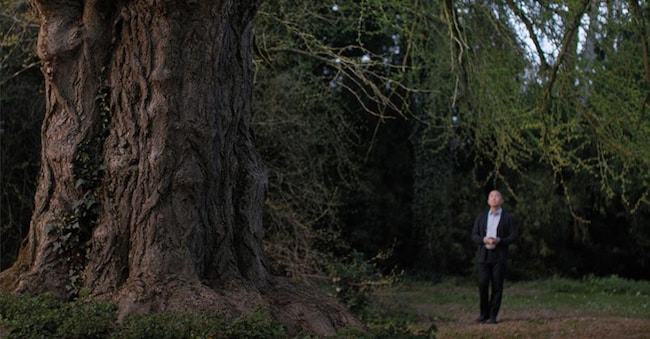
The main setting of this new work is the botanical garden of a university town in Germany, where a majestic ginkgo biloba stands. For over a century, this silent witness has observed the tranquil rhythms of transformation through three human lives. In 2020, a Hong Kong neuroscientist, exploring the minds of newborns, begins an unexpected experiment with the old tree; in 1972, a young student undergoes a profound change through the simple act of observing and connecting with a geranium; in 1908, the first woman admitted to the university discovers, through the lens of photography, the sacred patterns of the universe hidden in the humblest of plants.

The three episodes intermingle in a parallel montage, each maintaining its own autonomy, but connected by the attempt to establish links between humans and plants.

Various formats

Enyedi shoots with two different film formats the 20th century episodes and digitally the one set at the time of the COVID-19 pandemic: it is probably the latter that is most fascinating, offering numerous symbologies around our desire to connect with other living beings at a time marked by isolation.

Not always as incisive are the other two, which end up being rather redundant and partly unresolved.

The duration of around 150 minutes is excessive, but Enyedi still manages to deliver an unquestionably out-of-the-box audio-visual experience that is both challenging and fascinating.

From the condition of women to environmentalism, via technology, the themes are many and the meat in the fire is perhaps too much, but the suggestions are so numerous that the film might even find a place in the final palmarès.

Un film fatto per Bene

A Film Made for Good

Even more profligate is 'Un film fatto per Bene' (A Film Made for Good), the new feature by the brilliant Palermo-born director Franco Maresco, who is also in the running for the Golden Lion.

As in several of his previous works, the film starts with work on a set that has not been completed: the shooting of a production directed by Franco Maresco on Carmelo Bene is abruptly interrupted after yet another incident on the set. Pulling the plug is producer Andrea Occhipinti, exasperated by the endless takes and repeated delays. For his part, the director accuses the production of 'filmicide' and then disappears. Trying to mend the rift is a friend of Maresco's, Umberto Cantone, who calls as witnesses all those who took part in the enterprise, in an investigation that is an opportunity to retrace the personality and ideas of the most corrosive and apocalyptic author of Italian cinema.

One can never be ready enough when watching a film directed by Franco Maresco, creator with Daniele Ciprì of Cinico TV and of many important products, before turning to directing on his own and signing excellent works such as 'Belluscone' or 'La mafia non è più quello di una volta', which won an award in Venice in 2019.

In 'Un film fatto per Bene' Maresco reaches sometimes indigestible excesses, but his rebellious touch and non-conformist reflections continue to strike deep and make him increasingly an 'alien' within the panorama of contemporary Italian cinema.

Copyright reserved ©
Loading...

Brand connect

Loading...

Newsletter

Notizie e approfondimenti sugli avvenimenti politici, economici e finanziari.

Iscriviti