
Sileo: the civil, political and social role of art and its responsibilities
Long experience at the Pac and the realisation that public funds are becoming increasingly scarce, which is why intensive fundraising activities must be developed and pursued

4' min read
4' min read
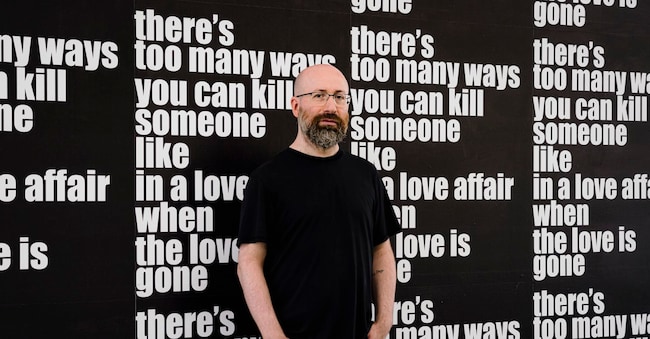
Diego Sileo, Milanese, born in 1977, art theorist and historian, has been collaborating in the exhibition activities of the PAC Padiglione d'Arte Contemporanea in Milan since 2004 and became its curator in 2013, focusing his interests on the experiences and theories related to performance and body poetics.
Tell us about yourself, your path and your curatorial vision? Above all, which exhibitions, in terms of impact and importance, can be qualifying of your path?
I have a degree in art history with a specialisation in contemporary art and a PhD in Latin American art. I immediately started working at the PAC Padiglione d'Arte Contemporanea in Milan: my choice was a well-focused one in wanting to dedicate myself to public culture and thus to one of the longest-lived and most relevant public contemporary art institutions in our country, a place that has shaped many of us with its exhibitions and with the work of its curators who have taken turns over time. So my curatorial vision could only be influenced by the so-called 'public conscience' and inevitably I have always looked at the civil, political and social role of art and its responsibility. From here I think I can answer that probably the Adrian Piper retrospective that I curated in 2024 is the most representative example of this vision of mine. However, I would also like to recall the entire series of exhibitions that I have dedicated to Italian artists of a specific generation, that of the 1960s, whose work started in the 1990s and changed the language of Italian contemporary art after the great seasons of Arte Povera and Transavantgarde, artists who developed their own absolutely recognisable poetics, of great depth, and who then influenced all subsequent generations.
Looking back, is there an Italian Pavilion that has particularly impressed or inspired you and what mistakes should not be repeated? And broadening your gaze to international ones?
In one way or another, in the last four editions of the Biennale I have always found the Italian Pavilion interesting, I believe that the choice of working with one artist or at most with three artists was the winning turning point: in each of these last proposals there was always something that caught my attention, I appreciated the choice of artists and the curatorial approach, even if in some cases it was very far from my own. However, I don't want to talk about mistakes because each project had its own specific character and a clearly recognisable stylistic signature. And this is what counts for me. On the international front certainly the 2022 Australia Pavilion entrusted to Marco Fusinato and curated by Alexie Glass-Kantor.


