Federturismo Confindustria

Caputi: ‘Supply chain contracts and simpler rules for Tourism 4.0’

We need more growth because, although Italia is growing, its growth rate is half that of France and Greece. We need to step up investment, innovate and take account of seasonal variations

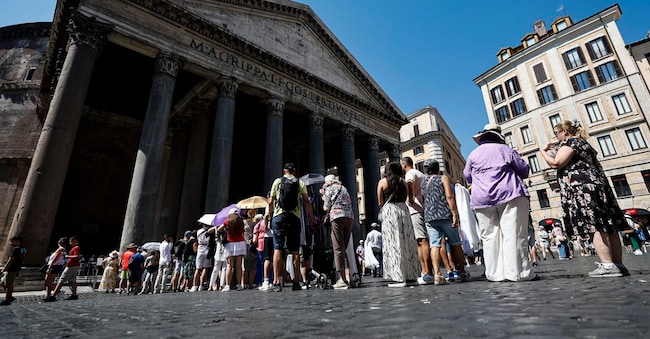
A Roma. Turisti in attesa di visitare il Pantheon nella Capitale. Situazioni simili a Firenze per accedere alla Galleria degli Uffizi o a Milano per il Cenacolo Vinciano.                              (ANSA/Angelo Carconi)

4' min read

Translated by AI
Versione italiana

4' min read

Translated by AI
Versione italiana

A project to lay the foundations for a Hospitality Industry 4.0. The aim? Not just one, but several interlinked objectives: to make doing business more competitive and simpler, with fewer constraints, in order to achieve more substantial structural growth, to the benefit of the country as a whole.
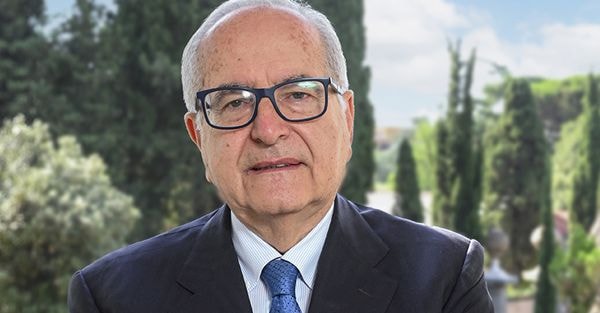
Massimo Caputi, Presidente Federturismo Confindustria

This is the project on which Massimo Caputi is working; he has been president of Federturismo Confindustria – the national federation for the travel and tourism industry within the employers’ organisation, which brings together 23 major associations and 7 major members, including FS and ITA – since 11 June.

Loading...

President Caputi, tourism appears to be in excellent health, with 55 per cent of arrivals coming from abroad, and Italia is among the top destinations. What challenges does the sector face?

The challenge for Italian tourism in the coming years is to turn this positive period – partly due to the global geopolitical situation – into structural growth. Italia is starting from a position of strength. Today, it is one of the world’s most attractive destinations, benefits from very dynamic international demand, boasts a unique cultural and natural heritage, and is consolidating its leadership in the Mediterranean.

The Mediterranean is home to the main competitors: Spain is firmly in first place, but France, Greece, Egypt and Turkey are hot on its heels. How can it maintain its lead?

Italia is growing, but at half the rate of Spain and Greece. Madrid is up 7 per cent and Rome is up 4 per cent. If Spain, Greece and Turkey continue to grow faster than Italy, the competitiveness gap will inevitably begin to take its toll in the medium term. This is why we must step up our efforts in investment, innovation, sustainability, seasonality management, human capital and the development of areas that are still underdeveloped. We must bear in mind that 90 per cent of tourists visit just 10 per cent of the country. We have vast scope to spread out tourist flows and avoid overtourism.

What measures would you like to see?

Italian tourism must not limit itself to simply managing growing demand. It must guide and shape it, transforming it into stable economic value for businesses and local areas, whilst much greater attention must be paid to employment and human resources: an increasing number of business groups are organising themselves independently to provide modern training, due to the public sector’s inability to provide responses that are in step with the times.

Did the idea for the ‘Hospitality Industry 4.0’ project stem from these insights?

Yes. Federturismo Confindustria’s challenge is to support growth and economic development with a proactive approach, working alongside the Government, businesses and institutions to build an increasingly modern, competitive and sustainable tourism system.

What will be the key points of the project?

We must start by simplifying things. Businesses are not asking for fewer checks or fewer rules. They are calling for simpler rules, clear timelines and a public administration that supports investment. Federturismo is advocating the swift introduction of a ‘zero-cost’ simplification decree for tourism, which will represent a very important step as it will enable us to overcome decades-old layers of regulation in a world that has changed completely.

This afternoon (yesterday for readers of – Ed. ), Tourism Minister Mazzi discussed the ministry’s policy priorities at a joint meeting of the Productive Activities Committees, identifying simplification as one of the key priorities. 

The proposals set out in the Decree have already been put forward, and we are pleased that Minister Mazzi and the Government have responded favourably. It is hoped that it will be formalised shortly. The real challenge will be its implementation. In Italia, reforms are often sound in theory but struggle to produce tangible results.

What are the other hot topics in the hospitality industry?

There are the ‘supply chain contracts’ introduced by the 2026 Budget Law, which recognise that the sector functions as an ecosystem made up of diverse but complementary businesses. Accommodation providers, transport companies, cultural organisations, event organisers, the catering sector, retail and service providers will be able to plan joint investments, generating economies of scale and greater competitiveness. We need simple procedures, clear criteria, swift turnaround times and, above all, the opportunity to develop truly integrated projects, avoiding duplication of effort and bureaucratic delays. Let us not forget that some innovative measures fail to get off the ground due to excessively cumbersome bureaucratic procedures.

Tourism also brings wealth to local authorities thanks to the tourist tax, the revenue from which is set to exceed 1.4 billion euros in 2026. 

This is an extremely sensitive issue because the tourist tax goes indiscriminately into the coffers of local councils. It is a purpose-specific tax, and for this reason, as Federturismo, we propose that the ‘supply chain contract’ should become a permanent mechanism funded by at least 20 per cent of the revenue from the tourist tax. This would be an extremely beneficial mechanism: a portion of the revenue generated by tourism would be reinvested directly to boost the competitiveness of the tourism sector, given that the tourist tax is currently used for a wide range of purposes, excluding tourism itself.

Could you outline your medium-term vision for the hospitality industry?

Tourism has been recognised as a strategic priority for the country, an essential component of its industrial policy. This role has been confirmed by Confindustria, which has entrusted Vice-President Leopoldo Destro with full responsibility for the sector. Tourism requires vision, decisiveness and responsibility.

What are the priorities from a medium- to long-term perspective?

Together with the Government and all stakeholders in the sector, we must launch a structural strategy that recognises tourism as a major national industry, on a par with other strategic sectors of the Italian economy, whilst also introducing innovative financial instruments such as the Important Projects of Common European Interest (IPCEI) – which are currently unknown to the tourism sector – and fostering industrial collaboration with entities such as CDP, which currently have a very, very marginal presence in the sector.

What will tourism be like in 2030?

I can envisage a form of tourism that is less seasonal, more competitive, digital and sustainable – one that creates widespread value and attracts investment and innovation. The aim is to generate greater value for businesses, workers and local communities.

Copyright reserved ©
Loading...

Brand connect

Loading...

Newsletter

Notizie e approfondimenti sugli avvenimenti politici, economici e finanziari.

Iscriviti