
Sina Hotels is expanding through soft brands: Italian identity and global networks to take on the major groups
With new agreements with Small Luxury Hotels and Marriott, investment in its assets, technological innovation and a generational handover, Sina Hotels is aiming for sustainable growth in the run-up to 2030

Key points
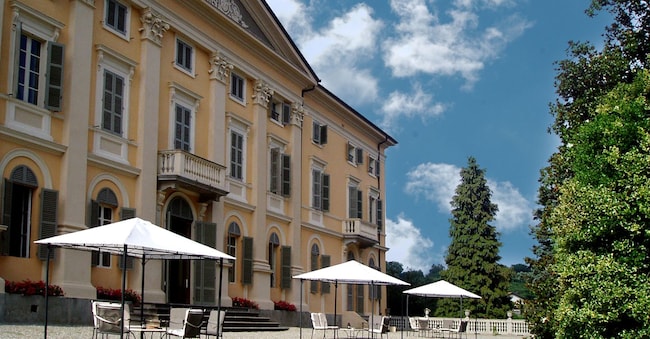
To combine independence and a connection to the local area with the need to compete on a global scale. This is the mission of Sina Hotels, the hotel group still led today by the founding Bocca family, with 11 properties across 9 destinations, which operates within an Italia context characterised by the influx of major international capital and a shift towards increasingly flexible management models. The path it has charted increasingly involves agreements with ‘soft brands’ – affiliation schemes that allow individual hotels to preserve their historic identity whilst linking up with the distribution platforms of global giants. The most recent example is the inclusion, since last June, of Sina Villa Matilde – a historic 18th-century residence in Romano Canavese in the province of Turin, with 43 rooms and formerly a family home – in the Small Luxury Hotels of the World network. This strategy will take another significant step forward at the end of the year with the affiliation of the hotel in Perugia (96 rooms, currently undergoing extensive refurbishment) to the Marriott network, following on from initiatives already launched in Florence and Rome.
The power of soft brands
Membership of international networks meets the need to attract high-end tourists, particularly from long-haul markets. For Villa Matilde, joining Small Luxury Hotels represents a strategic showcase to open up to markets that have so far had a limited presence in the Canavese area, such as the North American market, thanks in part to the commercial agreements linking SLH to major groups such as Hilton. “Soft brands guarantee access to very powerful commercial channels, whilst preserving the authenticity that characterises our group and our individual properties,” explains Francesco Salvo, brand strategy manager at Sina Hotels. “At Villa Matilde, the affiliation has only just come into effect, but we have already received our first bookings. We expect to consolidate our European client base and, gradually, to attract new streams of guests, driven precisely by these distribution synergies.”
Budget and Stability
Following the strong recovery that characterised the sector in the post-pandemic period, the group’s operating metrics are stabilising, although it is having to contend with general pressure on operating costs. “2024 was an exceptional year in terms of both turnover and profitability,” notes Salvo. “The market subsequently stabilised. Against this backdrop, the 2025 financial statements closed with revenue of €70.8 million and an average capacity utilisation rate of 70 per cent, with the outlook for 2026 expected to be in line with the previous financial year. Inflation and rising energy costs have put pressure on margins, but the strength of the North American market – our main overseas market – coupled with a domestic market that remains very strong, allows us to maintain a position of substantial financial health.”
With regard to performance metrics such as ADR (average daily rate) and RevPAR (hotel profitability index), the group’s strategy focuses on operational sustainability: ‘ADR is showing an upward trend, partly influenced by inflationary pressures. Our focus is on RevPar, seeking the right balance between room occupancy and the average rate, without putting undue strain on the product through excessive occupancy rates at inappropriate prices.”
The value of property in the age of the asset-light model
Unlike large multinational operators, which favour management contracts or pure franchising (the ‘asset-light’ model), Sina Hotels retains ownership of almost its entire portfolio, with just one exception. This approach, in the current competitive landscape characterised by the presence of private equity funds with substantial financial resources, requires flexibility and a long-term vision. “Competing today to acquire new properties can prove complex and does not always represent the optimal financial allocation for us, given current valuations and the presence of large institutional investors,” admits Salvo. “However, our competitive advantage lies in our ability to operate with a long-term perspective, without the need – typical of funds – to divest within strict timeframes. This allows us to plan for organic growth. At the same time, the company has structured itself to also consider alternatives to ownership, such as leasing or franchising.”
Brand connect


Newsletter RealEstate+
La newsletter premium dedicata al mondo del mercato immobiliare con inchieste esclusive, notizie, analisi ed approfondimenti
Abbonati