
From the crisis of October 1985 to the rejection of the fighter jets in March, Sigonella is once again at the centre of the Italia-US row
Spiri (Luiss): ‘In different ways, both in 1985 and in 2026, there is a prevailing belief in Washington that it can count on Rome’s support as a precautionary measure’
by Andrea Carli
Key points
Giambattista Vico would speak of ‘historical cycles and recurrences’ to indicate that history unfolds in a cyclical manner. There is a thread linking Italia and the US, which over the years has been more or less visible, and which has often passed through an air base situated some 15 kilometres west of the city of Catania, more precisely between the municipality of Lentini (in the province of Syracuse, within the district of the same name, ‘Sigonella’) and the municipalities of the metropolitan city of Catania, including Catania itself, Belpasso and Motta Sant’Anastasia.
Sigonella is a name well known to history books.
It was here that what can safely be described as a ‘landmark event’ in Italia’s diplomatic history unfolded: the Sigonella crisis of October 1985. And it was also here, recently, at the end of March, that the rift between Italia and the US over the war in Iran came to the fore, to the extent that, in the last few hours, US President Donald Trump has launched a scathing attack on Prime Minister Giorgia Meloni, drawing precisely on that episode.
The crisis of October 1985 and the standoff between Craxi and Reagan
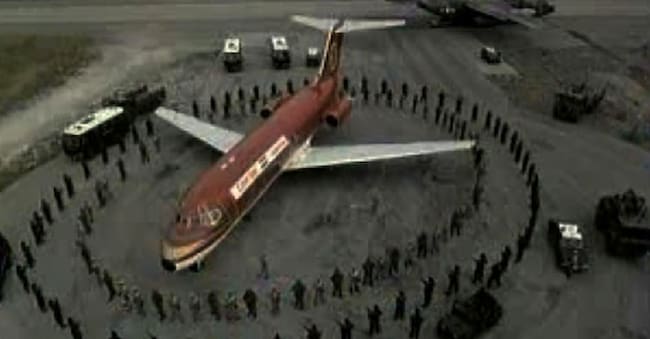
On 7 October 1985, a commando unit of the Palestine Liberation Front (PLF) hijacked the Italian cruise ship Achille Lauro, killing the American passenger Leon Klinghoffer. Following complex negotiations, the hijackers were granted safe passage by Egypt to fly to Tunis on an Egyptian Boeing. US fighter jets intercepted the aircraft in flight and forced it to land at Sigonella. The then Italian Prime Minister, Bettino Craxi, asserted Italian jurisdiction over the case as the offences had taken place on a ship flying the Italian flag. The result: the base’s runway became the scene of a surreal spectacle: the Egyptian aircraft was surrounded by the VAM (Military Air Surveillance) and the Carabinieri; the latter were in turn surrounded by members of the US Delta Force, ready to extract the terrorists by force. After hours of extreme tension and a heated telephone exchange between Craxi and the then US President, Ronald Reagan, the United States backed down, recognising Italian sovereignty.
March 2026: Crosetto says ‘no’ to US fighter jets
A second episode of tension, albeit less severe than in 1985, occurred in March. The backdrop in this case was the geopolitical tensions in the Middle East, and in particular the decision taken by the US and Israel to attack Iran. Italia intercepted a flight plan requesting authorisation for several American fighter jets in ‘tactical’ (operational) configuration to land at Sigonella. The bilateral agreements of 1954 provide for the automatic use of the bases for logistical or surveillance purposes, but require the Italian government’s political approval if the base is to be used as a launching pad for military action. As there had been no prior consultation in this instance, Defence Minister Guido Crosetto refused authorisation for the use of the base.


