
Sir Robotics: a bridge between Italy and China, also for managing e-commerce shipments
Since 2015, the majority stake has been held by Wolong, the Chinese electric motor giant, which acquired the company from Siti B&T in Formigine. This ownership structure has so far allowed the company a free hand in its strategic decisions. Wolong is also a shareholder and supplier to Agibot, one of the leading manufacturers of humanoids

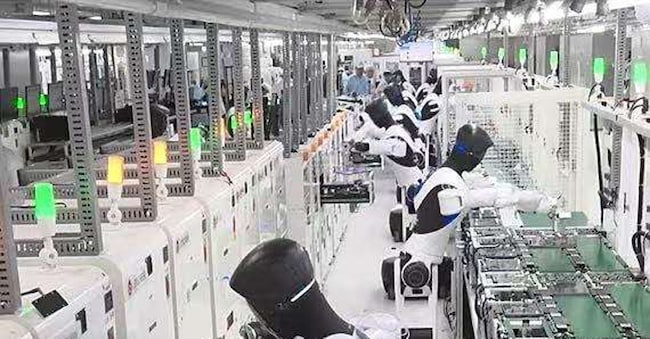
The Chinese know how to build humanoids that run, dance and practise tai chi. As for how to get them to work in a European factory, however, they’re asking Modena for advice. Sir, a systems integrator founded in 1984 by engineer Luciano Passoni, has built over 4,000 production lines in forty years – ranging from single-cell units with one robot to 200-metre-long lines with 50 robots – for clients such as Ferrari, Porsche and Mercedes. Today, led by his son Davide, the company employs 115 people in Italia, has a sales and support office in the United States and a factory in China that operates solely for the local market.
The alliance with China
Since 2015, the majority stake has been held by Wolong, the Chinese electric motor giant, which acquired the company from Siti B&T in Formigine. This ownership structure has so far allowed the company complete freedom over its strategies. Wolong is also a shareholder in and supplier to Agibot, one of the leading manufacturers of humanoid robots. Through this channel, Sir imports the robots and adapts them to the European market, starting with regulatory compliance. Conversely, requests for consultancy arrive from China almost daily: whilst the hardware is advanced, there is a lack of practical experience. It sometimes happens, for example, that anti-collision protocols prevent the two arms of the same robot from coming too close to one another.
Expertise
Modena brings its experience to the table, along with one rule: humanoids should only be used where there is currently no machine. Industrial robots remain faster, more precise and capable of lifting heavier loads. Above all, they are already ready for that job. Using a humanoid to load a machine tool means repeating the mistake already seen with cobots. Even where a humanoid might work, cycle times and costs are currently the deciding factors. To handle Zara’s returns, for example, Sir has opted for cobots: using vision and artificial intelligence, they sort returned garments – often creased or crumpled – one by one.
E-commerce
E-commerce will serve as a testing ground for humanoids: a robot that prepares parcels. It is slower than a person, but it is still a machine: ‘If I have to put five items in that parcel, it’s neither six nor four,’ explains Tommaso Gualtieri, head of humanoid robots at Sir. Then there’s internal logistics: preparing pallets at the end of the production line, night-time picking of parts from the warehouse for the following day’s production, and the machine inspection round in the workshop, where an operator monitors up to twenty workstations.
The issue of regulations remains. Current regulations apply to robots enclosed in a cage – whether real or virtual – whilst the humanoid is designed to work in unstructured environments. In the absence of specific regulations, Sir treats it as a traditional robot. To get it up and running straight away, he combines traditional programming with artificial intelligence. The dedicated team consists of three people in Italia, with two more on the way, and eight in China.

