
‘Sir Vacuum Cleaner’ wants his children to become farmers
British tycoon James Dyson, whose empire is worth 10 billion pounds, is donating his vast estate. Is he preparing for succession?

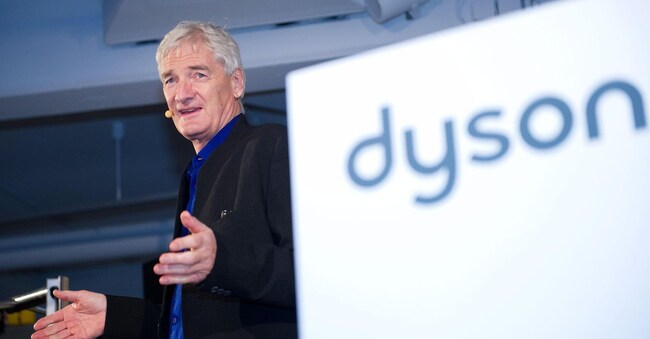
The legacy of the vacuum cleaner empire stems from farmland and stately country estates. The billionaire Sir James Dyson , founder of the company Dyson and one of Britain’s richest men, has handed over control of another empire – his agricultural one – to his children. This is perhaps the first step in a billion-pound succession for the man who has brought joy to millions of housewives with his revolutionary vacuum cleaner.
The donation
The billionaire inventor has gifted Dyson Farming, the UK’s largest agricultural business, to his three children. The holding company Heydon Limited, established in August and headed by Emily Dyson-Paley, Jake Dyson and Samuel Dyson, acquired the entire share capital of the farm last month.
Preparations are underway for the succession
This move suggests that Sir Dyson, who is nearly 80 years old, one of the staunchest supporters of Brexit and who has returned to the UK for tax purposes after years of living in Singapore, may be beginning to plan the succession of his empire, a colossus worth £10 billion built on vacuum cleaners and household appliances: his latest invention is the supersonic toothbrush. The new structure organises ownership around three family ‘branches’, one for each child. Certain decisions, including the appointment or removal of a chairman, will require the approval of all three branches. Family members are also prohibited from transferring their shares: his daughter Emily, aged 55, is a fashion designer and founder of a boutique in Notting Hill. Jake, aged 54, serves as chief engineer at his father’s company, whilst Samuel, aged 48, is an entrepreneur in the music industry.
The tax on farmers
The decision comes after the tycoon criticised the Labour Party over the taxation of family-run farms. The Government has introduced a form of wealth tax on land and farms passed down from father to son: it is effectively a 20 per cent inheritance tax on agricultural assets, which risks leading many farmers’ heirs to refuse their inheritance and sell the land to multinational food companies. Mr Dyson has repeatedly accused Labour of pursuing a ‘revenge’ economy, citing other measures as well, such as the increase in payroll taxes and the minimum wage.
Dyson Farming, founded in 2012, has assets totalling approximately 640 million pounds – comprising property, cash and agricultural machinery – and covers an area of 36,000 acres (approximately 14,500 hectares) across various plots spread across Lincolnshire, the Oxford and Somerset countryside, the country’s most agriculturally productive region.

