
Electoral law: the six points raised in the appeals – from the bonus to the signatures
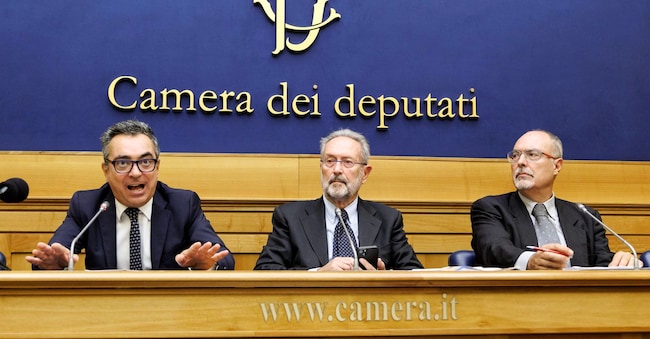
Thirty appeals are to be lodged across Italia on 26 October, targeting six aspects of the bill. Today in the Chamber of Deputies, the ‘Network for a Free and Equal Vote’ – the group of legal experts led by Roberto Zaccaria and Enrico Grosso – joined forces with the opposition parties to present their strategy for bringing the Stabilicum before the Constitutional Court.

Key points
Having lost the battle in Parliament, the campaign of legal challenges (thirty of which will be lodged on 26 October) against the new electoral law – the ‘Stabilicum’ or ‘Rosatellum’ – is now underway. Today in the Chamber of Deputies, the ‘Network for a Free and Equal Vote’, led by constitutional experts Roberto Zaccaria and Enrico Grosso, presented – alongside the opposition parties – the strategy to bring the Stabilicum or Melonellum before the Constitutional Court. A network of lawyers, now numbering 99, is hard at work. “The law is seriously unconstitutional, which is why we are launching this extraordinary campaign of appeals. The reaction has been strong, with the aim of reaching the Constitutional Court before the elections,” said Zaccaria, revealing that a total of 500 appellants will sign the constitutional challenges. Among them, alongside historic figures such as Romano Prodi, Pier Luigi Bersani, Massimo D’Alema and Fausto Bertinotti, are representatives of civil society such as Giovanni Bachelet, Luciano Canfora, Gianrico Carofiglio, Lella Costa, Maurizio De Giovanni, Tiziana Ferrario, Monica Guerritore, Marisa Laurito, Gad Lerner and Tomaso Montanari.
The 6 points under scrutiny in the appeals
There are six points in the text that are the subject of the appeals. “The first issue is the majority bonus, both in numerical terms and with regard to the method of allocation via a fixed number,” explained Grosso. The second issue concerns the allocation of the bonus on a national basis for the Senate, ‘which should instead be elected on a regional basis’. The third concerns the method of selecting elected members and, consequently, the allocation of seats. And then: ‘the gender disparity governing candidacies and preferences’, whereby ‘the top candidates on the closed lists may all be men’; the mandatory prior nomination of the future Prime Minister, which ‘violates the parties’ freedom to choose how to stand and the prerogatives of the President of the Republic to assign the task of forming a government, as well as the requirement to collect an excessive number of signatures for new political parties, which “is unreasonable”’
Appeals have been lodged on the grounds of unconstitutionality, but the electoral law remains valid
“No one is calling for a return to the previous law, which has now been repealed,” remarked Grosso, who added: “If the appeals are upheld, the new law will be stripped of its unconstitutional aspects and will remain suitable for application.”
Appeals lodged on 26 October
“We have the ambitious aim of lodging appeals immediately after the law comes into force,” explained Pietro Adami, a lawyer and legal coordinator of the Network for a Free and Equal Vote. On Saturday 24 October, the ‘Stabilicum’ or ‘Melonellum’ will come into force, fifteen days after its publication in the Official Gazette last Friday. On 26 October, therefore, appeals setting out in black and white the provisions at risk of being unconstitutional will be filed simultaneously in the courts of the 30 Italian districts and judicial offices. ‘The hearings are likely to take place in mid-January, and a judge may issue an order referring the matter to the Constitutional Court’.
Constitutional Court ruling expected by spring
And when might the Constitutional Court reach a decision? The appellants are keeping their cards close to their chest, although Adami ventures: ‘The Court has the option of assessing the urgency of this matter and scheduling a hearing quickly. We wouldn’t be doing all this if we didn’t think we could make it in time for the elections. So I’d say by spring we could have the hearing at the Constitutional Court, between March and June.”


