
Sixteen dead in Aleppo in clashes between Syrian and Kurdish militias
For three days, the city in northern Syria has been the target of violent clashes that have displaced 140,000 people

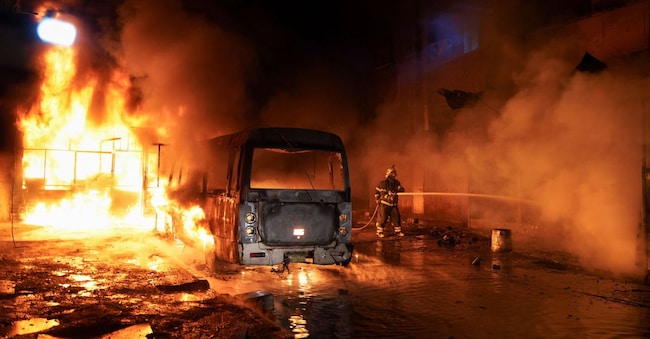
It is a warlike scenario in Syria's 'Northern Capital'. For three days, Aleppo, the country's second city, has been the heart of clashes between Syrian factions under the orders of leader Ahmad Sharaa and the Kurdish-Syrian forces present in the two Kurdish-majority districts. Schools are closed, the international airport is not operating and flights have all been diverted to Damascus, artillery bombardments have caused thousands of people to flee, locking many more in their homes. The toll of the clashes, still to be updated, already counts 16 dead and 140,000 displaced. "The deployment of tanks and artillery in the neighbourhoods of Aleppo," said Mazloum Abdi, Kurdish leader of the Syrian Democratic Forces, "the shelling, the displacement of unarmed civilians and the attempts to break into Kurdish neighbourhoods during the negotiations, undermine the possibility of reaching agreements. Just last Sunday, the leader had been in Damascus to discuss the implementation of the agreement with the Syrian government. The Turkish Defence Ministry spokesman's statement was dry, saying that Ankara supports the Syrian fight against terrorism and is willing to provide assistance if requested.
Israel's position is opposite. Foreign Minister Gideon Sa'ar called the Syrian regime's attacks on the Kurdish minority in Aleppo "serious and dangerous", adding that "the silence of the international community will lead to an escalation of violence".
The European Commission expresses great concern about the situation in Aleppo, calling for restraint, the protection of civilians and the search for a diplomatic solution. Legitimate concerns, in light of the opposing positions of Turkey and Israel, which risk the clashes taking on a regional dimension.
The Gaza front also remains very hot. Despite the ceasefire that has been in place for three months, seven people, including four children, have been killed by IDF raids in the Strip. A drone attacked a tent of displaced people killing an adult and three children, while the other victims were the result of attacks in the south and north of the enclave. The umpteenth alarm over the gravity of the situation in the Strip comes from the EU High Representative, Kaja Kallas, who states that "Hamas refuses to disarm" and "Israel restricts the work of international NGOs, putting humanitarian aid access at serious risk". This information is confirmed by Israel, which has declared that it has banned foreign medical and humanitarian personnel belonging to organisations that have been ordered to cease their activities from entering Gaza unless they register the details of their employees with foreign authorities. These include Médecins Sans Frontières, Médecins du Monde Suisse and the Danish Refugee Council. Spanish Prime Minister Pedro Sanchez says he is ready to send 'troops to Palestine' for peacekeeping purposes and hopes 'that there will soon be recognition of the two states'.
Tensions also exist in Lebanon where the army claimed to have disarmed Hezbollah militias in the south of the country, but Israel responded by describing its efforts as insufficient and inefficient.


