
Jovanotti turns 60: the eternal ‘lucky lad’ who loved to walk
A milestone birthday for Lorenzo Cherubini, television DJ, rapper and ideologue of the ‘Great Church that stretches from Che Guevara to Mother Teresa’

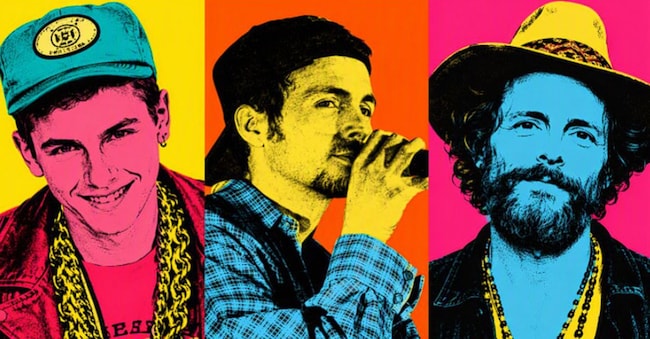
‘Luck favours those who walk, not those who stand still waiting for it,’ as someone once said. Perhaps that is precisely the secret: Lorenzo Cherubin has always been a keen walker, whether following in the footsteps of Francis of Assisi or trekking in Patagonia. From the 1980s to the present day, he hasn’t stopped for a moment – Italia’s eternal Jovanotti – and so he has found himself, by his own admission, a ‘lucky lad’ who has been ‘given a dream’. Perhaps even two, three, four – as many as the opportunities life has thrown his way. And today, 27 September, he turns 60, a milestone that would make his stage name seem incongruous, if only he were just anyone. But Jovanotti has never been just anyone, and incongruities have always been part of his repertoire.
Whether you like it or not, he is a generational icon for those of us born between the mid-1960s and 1980 – what in America is known as Generation X – and immediately brings to mind Kurt Cobain and Jeff Buckley. Our fabulous young man, however, is less tormented: he was born in Rome, the third of four children, into a family originally from Cortona, the very place where St Francis founded the hermitage of Le Celle. His father, Mario, is a member of the Vatican Gendarmerie, whilst his son attends the Malpighi scientific secondary school in the Buon Pastore area, but is passionate about music and wants to become a DJ.
And so he set off, making his way between independent radio stations such as Radio Antenna Musica and the capital’s nightclubs, with a suitcase full of mixes and enthusiasm as his hallmark, until he was spotted by Claudio Cecchetto, a DJ, TV personality, talent scout with a keen eye and the creator of Gioca Jouer, a man who, at the age of 27, had already hosted the Sanremo Festival. The spark was ignited and Cecchetto brought Jovanotti to Radio Deejay, a station he owned which would soon join forces with Fininvest owned by Silvio Berlusconi, giving rise to the Deejay Television experiment.
Once again, whether you like it or not, Cecchetto puts together a dream team comprising Gerry Scotti, Linus, Fiorello, Amadeus and, of course, Jovanotti, who for the young people of the 1980s – the ‘generation of disengagement’ – soon became what Marx, Engels, Lenin, Mao and Che had been for the young people of the 1970s. Lorenzo, with his Boy London cap borrowed from the punks, his rapper-style metal necklaces and his red ‘biker jacket’ that paid homage to the legend of Fonzie, was an instant smash hit. He released music videos, then at a certain point began singing in a jumble of English that was partly inspired by Prisencolinensinainciusol from Adriano Celentano.
No one, up until then, had ever tried their hand at rap in Italia, and when Jovanotti released the single Gimme Five and the album Jovanotti for president (1988), it was a triumph, selling half a million copies. The following year, he was bound to end up at Sanremo, and so he began singing in Italian, in the spirit of Vasco Rossi’s Dadaism, with a song aptly titled Vasco – though perhaps it was an anti-drugs anthem (“No, Vasco, no, Vasco, I’m not falling for it/ Because I don’t trust anyone who never breaks a sweat’), came fifth and ended up on the album La mia moto. At the same time, he did his military service, and his ‘naja’ became for Italian teenagers what Elvis’s military service had been decades earlier on the other side of the Atlantic. This included a television report on his discharge party, broadcast on Italia 1.


