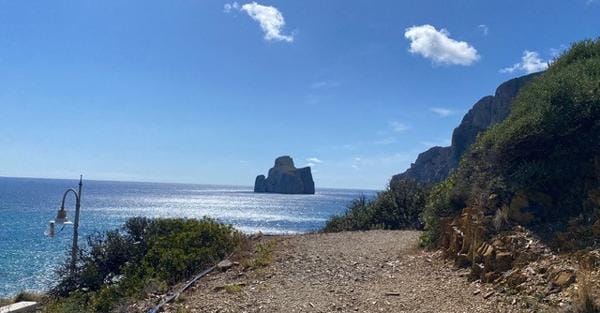
Slow tourism in the Suclis-Iglesiente on the old miners' paths
In south-western Sardinia, the wound of the mines that has been slow to heal is becoming, also thanks to European structural funds, an opportunity for rebirth for the area
4' min read
Key points
4' min read
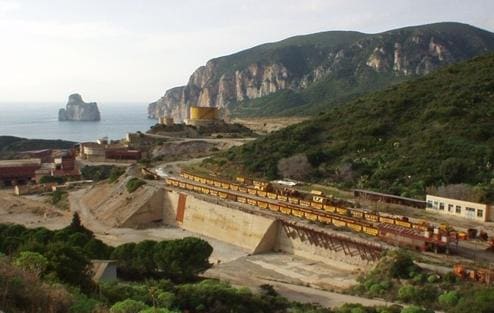
Tunnels are no longer being dug, but a new course made of technology and tourism is being pursued. The legacy left behind by the mining companies that stopped mining in Sardinia is a heavy one and has to reckon with a compromised environment that has to be recovered, with buildings collapsing, abandoned compounds and landfills to be reclaimed.
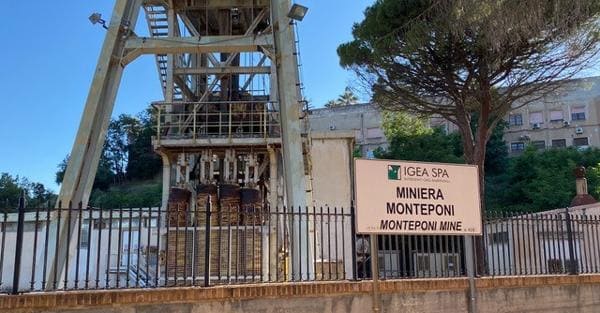
It is a wound that is slow to heal and with which Sulcis Iglesiente still has to reckon. Yet in the last twenty years something has been done and a new course has been set, starting with the birth of the Geominerary Park established after a year-long underground protest in the Monteponi mine. The two capital cities, Iglesias and Carbonia, are at the centre of this change that is travelling intermittently, in which important phases of non-stop work alternate with periods of stalemate and silence. And EU resources, especially the European Regional Development Fund (ERDF), have been decisive in this first phase.
European Resources Fundamental
'European funds have been crucial for solving basic issues in the city. For example, in order to completely rebuild the water network, we invested more than 20 million euros,' emphasises Salvatore Cherchi, mayor of Carbonia from 2001 to 2010 and then president of the Province of Carbonia Iglesias until 2014. Or to reconvert abandoned mining sites, such as the large Serbariu mine where, thanks to European funds, we have been able to build a large museum, a cinema factory, and a laboratory with thirty people for clean energy technologies. We presented the projects, won the tenders and, from my experience, I can say that we can meet the deadlines: in fact, we have not returned a single euro'.
The stumbling blocks: the case of public land reclamation
.Not everything, however, has gone well over the years and the effects can still be seen today. "In the area I find the case of land reclamation particularly critical,' Cherchi adds, 'I am thinking of mining sites in public hands. I have to note that the public system under the Region has lost about EUR 160 million from the Development and Cohesion Fund because the regional system has not been able to commit these resources. On the other hand, some interventions in private hands, such as that of Alcoa, have spent over 25 million euro to secure the abandoned site'.
A new life after mining
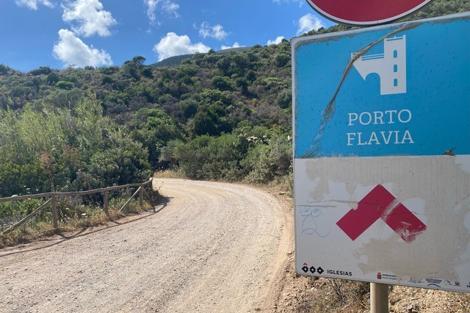
.The city of Iglesias, which has been at the centre of a real change since 2004, has also exploited the leverage of European funds. The ERDF funds enabled the redevelopment of an important part of the Monteponi mining compendium, now a destination for tourists and visitors. Pierluigi Carta, mayor of the mining town in those years, experienced these changes at first hand. "The structural funds were certainly important," he says, "in this area they were very important because we were coming out of a crisis dictated first by the closure of the mines and then by the factories in Portovesme. Hence the planning and interventions that, as Carta points out, 'have grounded projects and interventions worth over 70 million euro. Today, Pierluigi Carta is the guide of 'Villaggio Normann', the voluntary organisation that has revived the mining village of Normann, in the nearby municipality of Gonnesa, where an 80-kilometre-long network of footpaths has been created.