Destination: Belgium

Small in size, cosmopolitan in outlook: Antwerp

The city has a unique creative microclimate. It gave rise to the Antwerp Six and is now a vibrant hub where a new generation is rethinking fashion, design and art.

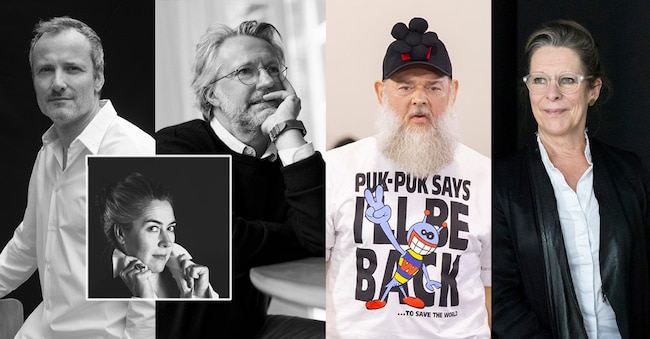
Da sinistra Tim Van Steenbergen, Katrien Huygens, Axel Van Den Bossche, Walter Van Beirendonck e Veerle Wenes. ©Benoit Béthume - ©Siska Vandecasteele -©jeremie Leconte

9' min read

Translated by AI
Versione italiana

9' min read

Translated by AI
Versione italiana

Several decades ago, leading ornithologists reached a surprising conclusion: it is in the Belgian countryside – and in particular in the area around Brussels – that the largest number of migratory birds stop off on their journey between the Far North and Africa. A little-known fact, yet one that serves as a symbol and evocative metaphor for this small country, sandwiched between four larger nations, yet one that sometimes manages to surpass them all. In the heart of Flanders, Antwerp perfectly embodies this notion. Both intimate and cosmopolitan, it is the place from which one sets out and to which one returns, as if it were imbued with a creative microclimate all of its own. Of course, its geographical location, its immense port open to the world, its mercantile tradition and the historical role it played during the Golden Age have created particularly favourable conditions.
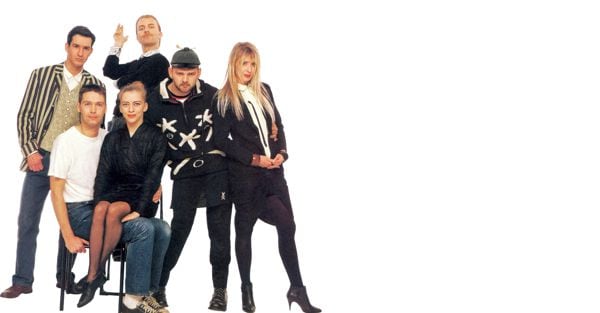
“The Antwerp Six” (1988), foto pubblicata su Elle, edizione americana, maggio 1988. In mostra al MOMU di Anversa fino al 17 Gennaio 2027. ©Thierry Bouët

BETWEEN DEADSTOCK AND INCLUSION

Loading...

It was right here, in the early 1980s, that a small group of young graduates from the fashion department of the Royal Academy of Fine Arts needed courage and a good dose of daring to transform the city into a new fashion capital. Honoured in an exhibition at MoMu, the famous Antwerp Six opened up new possibilities for subsequent generations. Today, some of the key figures from that first wave have chosen to return to their roots. Walter Van Beirendonck, for example, has just presented his new collection in Antwerp, leaving Paris for the first time since the 1990s and returning to the very place where it all began. This connection to the city and its ecosystem is also evident in the words of Tim Van Steenbergen, co-founder – alongside Ruth Goossens – of the REantwerp brand.
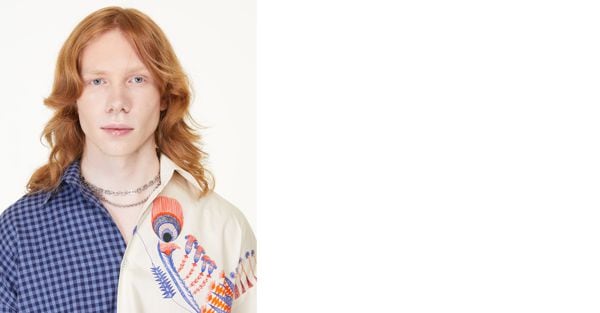
Un look della collezione di REANTWERP, fondato da Tim Van Steenbergen.

Launched in 2023, this unconventional project embodies a synthesis of Flemish ingenuity enriched by a strong humanistic sensibility. ‘The Antwerp Six had broken new ground in terms of stylistic conventions. Today, to be truly relevant, the challenge was to challenge the system itself, which has since changed,” explains Van Steenbergen. Using deadstock and reclaimed fabrics from production surpluses, sourced locally through a carefully built and nurtured network, REantwerp produces small runs of archetypal pieces – the trench coat, the shirt, the dress – whilst showcasing the skills of refugees from all over the world. ‘So this isn’t a seasonal collection. The people who work with us have a name, a face and technical skills that are unique to each of them. They create alongside me. It’s not a formula that can be replicated endlessly, because everyone stays with us for a limited period,’ explains the designer. A creative and economic balance perfectly tailored to the city’s scale. ‘When you want to change something, it seems natural to start with a local context. Antwerp is just the right size for a project to be sustainable. What’s more, it attracts international visitors who are well-versed in fashion and a local clientele that is increasingly interested in new trends, but also more attentive to social values.’ It is probably precisely in this continuous evolution, in this ebb and flow, in the alternation between the large and the small, between emptiness and fullness, that Antwerp has found its own formula.

IT ALL BEGAN IN A GARAGE
For the past few years, Axel Van Den Bossche has been living, alongside his wife, the designer Marie Michielssen, in a 16th-century castle in the historic Berchem district of Antwerp. Behind the ancient red-brick façade, the couple have created a personal world in which contemporary art and design coexist with the history of the place. The story of Serax’s founder is a modern entrepreneurial fairy tale, which began exactly 40 years ago in a garage with a few flower pots and has now become a benchmark for Belgian design, with a presence in 90 countries around the world. “Belgium is a small country, made up of small businesses,” says Van Den Bossche. “To get noticed, we have to look beyond our borders and introduce ourselves to the world.”

In 1990, Paris was to Serax what London had been to the Antwerp Six. “We attended Maison&Objet for the first time and won the prize for the best stand, thanks in part to our creative collaboration with the floral designer Daniel Ost.”

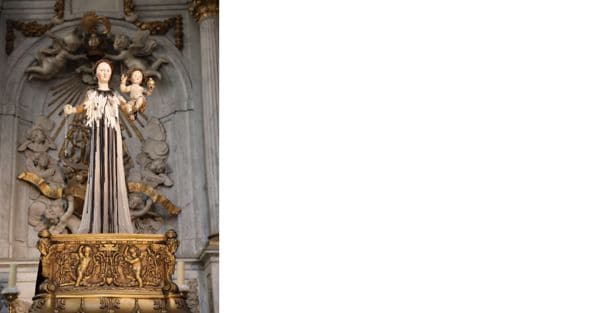
La statua della Vergine Maria con un abito disegnato da Ann Demeulemeester nella chiesa di Sant’Andrea. ©Monica Wells /ALAMY

Since then, the brand has continued to grow, weaving its history together with that of creatives from diverse backgrounds: designers, architects, chefs and fashion designers, as well as brands such as Marni and the French label Merci, and, more recently, artists. At the same time, Serax has evolved from a brand specialising in tableware into a company capable of branching out into the worlds of furniture and lighting, welcoming figures such as the architect and designer Vincent Van Duysen and developing collections with the fashion designer Ann Demeulemeester, two absolute benchmarks of Antwerp’s capacity for creativity.

“To understand the city’s energy, you need to look at its history,” advises Van Den Bossche. “We’ve always had excellent schools, starting with the workshop of Rubens, one of the most influential artists of the 17th century, whose works I recommend you admire at the KMSKA, the Royal Museum of Fine Arts in Antwerp, which reopened in 2022 after 11 years of restoration. But I’m also thinking of the fashion design programme at the Royal Academy of Fine Arts, one of the oldest in Europe, which continues to attract students from all over the world.” Van Den Bossche’s words also paint a picture of a city on a cosy scale, with a pace quite different from that of Europe’s major creative capitals, yet capable of attracting an international audience thanks to its history and its port – the second largest in Europe after Rotterdam – which has always been the driving force behind urban transformation. “In recent years, moreover, the opening of the Botanic Sanctuary – a luxury hotel housed in a 12th-century monastery within a botanical garden – and that of the August, a hotel designed by Vincent Van Duysen in a former Augustinian convent, have been a real boon for Antwerp.” Once again, different eras intertwine in this city, which blends the ancient and the modern better than any other.

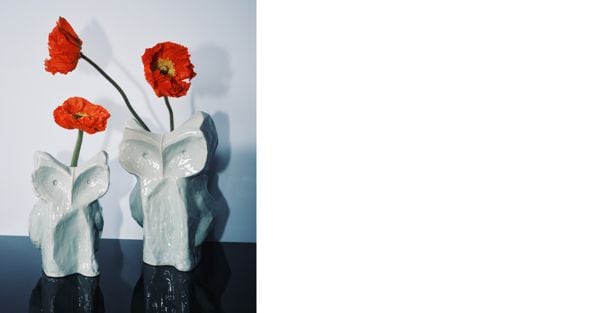
Il vaso Gufo della collezione After Midnight, progettato da MARNI per SERAX(75 €).

This coexistence of different spirits is also reflected in Van Den Bossche’s approach to creative collaborations. “Ours is a platform for designers with different styles, whom I choose instinctively or simply by discovering new talent through the network of creatives I work with, but ultimately I find there is a certain consistency: together, they all embody the Serax style, and I ensure that this does not change.” Since last August, in fact, Axel Van Den Bossche has stepped down as CEO, handing the reins to Tim Kamanayo. “It was the right time to hand the company over to someone younger. I’m staying on the board of directors and will continue to oversee the selection of designers and our relationships with them. That, after all, is my true passion.”

Loading...

A DNA FUELLED BY POLITICS

Beyond the catwalks. Fashion in Antwerp pops up in the most unexpected places. Take, for example, the Baroque church of St Andrew, just a stone’s throw from the historic centre with its cobbled streets. Here, a 16th-century Madonna wears a dress designed by Ann Demeulemeester, a symbol of the poetic and unconventional aesthetic that has defined the creative spirit of this Belgian city for decades. “Here, creativity isn’t something contrived; it’s truly part of the city’s DNA,” says Katrien Huygens. For the past five years, she has been the driving force behind this ecosystem in her role as the city’s Fashion Project Leader. A role that did not exist before, created to coordinate a sector which, whilst brimming with talent, risked remaining fragmented. Her career began as a fashion designer; she graduated from the Antwerp Academy in 1993, in the same class as Olivier Rizzo – now a stylist and art director for Prada and Calvin Klein – photographer Willy Vanderperre, and Peter Philips, creative director of make-up at Dior. It was the academy’s long-standing director, Linda Loppa, who gave her a glimpse of career paths other than that of a fashion designer. ‘She spoke to me about business development and project management. That was when I realised I was better suited to building connections and strategies than designing collections.’ Today, Huygens works within Antwerp’s public administration, where she has developed a strategic plan that brings together incubators, institutions and mentoring programmes. “My first objective was to build a network of trust. There were many key players – the Royal Academy of Fine Arts, the MoMu fashion museum, the Flanders District of Creativity, the designers – but there was a lack of proper coordination.” Hence her role, which she herself describes as that of a ‘i’bridge builder’, ‘a sort of spokesperson for the sector to the outside world, but also a point of reference within the city administration, where, until recently, those with a project often didn’t know which door to knock on’. For the first time this year, her networking efforts have become visible to the general public through the Antwerp Fashion Festival, running from 4 to 7 June, coinciding with the retrospective that MoMu has dedicated to the Antwerp Six (running until January 2027). “Dries Van Noten, Ann Demeulemeester and the others took the world by storm in the 1980s with radical collections: minimal budgets and recycled materials.” Forty years on, the Antwerp design school has never stopped producing leading designers, from Demna – now at the helm of Gucci following his years at Balenciaga – to Meryll Rogge, creative director at Marni. “Even before international recognition, the most delicate work takes place between the end of one’s studies and entering the market, when many careers come to an end before they’ve even begun,” explains Huygens. “For this reason, in addition to creativity, we seek to support and guide emerging talents in building a solid business model.” This vision has given rise to projects such as Bakermat, a platform that helps young designers develop their collections by connecting them with textile companies, sustainable materials and digital tools that reduce waste and costs. Or REantwerp, which engages and trains refugees. It is also through initiatives such as these that Antwerp reaffirms its unique identity: a city small enough to foster genuine connections and free enough to allow room for experimentation. Still far removed from the commercial pressures of the major fashion capitals.

THE CONVENT THAT EXPLORES EVERYDAY LIFE

When she opened the valerie_traan gallery in 2010, Veerle Wenes was among the first to create a dialogue between works of art and design objects in her exhibitions. Trained as an architect, the concept for her gallery emerged whilst she was working on an exhibition at the Musée des Arts Contemporains au Grand-Hornu the previous year, entitled Le Fabuleux Destin du quotidien, in which she explored people’s relationship with everyday objects and the sometimes subtle boundary between art and design, juxtaposing works by artists such as Michel François and Richard Artschwager with functional objects.

And so her career as a gallery owner began in a very unusual building in the centre of Antwerp: a former 19th-century convent, where the nuns used to make bras and inside which, in 1979, a modernist concrete structure was built. ‘I wanted it to be both a gallery and a home, because in this line of work there’s no distinction between life and work,’ she explains. The gallery’s name comes from a simplified, more international version of her first name, and from a play on words involving her surname, which in Flemish sounds similar to the verb ‘to cry’, whilst ‘traan’ means ‘tear’. She immediately began collaborating with Muller Van Severen, the duo who were still working in the art world at the time, and it was she who encouraged them to move into design – a field in which they are now superstars. “When you step out of your comfort zone and don’t have your usual audience judging you, you can be more experimental,” she explains. Over the years, she has continued to work closely with them, as well as with names such as Andrea Branzi, the 51N4E collective and the photographer Dirk Braeckman, to name but a few.

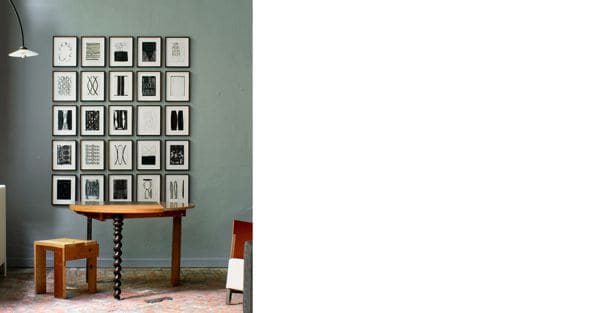
Tavolo e sedia di Rikkert Paauw con disegni su carta di Ante Timmermans, nella galleria valerie_traan di Veerle Wenes. ©Davide Pastore

Over time, she has become increasingly involved in the arts, working with artists such as Philip Aguirre y Otegui, who is currently taking part in the Venice Biennale’s International Exhibition with two works on the theme of immigration. Another key figure in her career has been Rikkert Paauw. “He works with discarded items found on the street, managing to create something beautiful from abandoned materials,” comments Wenes. “He is a true artist, with a highly recognisable style of expression.” In 2022, he installed his objects inside the gallery’s Cabinet, which had been painted by Muller Van Severen ten years earlier, echoing their colours on the walls.

Another important project dates back about ten years: valerie_objects. “I commissioned various designers to create cutlery, and then turned to the company Serax to produce it.” Wenes is now the creative director of that project. A more recent initiative is valerie_colours, which arose from a collaboration with Blēo, a Danish company that produces surface paints. “Colour has always been central to my creative life,” she explains.

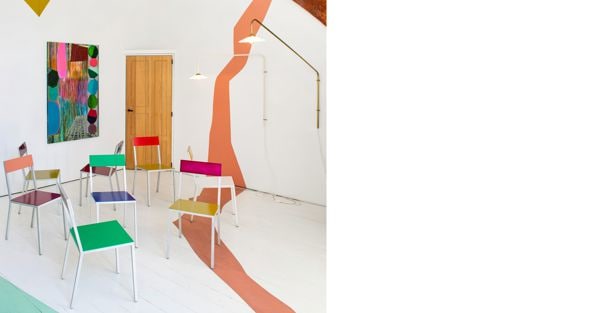
Alu Chairs e Lamps dei Muller Van Severen per valerie_objects con un dipinto di Ingrid Castelein. ©Davide Pastore

She has a love-hate relationship with Antwerp, where she moved around the same time the gallery opened to follow her husband (‘it’s impossible to take someone away from Antwerp who was born there,’ she jokes). ‘In some ways, it’s very similar to Milan: it’s the city of fashion and shopping. But there are also galleries and museums. Fashion, however, dominates. One place I particularly love is the Middelheim Museum, a sculpture park, with works surrounded by trees and set amongst the greenery’, she says. ‘They recently acquired a major work by one of my artists, Paul Gees. On the other hand, the fashion scene manages to attract a large crowd of creative types and interesting personalities who come from Paris, Brussels and Italia, and who then also visit the gallery and take an interest in art and design.” (Silvia Anna Barrilà)

Copyright reserved ©
Loading...
Loading...

Newsletter

Notizie e approfondimenti sugli avvenimenti politici, economici e finanziari.

Iscriviti