
Small non-EU parcels, here's who and how they are avoiding the 2 euro Italian mini-tax
Assonime points out that goods arrive at other EU hubs and are then transferred to Italia via land transport. Under consideration is the postponement

Key points
The 2 euro 'made in Italy' mini-contribution on small non-EU parcels worth up to 150 euro that was triggered on 1 January (albeit with a soft debut period) is in danger of already being out of action. Not only because of the debut of the 3 euro tariffs from 1 July decided by the EU Council, but because an attempt at circumvention is already underway. The warning comes in the Assonime Circular 2/2026 signed by Director General Stefano Firpo, which highlights the problematic profiles on both the economic and legal levels with respect to compatibility with EU law.
Cargo arrives at other EU airports
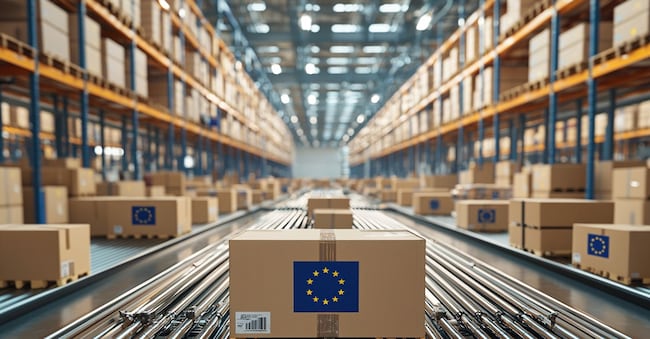
As pointed out by the association of joint stock companies, 'in a context characterised by the existence of the single European market and the absence of internal border controls, the application of a non-harmonised levy is already influencing the logistical and distribution choices of operators, encouraging the entry of goods into other Member States where the levy is not foreseen and their subsequent introduction into the national territory by intra-EU transport'. As a matter of fact, goods arrive at other (mainly) EU airports and are then transferred by land transport to Italia. The consequence, as Assonime explains, is 'a shift in import flows that cannot be traced back to economic or organisational requirements, but is determined by the application of a national charge not provided for in the other Member States, with distorting effects on competition between operators and between Member States'.
The decline in small value packages
Assonime's circular also cites data from the Customs and Monopolies Agency according to which 'between 1 and 20 January, the number of low-value parcels arriving in Italia from non-EU countries fell by 36 per cent compared to the same period last year'. And the circular also highlights how the change in import mechanisms is causing 'an increase in intra-EU transport (including land transport), with negative consequences also from an environmental point of view, in clear contradiction with the sustainability and emission reduction objectives pursued at EU level'.
The potential conflict with the EU
The generalised and lump-sum nature of the national contribution then runs the risk of translating into a measure that, beyond its formal qualification, produces effects similar to those of a customs duty, thus potentially conflicting with the Treaty on the Functioning of the European Union (TFEU) and with the very logic of the customs union, which aims to guarantee the elimination not only of tariff barriers, but also of any national burden that could alter the neutrality and uniformity of the customs regime applicable to imports.
Notwithstanding, then, that 'the national legislator intended to place the new levy outside the category of customs duties in the strict sense, the economic effect of the measure is to reintroduce a fixed charge on precisely those transactions that EU law has hitherto intended to facilitate, also in order to simplify low-value trade flows. In this perspective, the levy runs the risk of running counter to the rationale of the existing EU discipline, anticipating, on a national basis, a choice of customs policy that, as already mentioned, will enter into force on 1 July next".


