
Black Friday: here are the numbers and types of best-selling products
Until Cyber monday, 5 billion will be spent in Italy with Christmas in mind

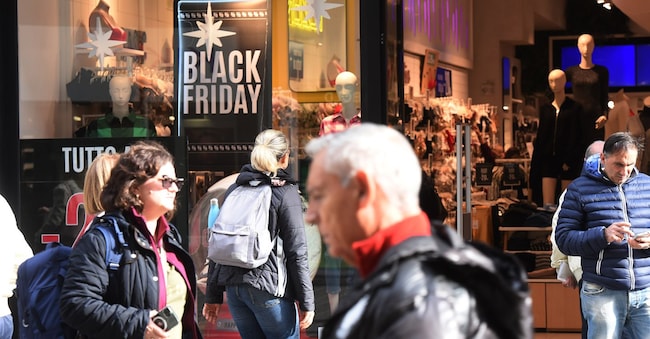
Small revolution among Black Friday best sellers. Among the purchase intentions, clothing stands out, according to Confesercenti-Ipsos forecasts, overtaking consumer electronics and IT products. This is followed by personal care items, household appliances, books and toys as well as furniture and household items. Less than 10% plan to buy jewellery and travel.
Black friday, the big shopping happening in search of more or less discounted bargains will fuel a billion-dollar business. During this week and until next Monday, 5 billion will be spent with a growth of almost 20% compared to last year and 145% on 2018. This is the estimate drawn up by the Confcommercio Studies Office, which highlights the rise of omnichannel shopping in which purchases on online platforms are joined by those made in traditional shops. The spring that triggers purchases is to take advantage of discounts to get ahead with Christmas presents: an option shared by more than two thirds of the sample observed with an increasing trend over the last few years.
The Confcommercio Studies Office emphasises that, based on evidence from past years' sales, a share of gift purchases can be considered additional (10-15%) and not pure replacement: another way of saying that a good Black friday is an excellent premise for spending in December, the most important month of the year for household consumption. On the other hand, it is also worth noting that, over time, the weight of December retail sales has moderately decreased in favour of November, precisely because of the bargains offered by Black friday.
Electronics, clothing, toys and personal care products are the trendy purchases. Despite the climate of uncertainty, Italians are showing an ever-increasing interest in shopping and making the most of Black Friday promotions. Black Friday promotions are becoming increasingly important in shopping planning, with consumers arriving increasingly prepared and informed, having already made the appropriate comparisons in terms of both price and product features, through online searches and tools such as price comparators.
Then there is the phenomenon of 'very low cost' purchases sold by specialised Chinese platforms, this time the figure emerges from Confesercenti-Ipsos research, which will exceed 12%. "The growth of the low-cost sector is worrying: we estimate that, in November alone, over 4.5 million low-cost packages will move from non-EU platforms," emphasises Nico Gronchi, president of Confesercenti. "In this sense, we welcome the introduction of the two-euro tax envisaged by the manoeuvre, not so much because we think it is a disincentive, but because it is a first step towards rebalancing the rules. However, a broader strategy is needed: part of the resources must be invested in urban regeneration, local employment protection and proximity services. Otherwise Black Friday risks turning from an opportunity into a further element of fragility for neighbourhood commerce and the economic balance of the territories'.

