
7 out of 10 children aged 11 have a smartphone
New 2026 data from Social Warning’s Scientific Observatory on Digital Education - Movimento Etico Digitale Aps, based on data from around 20,000 pupils aged between 11 and 18 surveyed during the 2025/2026 school year

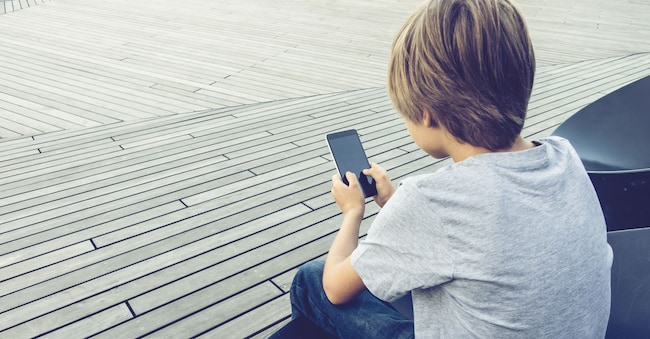
By the age of 11, for most children, a smartphone is already a personal possession. And from that point on, it tends to follow them everywhere: to study, look up answers, talk to others, find out information and, increasingly, even to chat with and seek advice from artificial intelligence. This is the picture that emerges from the new 2026 data from Social Warning’s Scientific Observatory on Digital Education – Movimento Etico Digitale Aps, based on data from around 20,000 pupils aged between 11 and 18 surveyed during the 2025/2026 school year.
Age at first use of the device
The first finding concerns the age at which children first get their own mobile phone: 7 out of 10 children already have a mobile phone by the age of 11. 42.5 per cent get one even before the age of 10, and almost all of them (92.8 per cent) have already got one before the age of 15. Raising the minimum age is not enough; we need to take action earlier.
The Bill
This gave rise to the Bill for a National Digital Citizenship Day, promoted by the Digital Ethics Movement and approved by the Senate on 8 January 2025: a call to embrace digital citizenship in an informed manner, at every age. The smartphone marks both the end and the start of the day. The reported time spent using it ranges from 3 to 6 hours a day, or even more, for 74.6 per cent of young people (with as many as 37.9 per cent spending over 5 hours). But their relationship with the device does not stop even when the day ends: more than 7 in 10 young people take it to bed at night and check it before they even get up. This behaviour is becoming difficult to break, to the extent that 52.2 per cent say they have tried to reduce the time spent online without fully succeeding, and 21.5 per cent feel anxious when they cannot use social media. Their doubts are no longer resolved by their parents, but by the internet and AI.
A comparison between relationships with parents and with mobile phones
Smartphones are having an impact on young people’s relationships with adults: when they have a query, 90 per cent of young people look for the answer online. Parents remain the go-to source for 58.6 per cent, but artificial intelligence is now almost on a par, at 57 per cent. AI has now become part of everyday life: requests mainly concern searching for information (70.9 per cent) and help with homework (55.5 per cent), but also personal advice (33.2 per cent) and conversation (14 per cent). National Digital Citizenship Day will provide an opportunity to bring these issues to the forefront of discussions between young people, families, schools and institutions. The event will take place on 22 October on Twitch and on 24 October in Venice.

Brand connect


Newsletter Scuola+
La newsletter premium dedicata al mondo della scuola con approfondimenti normativi, analisi e guide operative
Abbonati