
SMEs, the alternative finance market is growing again

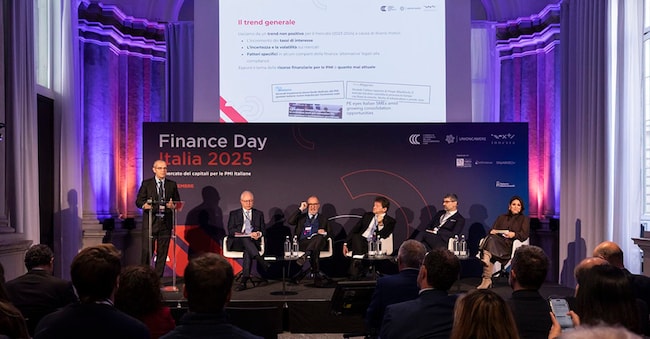
Alternative finance is growing again and confirming itself as an increasingly important part of the Italian production system. This is the image portrayed by the eighth edition of the Research Notebook "La Finanza Alternativa per le PMI in Italia", produced by the Politecnico di Milano with the support of Innexta, Corporate Financial Advisor of the Italian Chamber System, Unioncamere and the Chamber of Commerce of Milan Monza Brianza Lodi. The study, presented on the occasion of Finance Day Italia 2025, takes a snapshot of a recovering sector after two years marked by global uncertainties and market tensions.
The research, updated to 30 June 2025, analyses six key segments of alternative finance: private debt and minibonds, crowdfunding, invoice trading and fintech platforms, tokenization and crypto-asset, private equity and venture capital, and stock market listings. Despite a still complex environment, influenced by factors such as the increase in the cost of capital for SMEs from 2022, or international volatility, the market continues to attract investors and shows concrete signs of recovery, with positive prospects for 2026.
Private debt and minibonds are among the most dynamic sectors. After a subdued 2024, the sector posted its best performance since 2022. In 2024, Italian SMEs issued 114 minibonds for a total of EUR 592 million, down from EUR 710 million in 2023, but the real turnaround came in the first six months of 2025: 54 issues for a total of EUR 333 million raised, a significant leap compared to the EUR 202 million raised in the same period last year. Funding and investment volumes in the world of direct lending are also on the rise.
Venture capital is also growing: in the first half of 2025, investments amounted to 454 million euros distributed in 236 operations, according to data from AIFI, the Italian Association of Private Equity, Venture Capital and Private Debt. While growth capital shows a phase of weakness, with 30 deals worth 270 million, down from 56 deals worth 695 million euros in 2024, however, the return to growth in business angel activity stands out. According to IBAN, Italian Business Angel Network, private investments reached 74.5 million euros in 2024, almost double the previous year's figure, with strong interest in the ICT sector.
Fintech platforms are also growing steadily, particularly those dedicated to invoice assignment. In the first months of 2025, volumes are on the rise, confirming the strategic role of these instruments for SMEs in need of immediate liquidity. The picture for crowdfunding is more complex: over the last twelve months, crowdfunding has fallen by 14% to EUR 261 million from EUR 302 million in the previous period. In the first six months of 2025, around 120 million was raised, more than half of which was for real estate projects. The performance was affected by the entry into force of the European ECSP regulation and some disappointments on expected returns.
The listing market on Euronext Growth Milan also shows a slowdown. For the first time, the total number of listed companies has fallen, amounting to 205 as at 30 June 2025, while new listings are limited: only six in the first six months of the year, for a total funding of EUR 21 million, well below the EUR 72 million in the first half of 2024.
According to Danilo Maiocchi, Managing Director of Innexta, the priority now is to support companies' knowledge of financial instruments: "It is clear from the data how necessary it is to intensify the financial education of Italian entrepreneurs, especially small and medium-sized enterprises. The opportunities of complementary finance are still little known. This is a call that we intend to take very seriously, because the growth of our economic system depends on it."
Finance Day Italy offered businesses and professionals an up-to-date and comprehensive overview of the possibilities for accessing the capital market, highlighting how alternative finance is now a strategic and no longer a residual asset for the growth of Italian SMEs. Macroeconomic conditions remain challenging, but the instruments available today are more mature, more diversified and capable of supporting the competitiveness of the national productive fabric. The challenge for 2026 will be to transform this potential into concrete development.

