Interview

'SMEs and Artificial Intelligence, Italy crucial for Siemens'

Siemens Smart Infrastructure CEO Rebellius: 'Our turnover in Italy is 2 billion. You are in the top ten of the most important countries"
by Marco Alfieri

3' min read

3' min read

"Artificial Intelligence? Today's technologies already enable us to face tomorrow, but if we look ahead to 2050 many more new ones will come. So we should not spend too much time discussing the past, we should focus on their application in the present and the development of the future,' explains Matthias Rebellius, member of the Siemens managing board and global CEO of Smart Infrastructure.

The German multinational Siemens is the world's largest industrial software company and, within this colossus, the Smart Infrastructure business (21 billion revenue worldwide in fiscal year 2024 and a growth forecast of between 6-9% with a profit margin of 17-18% in 2025), is concerned with providing intelligent solutions for the efficient management of infrastructures and buildings, with the aim of promoting digitisation, energy efficiency and upgrading, environmental sustainability and ecological transition.

Loading...

Siemens Smart Infrastructure 'addresses these issues by combining the real and digital worlds, riding on the growth drivers from global mega-trends, including electrification, data, artificial intelligence and innovation,' Rebellius points out.


In concrete terms, what does it mean?

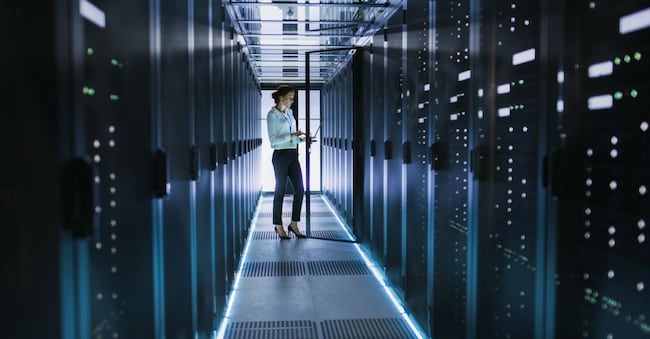
In concrete terms, we talk about building automation and control systems (lighting, air conditioning, energy optimisation, security, access). Integration of renewable energies into the electricity grid and microgrid management. Integration of electric mobility into the energy systems of buildings or cities. Electricity systems and automation solutions, e.g. for data centres, and technologies for smart electricity grids (sensors, management software, data analysis).

How important is Italy within the global Siemens galaxy? 

Siemens' turnover in Italy is around 2 billion for 2,900 employees. It is basically worth 2-3% of Siemens' global business, firmly in the top ten of the world's most important countries. The proof is that we have opened 5 Global Competence and R&S Centres in Milan, Bologna and Genoa and a Digital Experience Centre (DEX) in Piacenza. Italy remains a good place to invest: there are plenty of companies, political and institutional stability and good public-private cooperation.


Any examples?

In Milan, we worked with Coima on the smart building of Intesa Sanpaolo, Gioia 22. In Lodi, we renovated/optimised the historic production plant of L'Erbolario from an energy and automation point of view. With Unareti (A2A Group), we installed the first SF6-free gas-insulated medium-voltage switchboard in Italy, while in Rome, Areti (Acea Group), uses our technology to predict possible grid congestion and to request flexibility on medium- and low-voltage electricity grids. More generally...


More generally?

In the course of 2023, we also activated the Siemens Xcelerator open business platform in Italy to accelerate digital transformation. In this sense we see ourselves increasingly as an enabler of ecosystems, thanks also to global collaborations and partnerships with Nvidia, Amazon Web Services, Microsoft and Sony.

Doesn't the presence in Italy of such a fragmented ecosystem of SMEs make it complicated to adopt, for example, advanced AI systems?

On the contrary, it is a great opportunity. Siemens has the skills, technology and capabilities to create packages to simplify the work of even small companies. Our job is to take complexity away from our customers by incorporating Artificial Intelligence into their processes and thus achieve better results. In other words: we provide a modular product portfolio that incorporates AI and cybersecurity, so that security and cycle expertise are integrated and available to our partners.

How concerned are you about the international geopolitical situation, wars and tariffs?

Personally, I am concerned about wars and the impact on people. Of course all this uncertainty also has impacts in the business world that we have to deal with, but we are a very well diversified multinational group across China, Asia, Europe and the Americas. We have resources to mitigate these risks, we are adaptive. Of course we would like to have a different and more open economic framework, especially in the light of what are the global needs and urgencies, considering that the drivers for transformation do not change, contingencies aside.

What does it mean?

We need investment in energy transition, decarbonisation and sustainability. Our world is changing at an unprecedented speed and the planet cannot afford to miss this train.

Copyright reserved ©

Brand connect

Loading...

Newsletter

Notizie e approfondimenti sugli avvenimenti politici, economici e finanziari.

Iscriviti