Data from the Fondazione Nord Est for the A&T festival

SMEs are lagging behind in robotics

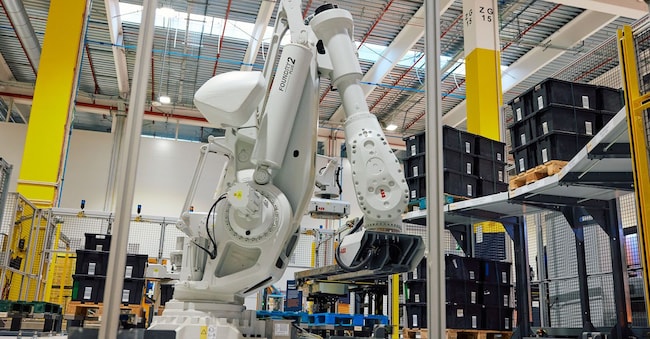
Adoption stands at 61 per cent amongst large firms, but only 15 per cent amongst smaller firms. AI is used in only 10 per cent of cases across production departments

3' min read

Translated by AI
Versione italiana

3' min read

Translated by AI
Versione italiana

We’re making progress with the basic methods. But we’re still lagging behind when it comes to the more sophisticated applications.

Research carried out by Fondazione Nord Est for the Automation & Testing exhibition in Vicenza highlights a phase of technological transformation in which SMEs remain caught in the middle. On the one hand, there is a high level of basic digitalisation — reaching an average of 80.2 per cent of manufacturing firms — whilst, on the other, there is a marked lag in the scale of adoption of robotics and artificial intelligence.

Loading...

Whilst industrial robots are already in use in almost two-thirds of large companies, this figure drops to just over 15 per cent amongst businesses with 10–49 employees. This gap is consistently reflected in the adoption of Artificial Intelligence, with a national uptake rate stuck at 8.4 per cent (compared with the EU average of 13.7 per cent): only 10.4 per cent of small businesses use it directly in their production departments, compared with 32 per cent of large industrial groups.

Closing this size gap is the aim of A&T Vicenza – Automation & Testing, an event organised by Italian Exhibition Group, the leading B2B platform for the manufacturing industry and SMEs seeking cutting-edge yet immediately operational technological solutions. The exhibition, which runs until 29 October, is hosting more than 300 exhibitors showcasing over 3,000 technologies.

The exhibition programme centres on six major, integrated thematic areas: automation and robotics, intralogistics, digital manufacturing, testing and metrology, control systems and additive manufacturing.

“For IEG,” explains Marco Cecchini, Group Exhibition Manager of IEG’s Industrial Division, “the development of A&T within our events portfolio represents a key strategic element in driving innovation and supporting the transition of the manufacturing industry. “With A&T Vicenza, we aim to bring together the most advanced technological solutions — starting with robotics and artificial intelligence — with the dynamism of a region rich in SMEs capable of innovating.”

“We have now,” explains Matteo Faggin, Director-General of the Smact Competence Centre, “reached a decisive moment in the development of artificial intelligence: with the evolution towards agent-based AI and physical AI, the technology is moving beyond the purely digital realm to interact directly with machinery, production lines and complex processes, and our businesses must be ready now. This is why SMACT coordinates the AI Forum section within A&T, a space where we showcase technologies in action and measurable results already achieved by local businesses. The real challenge today is not simply to use AI for personal productivity, but to integrate it structurally at the heart of business and manufacturing processes. The adoption process is complex and requires a systematic approach, but we cannot afford to hesitate: the return on investment is not measured solely in terms of operational efficiency; it is a matter of competitiveness and the very survival of the company in the market.”

“In the three-polar global landscape,” explains Alberto Baban, chairman of the A&T Industrial Scientific Committee and of Fondazione Nord Est, “Europe is lagging significantly behind the United States – which dominates the cloud and data centre sectors for data management – and China, which is already at the forefront of physical AI research. In this transition, time is a ruthless and decisive factor: either you are a leader or you are destined to be merely an implementer of technologies developed elsewhere. For our businesses, it is crucial to have an accurate picture of how the global market is being reshaped. The pace of change is so rapid that we cannot simply play catch-up: we need strategic vision, awareness and a precise understanding of these developments to steer manufacturing processes rather than merely being at their mercy.”

Data compiled by the Fondazione Nord Est highlight a wide range of applications for artificial intelligence. The most common uses in manufacturing companies relate to information and text extraction (72.7 per cent), speech transcription (37.8 per cent) and the generation of multimedia content (36.1 per cent), whilst predictive and operational applications, such as data analysis via deep learning (18.4 per cent), decision-making support (14 per cent) and autonomous machine movement (5.4 per cent), remain in the minority. Consequently, at the level of business processes, AI currently supports marketing and sales (28.7 per cent) and administration (21.1 per cent), whilst in production processes the scale gap is marked: only 10.4 per cent of small businesses use it in production, a figure that rises to 32 per cent in large industries.

Copyright reserved ©
Loading...

Brand connect

Loading...

Newsletter

Notizie e approfondimenti sugli avvenimenti politici, economici e finanziari.

Iscriviti