Energy

Snam: F2i, Edison and Retina vie for the biomethane contract

Retina is targeting the entire perimeter, F2i the Agri division, whilst Edison is targeting Forsu’s operations

3' min read

Translated by AI
Versione italiana

3' min read

Translated by AI
Versione italiana

The sale of Bioenerys, Snam’s biomethane subsidiary, is entering its final stages. According to market rumours, a further stage of the competitive process has taken place in recent weeks, resulting in the shortlisting of a select group of bidders eligible for the final phase.

The names reportedly under consideration are F2i, Edison and Retina Biometano – three operators with very different industrial and financial profiles and, above all, with strategies that differ in relation to Bioenerys’ scope of operations. It is precisely this differentiation that could prove decisive for the outcome of the tender: whilst some bidders appear to be interested only in one of the company’s two main divisions, another is reportedly aiming to acquire the entire business.

Loading...

According to rumours, F2i has in fact focused its interest on the Agri division, whilst Edison is said to have set its sights primarily on the Forsu division, which is involved in the recovery of the organic fraction of municipal solid waste. Retina Biometano, on the other hand, is reportedly interested in Bioenerys as a whole. This scenario therefore also opens up the possibility of a divestment involving a potential split between the Agri and Forsu businesses, rather than a sale of the company as a whole.

Based on the rumours that have circulated so far, the total value of the transaction could be in the region of 400–500 million euros, although the final figure will depend on the structure of the deal, the scope of the assets actually being sold and the valuations put forward by the various bidders.

The process is expected to get into full swing in September, when a further shortlisting of bids is anticipated, with the aim of finalising the deal by the end of the year. However, it cannot be ruled out that other operators may enter the fray.

The sale process actually began with a significantly wider pool of potential buyers. Before the summer, Snam’s chief executive, Agostino Scornajenchi, had reported that there had been around 40 expressions of interest in Bioenerys, whilst the number of non-binding offers was said to be around 20.

Snam, advised by financial advisers Rothschild and BNP Paribas, has therefore shortlisted nine parties for phase 2. The potential buyers initially identified included, in addition to F2i, Edison and Retina Biometano, Vesper Infrastructure Partners, an Italian fund specialising in infrastructure; Verdalia, a platform established in 2023 by Goldman Sachs Infrastructure Partners; the British fund Arcus Infrastructure Partners; the Italian fund Tages; the Spanish firm Plenium Partners; and the French multinational Veolia.

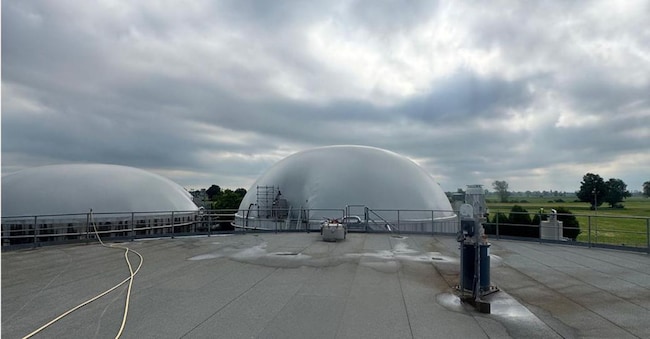
Bioenerys operates through two main divisions, Environment and Agri, and has a total of around forty plants. The Environment division focuses on the production of biomethane from organic waste, whilst Agri comprises plants fuelled by agricultural and livestock waste and waste from the agro-industrial sector. Around ten of the plants in the portfolio produce biomethane from organic waste, whilst the remainder consist of biogas plants fuelled by agricultural and agri-livestock feedstocks. It is precisely this dual nature of the portfolio that makes Bioenerys particularly attractive.

F2i’s interest in the Agri division would form part of the strategy of Italia’s leading industrial infrastructure operator: the Agri division could serve as a platform for F2i to consolidate the Italian agricultural biomethane market. Edison’s business rationale, on the other hand, would be more closely linked to the Forsu division, which stands for the organic fraction of municipal solid waste. This segment’s characteristics are particularly well aligned with the positioning of a major integrated energy operator.

The same applies to Retina Biometano, for which there had also been talk of a partnership with Sosteneo (part of the Generali Group) on this matter; the decision would make good business sense: keeping the two divisions together would enable the acquisition of a diversified platform, with exposure to both the production of biomethane from organic waste and that derived from agricultural and agro-industrial waste.

Copyright reserved ©

Brand connect

Loading...

Newsletter

Notizie e approfondimenti sugli avvenimenti politici, economici e finanziari.

Iscriviti