
Sanchez takes on the right: Spain heads for a snap election
Following the rejection of the housing plan, the Socialist Prime Minister has called a general election, capitalising on the street protests: ‘We need a progressive majority to achieve further social progress’

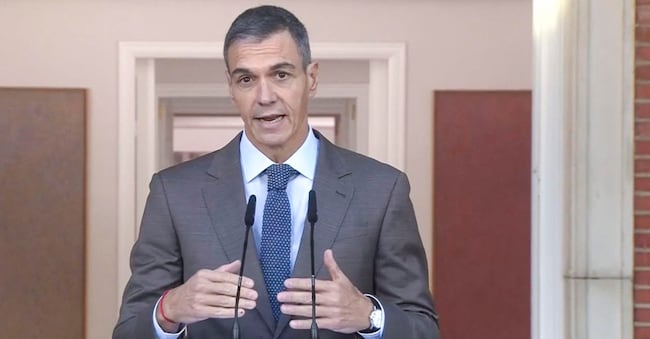
For Pedro Sánchez, this is the toughest challenge of his political career. The Spanish Prime Minister has decided to call a snap election for 29 November and thus take on the right. Once again, he appears to have no chance of surviving an election in which the polls show him at a significant disadvantage, but Sánchez has already proved he can hold his ground and bounce back when written off: this happened when he ousted the old guard of the Socialist Party who wanted to expel him from the party; but also in 2018 when, following an unprecedented motion of no confidence, he took over the reins of government from the conservative Mariano Rajoy, who had seemed invincible; and most recently in the 2023 elections, when he pulled off a coup even with his allies, returning to the Moncloa – albeit without securing a parliamentary majority – by bringing together the left and pro-independence movements from every region of Spain.
Sánchez’s challenge is once again against the right – against Alberto Núñez Feijóo’s People’s Party and against the xenophobic extremists of Vox, led by Santiago Abascal. It was they (along with the betrayal of Junts, the conservative separatists of Catalonia) who rejected the housing plan drawn up by the left-wing government in Parliament. And it is by capitalising on the street protests over the housing crisis that the Prime Minister – together with the left-wing parties Sumar and Podemos – will seek to make up the ground: the polls show a neck-and-neck race for the top spot between the Socialists and the People’s Party, both at around 30 per cent, but suggest that only a right-wing coalition stands a chance of securing a majority in Parliament.
“We must rally together and secure a much broader progressive majority in Parliament, which will enable us to overcome vested interests, achieve further social progress and continue to transform Spain,” Mr Sánchez said yesterday. For weeks now, demonstrations have been growing across Spain calling for more affordable housing: Mrs Maricarmen Abascal, aged 87, who was forcibly evicted from the flat in Madrid where she had lived for years, has become the symbol of a movement that is drawing in hundreds of thousands of people.
The left responded by pandering to public opinion with two measures that provided for a ban on evictions for vulnerable tenants until 2030; the automatic renewal of existing tenancy agreements; restrictions on short-term lettings; and very strict limits on the purchase of residential property by investors whom the government has described as ‘vulture funds’.
But in Parliament last Friday, the minority government’s housing plan was rejected. And now it is all too easy for Sánchez to capitalise on the protests by attacking the right. “If the left wants to regain ground, it must talk about housing, social rights and welfare. Only in this way will it be able to mobilise that one and a half million voters who voted for the Socialist Party in 2023 but who now say they no longer wish to do so or claim to be undecided,’ explains Cristina Monge, a political scientist at the Complutense University of Madrid. “If the debate,” she adds, “focuses on Ceuta, immigration, security or corruption, it will be very difficult for Sánchez to turn things round.”


