
How China aims to double its GDP per capita in ten years
The leitmotif of the next five-year plan will be the socialist modernisation of the country. GDP per capita at the end of 2024 was $13,400, to reach $30,000 in a decade's time a growth rate of 4.5 % over the five-year period will be needed
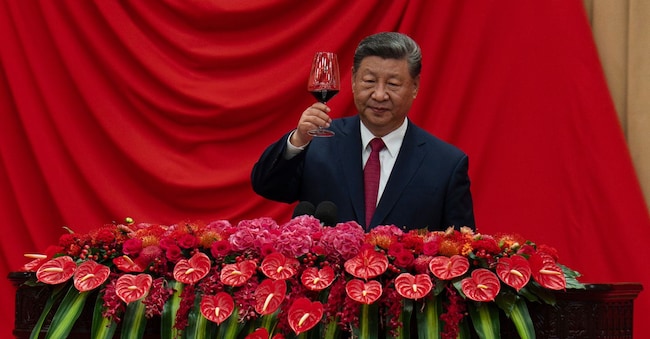
While China enjoys the remnants of a record-breaking Golden Week, the party's top leadership is preparing to work hard for the big Fourth Plenum. The Plenary of the 20th Central Committee of the Communist Party of China, scheduled for 20 to 23 October, is tasked with formulating opinions on the 2026-30 Five-Year Plan, the planning instrument that will be approved by the parliament.
The strategic leitmotif of the next plan, President Xi Jinping recalled in his last speech, is still and always the socialist modernisation of China, which will require hard work to achieve the doubling of per capita GDP, which stood at 13,400 at the end of 2024, and will have to rise to $30,000 in a decade, provided that it grows at the rate of 4.5% over the five-year period. For the record, the Central Committee's political bureau has filled a box left empty with the fall of Liu Jianchao, his place at the head of the party's international department will be taken by Liu Haixing, while other young leaders are growing, such as Liu Xiaotao, party chief in Suzhou, a crucial district for Italian companies, who has also been appointed number two of Jiangsu province.
These days, with the opening of the digital yuan hub in Shanghai and the creation of the Debt-Fighting Department, China has added new reforms that find their raison d'être in the expiring Plan - internationalisation of the renminbi and debt control of local governments.
But the two most obvious results produced were the integration of supply chains in Asia, Africa, and Latin America strengthened by agreements with customs agencies, to which is added the increase in quality production, especially in the technological field, theorised by the Made in China 2025 plan. Another key element introduced by the 14th Plan is the so-called dual circulation - openness to business and internal resilience - based on scientific and technological self-sufficiency, new urbanisation and green development, themes that will be reiterated in the 15th Plan.
All this has enabled the steady increase of high-tech goods in China's export basket to 18.2 per cent of total exports in 2024. Because China has learnt to fill the gaps in higher value segments, e.g. semiconductors, integrated circuits, telecommunication equipment and data processing machines, even under pressure from external elements.


