
So the country was built amid boom and bust
Guido Melis explores, in a well-documented work, the founding moments of Italian democracy by tracing its changes. The new chapter of Guido Crainz's work on Berlusconiism and the last years

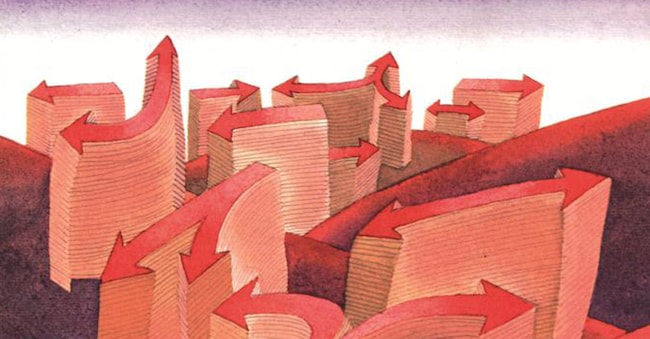
With the exit from Fascism and the war, Italia began a transformation of its physiognomy of exceptional proportions, projecting itself into a sort of 'race towards the future' of modernity, material and civil growth, and international integration, which accompanied, first, the 'revolutionary' break from monarchy to republic, and then, the consolidation of the democratic institutions established by the Constitution. A political-institutional system whose subjects - from the government to parliament, from the parties to the president of the Republic, from local branches to the judiciary, from public bodies to intermediate bodies - had to measure themselves against the impressive change in society.
In this imposing and well-documented work of his, Guido Melis penetrates with rare originality and interpretative certainty the mechanisms put in place by this system at all its various junctures. Beginning, of course, with the founding moment of the Constituent Assembly, followed step by step by the author in an activity aimed at composing the diversity of the components, all certain of having to arrive at a 'compromise' charter between the different party visions. It was then with the eight governments presided over by De Gasperi that the foundations of the reconstruction were laid, finding in the statesman from Trentino the point of equilibrium between the existing anxieties for renewal and the atavistic conservative permanence, due to his ability to read - a true 'man in history' - the deepest dynamics of society, beyond ideological conditioning.
De Gasperi's death marked the start of a confused transition, while the country was entering a phase of real boom, certainly not led by politics, which in just a few years led it to know a consumerist wealth and a productive dimension of international importance, such as to profoundly change the old lifestyles. And if the state failed to give such an impulse, it was instead - the author notes - the separate sphere of public bodies, the IRI above all, that made a significant contribution to such an 'explosion' of society's autonomous forces, with their 'third way' of entrepreneurial management aimed at the public interest, without of course being able to make up for the task of 'government' capable of avoiding imbalances.
The end of the 1950s witnessed an acceleration of new dynamics between the parties, with the approach of the DC and the PSI to the goal of a project that would define a coherent planning for the development underway. A path full of obstacles, which Melis accurately describes by following the protagonists at the turn of the 1960s, up to the dramatic events of the Tambroni government and the subsequent positive outcome of the beginning of the centre-left.
The hoped-for social, labour and rights reform hypothesis was realised amidst countless delays and against the backdrop of obscure subversive plots, leaving the following decade the chance to materialise, giving rise to Italy's precarious welfare system, incapable of satisfying large segments of society; while a 'retreating' State was increasingly dominated by party elites lacking any real planning. Defined with felicitous synthesis as 'the winter of our discontent', these years unfolded amid disappointed hopes of sectors and social subjects eager for real progress, a deep economic crisis, and outbreaks of violence leading to terrorism. The DC and PCI attempted to respond by relying on unprecedented understandings of 'national solidarity', through a 'historic' compromise, which failed in the tragedy of the assassination of Moro, its most authoritative 'weaver'.

