
How NATO came to the historic agreement to spend 5% of GDP on defence
The 32 countries of the Atlantic Alliance have decided to more than double their military spending by 2035. Trump threatens double tariffs for Spain if it does not pay. Russia called 'long-term threat'
by our correspondent Beda Romano
 Aggiungi Il Sole 24 Ore
ai preferiti su Google
3' min read
3' min read
THE Hague - After much back-and-forth negotiating and some last-minute adjustments, at the American request the 32 countries of the Atlantic Alliance agreed to increase military spending from 2 to 5 per cent of gross domestic product by 2035. In a communiqué, Russia was described as 'a long-term threat'. From Moscow, Dmitry Medvedev, President Vladimir Putin's right-hand man, responded that the EU is now 'an enemy' of Russia.
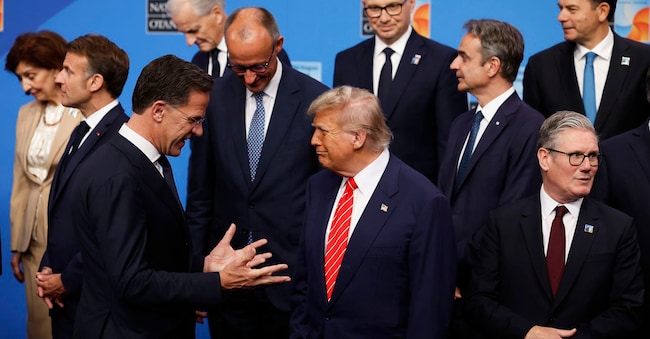
The two-day summit in The Hague ended yesterday without (excessive) disruption. On the other hand, NATO Secretary General Mark Rutte had gone to great lengths to blandish the US president in order to avoid the tailspin of an unpredictable Donald Trump. Yesterday again, praising him for the recent bombing of Iran, the former Dutch prime minister called the current occupant of the White House 'a man of strength, a man of peace'.
The agreement on increased spending (3.5% on defence, 1.5% on infrastructure) came despite the doubts of some countries, including Spain. Not for nothing does the communiqué read 'the allies commit', instead of 'we the allies commit', as was imagined at the start of the diplomatic negotiations. The target is to be reached by 2035, and no longer 2030-2032, as previously planned. Governments must present an annual plan showing a 'credible' path to the target.
Speaking of Spain, at a press conference here in The Hague yesterday, President Trump called the country 'terrible', accusing it of wanting to snatch 'a free ride' (free ride, in English). "We are negotiating a trade agreement with Spain. We're going to charge you a double price. I'm talking seriously." It was not clear last night whether the threat was concrete, and whether the president was referring to the (painful) ongoing trade negotiations with Brussels.
In coaxing the US president, Secretary Rutte called him 'daddy' during a press point. Asked whether he considered European countries to be 'children', Donald Trump explained that they 'need American help'. On his commitment to Article 5 of the Washington Treaty, which provides for mutual assistance in the event of war, he said of the European leaders: 'They have shown great respect for me. We are here to protect their country'.


