Salone del Mobile

So technology meets design in the kitchen

Connected appliances, new functions, innovative shapes and geometries on show in Milan. For cult objects costing up to 150,000 euros.

by Luca Orlando

4' min read

4' min read

The union has existed for some time, although visiting the stands at the Salone del Mobile in Milan, it is evident how in the kitchen sector, technological and design directions are increasingly intertwined, interdependent and 'necessary'.

The Eurocucina show, now in its 24th edition, takes place in conjunction with the FTK, Technology for the Kitchen, bringing together more than 100 entrepreneurs in a 24,000 square metre space.
Loading...

Le novità

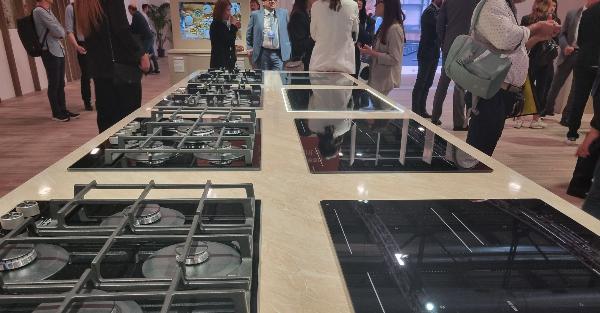
Accanto a quelli tradizionali, si diffondono con sempre maggior forza i piani cottura a induzione

The new possibilities offered by technology are evident in company presentations and one of the strands of development is clearly that of 'connecting' objects. Household appliances today can be networked and this not only allows direct programming of their operation but also enables certain maintenance activities to be carried out remotely. In some cases remote diagnosis allows the problem to be identified and solved via software, thus avoiding the need to send a technician to the home.

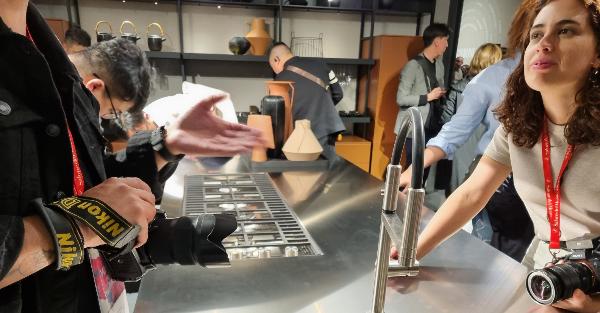
A strong development trend is that of induction hobs, where improvements concern design but also functionality, such as the partial ignition of the zones on which a pan rests, so as to avoid unnecessary waste of energy. A course, that of hobs, that Elica is strongly following, for example, diversifying its business beyond extractor hoods. Extractor hoods, the group's traditional business, with 2,600 employees and 80% of its revenues from exports, are in this case still present but integrated in the hob, thus sucking downwards. Another hi-tech foray is to integrate induction hob, extractor hood and oven into a single object. "We have reorganised our business and diversified our product lines extensively, also working with great designers and architects," explains Elica CEO Giulio Cocci, "and we are ready to take advantage of the new demand that is arriving. To launch this message the Salone del Mobile is fundamental, we want to be visible and 'loud' in our communication".
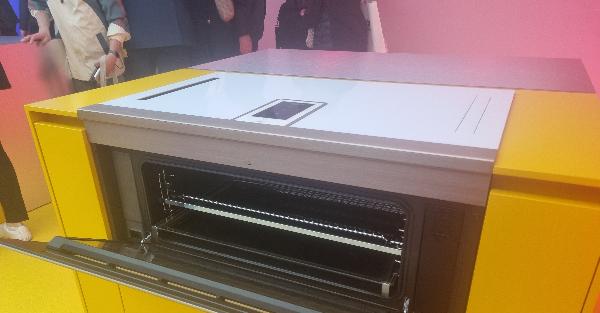
Elica e l’hi-tech: induzione, cappa integrata e forno

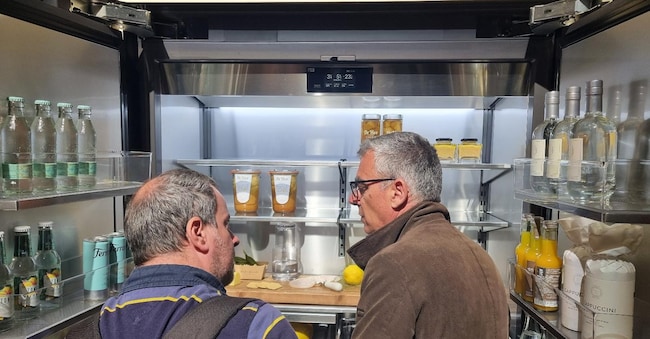
Wandering around the stands, one sees fridges of "monstrous" dimensions, even of over 1000 litres, programmable instruments, and ovens capable of recognising the dish inserted, so as to programme the most suitable cooking. Smeg, the historic manufacturer of household appliances (just under a billion in revenues), is also continuing along this technological path, launching new lines here at the Show, one of which was designed by Stefano Boeri.
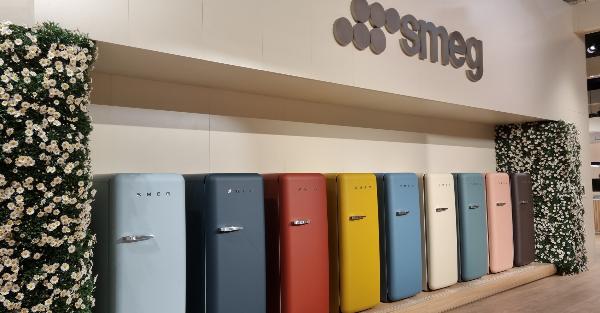
Colori e tecnologia

Lo stand di Smeg al Salone del Mobile

"We are continuing with our philosophy," explains sales director Guido Bertelli, "and I must say that despite everything, even in the presence of difficult markets, our growth will continue in 2024. The Salone del Mobile is fundamental in our communication strategy and is the ideal event to promote Made in Italy products in general, which we want to continue to represent strongly'.

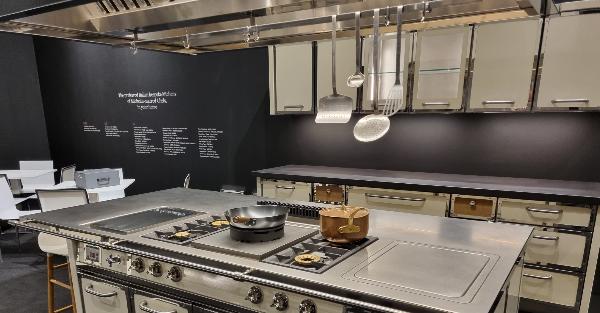
Technology and design are also integrated in more traditional products, such as the hobs of Trentino-based De Manincor, a manufacturer of customised systems now in its fifth entrepreneurial generation, 15 million in revenues, with a strong emphasis on the professional world, kitchens also chosen by dozens of starred chefs in Italy and beyond.

Le cucine degli chef stellati

Un piano cottura della trentina De Manincor

Objects costing tens of thousands of euros, in some cases gas-powered, in others induction models, where the peculiarity is that they have the connection systems (e.g. the electrical panel or gas connections) segregated in a single ad hoc space, easily accessible for maintenance and various interventions.

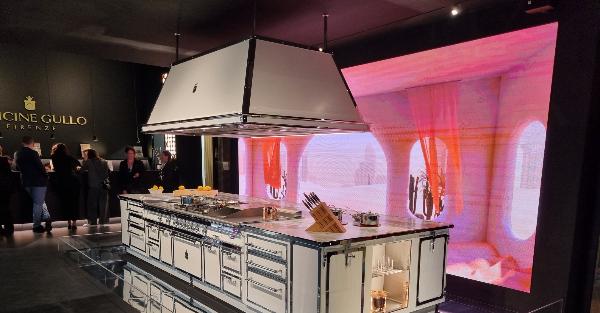
Custom objects that are also the core business of Florentine Officine Gullo, which makes 'cult' cooking islands that can cost as much as 150,000 euro. Steel objects (with gold finishes too, on request) that end up in the homes of global VIPs, with clients such as Tommy Hilfigher, Andrea Bocelli or Jessica Chastain.

L’isola cottura dei vip

Oggetti anche da 150mila euro per la toscana Officine Gullo

"Each of these objects,' explains CEO Pietro Gullo, 'requires months of processing and is made to a specific design for each customer. Exports are the preponderant part of our business and I must say that in our sector, Made in Italy continues to be a relevant strong point, as we can also see from the throng of foreign buyers we see here in Milan these days'.

Incursions into technology are expanding, as demonstrated by the case of the Piedmontese Gessi group, which is able to produce an electronic mixer capable of instantly dispensing water at different temperatures, with different degrees of 'fizz' and also capable of making espresso coffee.

Another relevant trend in the sector is sustainability, with Italian companies committed to changing processes and products in this direction.

Lo stand di Scavolini

"This has been a mantra for us for many years," explains Scavolini CEO Fabiana Scavolini, "and we have been certified in this sense since 2004. The idea is to change products and processes towards greater circularity, with important results: 96% of what we do can be reused within the production cycle while at the same time we are working on introducing appliances that progressively require less energy consumption".

Scavolini va al rilancio sulla sostenibilità

Veneta Cucine al Salone

"We bring here the result of two years' work," says Denise Archiutti, board member of Veneta Cucine, "with new products and new finishes. Materials are changing, and not only for aesthetic reasons. In fact, the focus is on looking at the entire life cycle to maximise reuse".


Copyright reserved ©

Brand connect

Loading...

Newsletter

Notizie e approfondimenti sugli avvenimenti politici, economici e finanziari.

Iscriviti