
Social media banned for under-14s: bipartisan bill in Parliament: ‘Ready to pass it straight away’
The government and the opposition agree on the need to take action on children’s digital safety. Various proposals are on the table, but the most likely solution appears to be the bipartisan Mennuni-Madia bill, which has been stalled in the Senate since last June

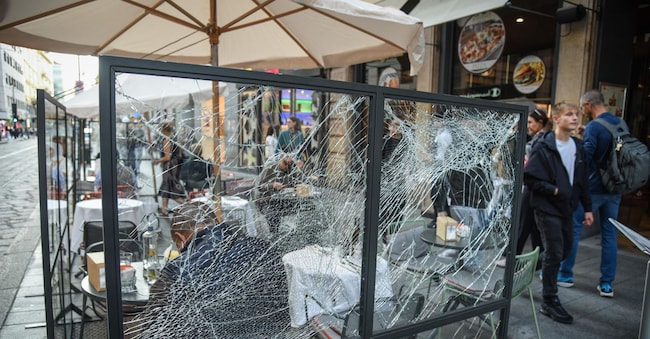
Following a weekend of destruction and looting in Milan, the issue of regulating the relationship between minors and the web has returned to the centre of the debate amongst political parties. The government and the opposition appear to agree on the need for urgent action on digital safety for young people, but there is still no agreement that can reconcile the demands of the various parties. There are numerous proposals on the table and, at present, the most plausible solution is the bipartisan Mennuni-Madia bill, tabled in 2024 at Palazzo Madama. The government’s recent openness to tighter regulations in this area could speed up the process.
The formation of the government
The rallies that set Milan alight last weekend have once again turned the spotlight on the uncontrolled use of social media by minors: the gatherings in the city’s squares had, in fact, also been organised online, and the newly formed 17 October Movement announced a permanent protest scheduled for every Saturday via its Instagram page.
This is not, however, the first time that politicians have raised the issue of regulating social media platforms, partly in the wake of recent events in the news. In this instance, however, the call comes directly from Prime Minister Giorgia Meloni: speaking to *La Repubblica*, the Prime Minister stated that she is not opposed to banning the use of social media by children under the age of 14.
The proposals on the table
To date, there are already numerous bills on this subject in both houses of Parliament. These are initiatives put forward by various parties, including Fratelli d’Italia. “Given the role played by social media, particularly in relation to minors, and in light of those who were responsible for the deplorable acts of destruction and violence during last week’s demonstration, it is increasingly necessary to take steps to protect minors in the digital sphere,” stresses Fdi Senator Lavinia Mennuni, the lead signatory of the cross-party bill, which has been stalled since last June. “I believe it is important,” continues Mennuni, “that we act on Prime Minister Giorgia Meloni’s call for Parliament to resume the work carried out so far in the Senate to pass the bill.” Meanwhile, the opposition is calling for the legislative process to be unblocked.
It cannot be ruled out, moreover, that the matter will be settled by means of an amendment to the security decree adopted on Tuesday 20 October by the Council of Ministers, so that the new legislation can come into force more quickly. “Casa Riformista,” Marianna Madia announced, “will immediately table an amendment to the latest security decree and ask all the other parliamentary groups to sign it. We will then see how willing President Meloni really is.”

