
Social responsibility, how companies can attract GenZ
Young people are looking for job opportunities in ethical and sustainable companies that focus on people and the environment. A pact between institutions, companies and the Third Sector is needed

3' min read
3' min read
Not just any job. And in first place is no longer the salary. The young people - the 'GenZ' girls and boys - are asking companies for something more: they are asking them to guarantee a sustainable future for them and for the planet in which they will have to live.
People at the centre
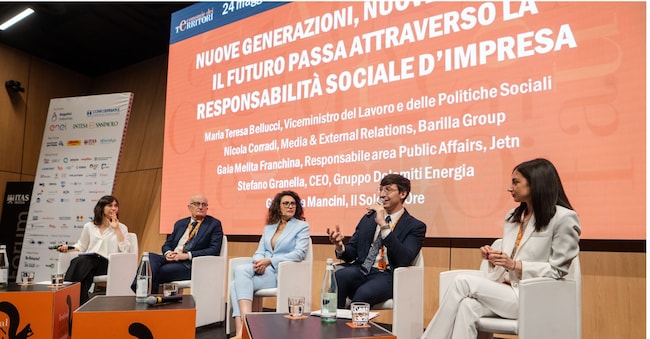
.Thus, ethical companies that put people and the environment at the centre of their policies before profit. "It is not an impossible request: several studies show that companies that have adopted corporate welfare measures and invested in environmental and social sustainability have improved their performance," says Gaia Melita Franchina, head of public affairs at Jetn (Junior Enterprise Trento), the association that organised the panel entitled 'New generations, new companies: the future passes through social responsibility' at the Trento Festival of Economics.
Attention to corporate social responsibility has grown rapidly in our country: according to the CSR Report of the Socialis Observatory, 96% of Italian companies with more than 80 employees made investments in CSR in 2021, up from 90% in 2019, with an average investment of EUR 282,000, an increase of 17% compared to the pre-Covid period, totalling more than EUR 2 billion.
An attractiveness factor
.These are not huge figures, it is true, but they indicate a trend and, above all, an awareness: that the urgency of these issues does not allow for further delays, that investing in sustainability is worthwhile and that it is a trump card to play in order to attract and retain young people in companies, counteracting that demographic decline and brain drain from the peripheral areas of the country - but also from the country itself - that now seems unstoppable.
"Up until a few years ago, corporate social responsibility focused almost exclusively on the environmental aspect, sometimes with some distortions, especially at the European level, but today there is finally more attention being paid to welfare and personal issues, with the aim of creating authentically anthropocentric companies," said Deputy Minister of Labour and Social Policies Maria Teresa Bellucci, speaking at the panel. However, the help of the institutions is needed: 'Synergy and collaboration between three actors is fundamental: institutions, enterprises and the Third Sector,' Bellucci added.

