
Sodium batteries, how Comau focuses on the production line
The aim is to create a scalable platform for quasi-solid cells, capable of reducing costs and manufacturing time

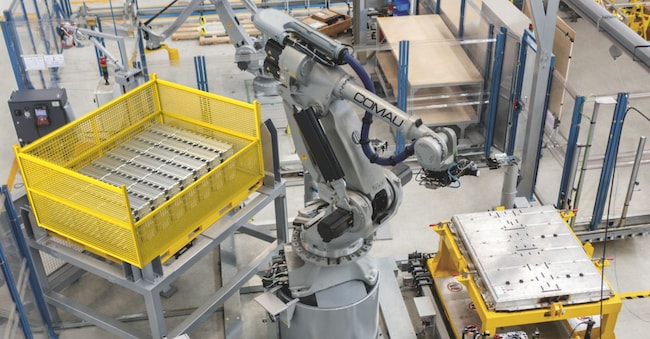
Automated production lines, research projects, a dry room and investments in start-ups. Comau is focusing on new generation batteries such as sodium batteries with an innovation plan that includes many actions.
The Turin-based company has joined the European Sprint project dedicated to the development of next-generation sodium-ion battery technologies. The aim is to create a scalable production platform for quasi-solid cells, capable of reducing manufacturing costs and times, in view of the transition to more sustainable energy systems.
As part of the project, the Global Competence Centre in Grugliasco will play a central role in designing industrial processes and evaluating the most suitable technical solutions for mass production. "Innovation projects such as Sprint," explains Daniela Fontana, Battery Innovation Manager at Comau, "respond to the company's strategy of developing technologies for the production of next-generation batteries not only in the field of mobility but also in energy storage from renewable sources.
Comau is already engaged in the design of automated sodium battery lines as part of a collaboration with LiNa Energy, a UK company active in sodium-metal-chloride technology. Through a simultaneous engineering model, the Comau team has defined an automated process that enables the scalable production of solid-state cells, improving industrial efficiency and reliability.
The Sprint project is part of a broader strategy that sees Comau playing a leading role in battery innovation. In 2025, the company inaugurated a Dry Room within the Grugliasco plant, a humidity-controlled laboratory designed to test machines and processes for the production of lithium and post-lithium cells. The facility, which cost around €1 million, is also open to universities and research centres and represents one of the most advanced infrastructures in Europe for testing solid-state technologies.

