
Soft and green tourism in the Alps, Legambiente awards 19 green and 9 black flags
Local realities that successfully invest in agriculture and socio-cultural projects using environmental sustainability as a driver are rewarded
3' min read
3' min read
In 2025 there will be 19Green flags from Legambiente flying over the Alpine arc, for realities that successfully invest in gentle tourism, agriculture and socio-cultural projects using environmental sustainability as a driving force. Piedmont and Friuli-Venezia Giulia, tied, are the regions with the most green flags, four each, followed by Lombardy and Veneto with 3 flags each, Trentino 2, Alto Adige 1, Valle d'Aosta 1, and Liguria 1.
On the other hand, 9 black flags have been awarded to operations in the Alps that have an unsustainable approach to the mountains: 8 in Italy and one across the Alps, in Austria. The Friuli-Venezia Giulia is the region with the most black flags (3), followed by Piedmont, Valle d'Aosta, Trentino, South Tyrol and Veneto, all with one black flag respectively. In Austria, a black flag was awarded to the Austrian ski industry for its 'dogged efforts to expand ski areas in the Tyrol by exploiting the last remaining glacial areas in the Eastern Alps'.
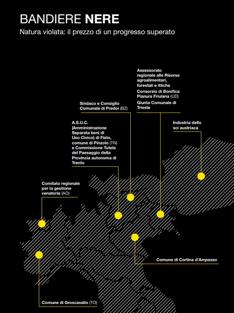
It is Legambiente that today, 3 May, on the occasion of the 'IX National Green Flags Summit', awards in Orta San Giulio, in the province of Novara, those stories that have at their centre three key areas - gentle tourism, practices linked to agriculture, forestry and pastoralism, and socio-cultural projects - and that tell of "the great revolution taking place in the Alpine arc". Here the watchword is not only to make the area known and attract tourists, but also to encourage a return to these lands by strengthening local communities.
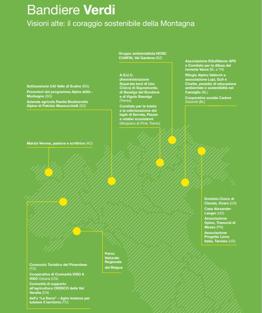
Green flags
.The 19 Green Flags 2025 include, for example, the heart of the small village of Ostana, in the province of Cuneo, where the Cooperativa di Comunità Viso a Viso, set up in 2020, carries out a series of services and activities focused on wellness, health, community welfare and sustainable tourism that have allowed the small Piedmontese village to be reborn, to the story of the shepherdess and writer Marzia Verona who decided to live at high altitude while carrying on her pastoral activity, to the Raetia Alpine Biodiversity Farm (So), which follows and adopts the principles of agroecology by growing vegetables, native beans and ancient potatoes of Alpine biodiversity; and the 'Progetto Lince Italia' association, Tarvisio, which is committed to the study of the lynx as an endangered species; the Vallorch Alpine Refuge run by the 'Lupi, Gufi e Civette' association, which stands out as a centre for nature education and sustainable tourism. And then there is the CAI sub-section Valle di Scalve (BG), which promotes La Via Decia, the ironwood path in the Lombardy Alps, to name but a few.
"Do not leave local communities alone"
."Our Peninsula," says Giorgio Zampetti, director general of Legambiente, "preserves a unique and strategic environmental heritage with respect to the climate crisis underway, such as that of mountain areas, places of extraordinary naturalistic value, today in great difficulty due to the lack of services, the effects of the changing climate, and the depopulation of housing. The green flags that we award each year to the best Alpine experiences tell us how there is a concrete response to all this in these areas. Experiences that focus on innovation and environmental sustainability represent a valuable driver of development for mountain territories. On this path, however, it is important not to leave local communities alone. This is why we ask the institutions and regional and national politics to do their part by supporting mountain municipalities through interventions and regulations capable of promoting a shared vision and coordinated action also on a supra-regional scale'.

