
Solar energy is starting to make a difference in Africa
As many as 20 countries broke all records for solar panel imports from China, up 60 per cent

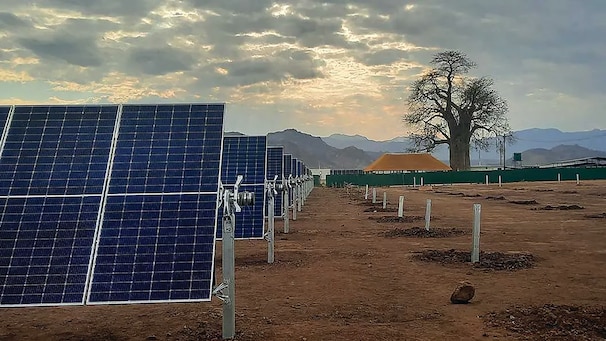
A nascent solar revolution is taking hold in Africa's largest oil-producing nation, Nigeria, where even the presidential residence relies on the sun for a steady supply of energy. On the edge of the economic centre of Lagos, two hectares of solar panels power Nigeria's power quarters, as part of a World Bank-backed project to tackle Africa's age-old problem of lack of access to a stable source of electricity. Despite being oil-rich, the country suffers from severe infrastructural deficiencies, including an unstable electricity grid, which prevents it from turning its fossil resources into a reliable source of energy. This mini-grid composed of solar panels and batteries, on the other hand, can also operate autonomously to power buildings and offices used by 7,000 people, and is one of many similar systems mushrooming in various African countries. The implementation of solar energy follows a pattern common to the entire 'sun belt' of the world, where low-cost Chinese panels have favoured a surge in installations.
A 4% share globally
The African solar boom was the focus of the Africa Climate Summit, which preceded the UN global Cop30, opening next week in Belém, Brazil. Solar energy is not new to Africa. For more than two decades it has helped improve the lives of Africans, in rural schools and hospitals, street lighting, water pumping, mini-grids and more. But until now, the Dark Continent, which boasts the world's greatest potential for solar energy, has remained a tail-end compared to the exponential growth of this renewable technology already seen in Asia and Europe. Only four per cent of last year's global solar production was generated in Africa, and according to the International Energy Agency, Belgium had more installed solar capacity than the whole of Africa in 2023. Only South Africa and Egypt today have solar capacity that can be measured in gigawatts, rather than megawatts.
Boom of imports from China
This, however, may be about to change: in the past year, as many as 20 countries have broken all records for solar panel imports from China, which have increased by 60 per cent from 9 gigawatts in 2024 to 15 gigawatts of capacity in the first half of 2025 alone, with imports to countries outside South Africa tripling. 'There is a glimmer of hope,' argued Richard Muyungi, Tanzania's climate envoy and advisor to the president, at the Africa Climate Summit.
Among the most striking examples is that of solar panels imported into Sierra Leone in the last 12 months: if installed, they would generate electricity equal to 61% of the total declared electricity production in 2023, contributing decisively to the supply of electricity to the population. Central among the benefits cited at the summit is that of cost savings: solar panel imports will reduce fuel imports, and savings from the elimination of diesel can pay back the cost of a solar panel within six months in Nigeria and even less in other countries. In nine of the top ten importers of solar panels, the value of refined oil imports in one year far exceeds the value of solar panel imports.
Energy is an urgent necessity
The shortages, however, still remain enormous. About 600 million people in Africa have no access to electricity and about one billion have only firewood or polluting fuels for cooking. Women and girls are the most affected by the fumes, which often prove lethal. "Renewable energy is not only Africa's greatest opportunity, it is also an urgent need. Solar facilitates everything from irrigation and food preservation to disaster warning systems, healthcare and livelihoods,' says Melaku Yirga, regional director for Africa at the aid organisation Mercy Corps. Despite the recent increase in investment in solar energy, there is still a lack of decisive public sector intervention.

