
Sonny Olumati: an obstacle course to obtain citizenship also for foreigners born in Italy
For the Nigerian-born Roman, dancer, choreographer, writer and human rights activist, 'there are many sons and daughters of Italy whom we still call foreigners'.

5' min read
Key points
5' min read
'There are many sons and daughters of Italy whom we still call foreigners'. This is said by Sonny Olumati, a Roman of Nigerian origin, who still does not have Italian citizenship. This despite the fact that he is a talented dancer and choreographer, writer and human rights activist, also known to the general public for having participated in many television programmes, such as 'L'isola dei Famosi' in 2024. He has also worked with international stars such as Rihanna. President with Riccardo Magi and Deepika Salhan of the committee for the referendum on citizenship, which envisages halving from ten to five the years of legal residence in Italy required for non-EU citizens to be able to apply for Italian citizenship. For him, 39 years old in a few days, the obstacles to obtaining citizenship have lasted for years.
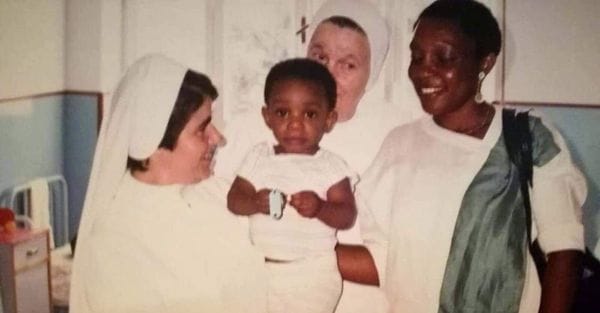
Sonny was born at the Gemelli polyclinic and lives at the nuns' boarding school
'My story is common to more than two and a half million people in Italy, who are born in Italy, grow up in Italy, but have parents from 200 and more countries around the world'. Sonny was born in Rome, at the Policlinico Gemelli, grew up in South Rome and then moved to North Rome. He works, participates in international competitions under the colours of Italy. "When I was four and a half months old, my parents divorced and I spent four years, then until almost my fifth birthday in one of those places that in those days were called a boarding school. Today it would be called a family home, run by church personnel. So there were nuns, whom I love dearly, and we were 71 children'. Then Sonny, an almost unique case at the time, was given as a probationary foster child to a divorced lady: "Today it would be called beta foster care," he says. Then he was back with his mum when he was seven.
College stay to be documented
.Mum made an initial application for citizenship for him when he was 14 years old, but the time it took for Mum to acquire citizenship exceeded Sonny's 18th birthday. At this point he has to apply as an adult. On his own. "My stay in boarding school is one of the first things I was asked about when I applied for citizenship at 18. From the age of 18 to 19, according to current law, we have a twelve-month window of time to gather all the documents and submit them to the appropriate offices'. Sonny did it on time. "But when I went to inquire about the status of my file, they told me about some shortcomings, primarily that I did not have continuous residence. So I had to go to the nuns, get a certification, only to find out that self-certification was enough. I was also asked for documents from my parents, my father, my mother and documents such as a criminal record, which must be requested directly in my parents' country of birth. In my case for my criminal record, the embassy replied: 'But who is this person? Who is this Sampson Olumati. He has never lived in Nigeria'.
A series of obstacles to be removed
.All impediments that led to delays: 'This made the time jump to over 19 years. Then, for example, before 2016, I also had the file that was lost for a few years. In 2021 I learned that in 2016 the decree had been issued in my name, but I had never been notified. So we had a lot of obstacles that my lawyer is now trying to resolve'. Yet Sonny is from Rome, works. and is an advocate for the rights of second-generation youth.
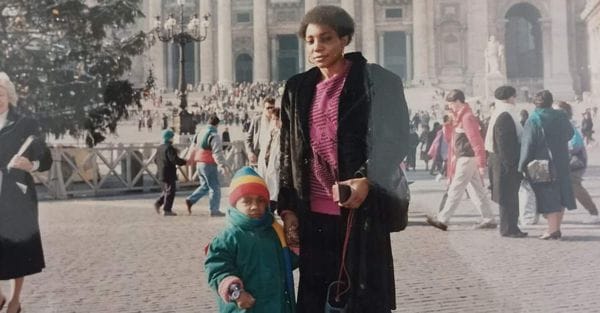
The problem of school travel
."The problem that is most often brought to our attention," Sonny explains, "is that of school trips, since our community consists of almost two and a half million girls and boys, mostly of school age. We are very often asked for help because to do cultural exchanges or simply the school trip there are always problems. If the trip has perhaps been decided at the last minute, if you are three months away from visiting a European country, three months is not enough if you have a residence permit, especially if it is being renewed at the time. The second instance is income, because after the age of 18 people often find themselves with income gaps due to youth unemployment. And those who are like us at the bottom of this society suffer a lot. The third thing is the continuity of residence, because most people have holes in their residence because maybe they moved to a different flat with their parents or for a period of time their parents, having to change jobs, could not renew their residence permit, so legal residence at that time cannot be proven, as legal residence must be proven for ten years'.


