Companies

Heading for South America: ‘Made in Italy’ steps up the pace for a commercial breakthrough

In September, a ‘System’ mission visited Buenos Aires and São Paulo. The aim: to make full use of the opportunities offered by the EU–Mercosur free trade agreement. Matteo Zoppas (President of the ICE Agency): “The ‘System Paese’ approach is a good one.”

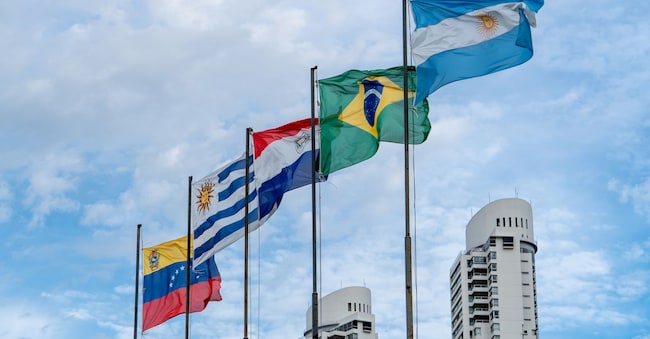
 (AdobeStock)

5' min read

Translated by AI
Versione italiana

5' min read

Translated by AI
Versione italiana

In September, Italia – a country that knows how to work as a cohesive whole – set its sights on South America, a region set to open up enormous opportunities for Italian businesses, following the free trade agreement between the EU and Mercosur, which is now in the process of being implemented. The large-scale business mission selected two key cities – metropolises and nerve centres of economic life: Buenos Aires and São Paulo.

Organised by Confindustria and the ICE Agency, and coordinated by the Ministry of Foreign Affairs and International Cooperation and the Ministry of Enterprise and Made in Italy, the initiative saw the participation of the leading organisations representing commercial diplomacy and the business world: in addition to the aforementioned Confindustria and ICE, ABI, CDP, SACE, SIMEST and the network of Chambers of Commerce abroad. The bar has been set high: to tap into the considerable growth potential of trade with the South American continent, a crucial milestone on the path that ‘Made in Italy’ is taking towards the strategic target of €700 billion in total exports.

Loading...

The new and decisive contextual factor that provided the backdrop to the mission is, in fact, the regulatory framework provided by the EU–Mercosur Free Trade Agreement. The agreement provides for the gradual elimination of up to 91 per cent of tariffs on European goods – with an estimated saving of over €4 billion a year for EU businesses – and the reduction of customs duties on key sectors such as the automotive, engineering and chemical industries. Another crucial development is the protection afforded to 57 Italian geographical indications for food products against the phenomenon of Italian Sounding. For Italia, the agreement is expected to generate an increase in exports estimated at around 3.5 billion by 2036.


Argentina (7 and 8 September). The first leg, in Buenos Aires, produced impressive figures: 83 Italian companies took part in 1,371 B2B meetings with 317 local counterparts. Argentina, even setting aside its historic cultural ties, is a crucial economic partner. As the third-largest economy in Latin America and the second-largest in South America, it is benefiting from an upward macroeconomic trend: in 2025, the economy recorded real growth of 4.4 per cent, whilst GDP per capita reached US$14,355. Official estimates from the International Monetary Fund indicate GDP growth of 3.5 per cent for 2026, with prospects for 2027 reaching 4 per cent. In addition to the macroeconomic data, there is a regulatory framework that is proving to be a key driver for ‘Made in Italy’ products in Argentina: this is the Rigi (Régimen de Incentivo para Grandes Inversiones, or Incentive Scheme for Major Investments), approved in 2024. This regulatory framework, formed part of the Ley Bases – the ambitious economic reform plan championed by the current government – aims to provide fiscal, legal and customs certainty for major investment projects.

Thanks to Rigi – notes the ICE Agency – investments totalling over 27 billion dollars had already been approved by May 2026. This context opens up significant opportunities for Italian businesses, particularly for high-tech SMEs. For example, in the supply chain sector and in machinery for the Vaca Muerta energy hub. But there is also significant potential in water management for lithium and copper extraction, in the agri-food sector and in the pharmaceutical industry.

It was against this backdrop that the Memorandum of Understanding was signed between the ICE Agency and its counterpart organisation, PromArgentina, an agreement aimed at facilitating industrial partnerships and bilateral investment flows.  The areas of cooperation set out in the document are: the exchange of economic and commercial information and the sharing of knowledge and best practice; the mutual promotion of investment; support for the internationalisation of businesses; the organisation of seminars, workshops, conferences, events and B2B meetings; the promotion of trade fairs and exhibitions in the respective countries; and the identification and dissemination of opportunities for international trade, as well as industrial, commercial and technological cooperation.

Brazil (8 and 9 September). The second leg of the tour saw the delegation travel to São Paulo, the beating heart of the Brazilian economy and the main target market for ‘Made in Italy’ products in the region. Brazil is a key entry ‘hub’ into Latin America and, according to ICE’s analysis, ‘a benchmark due to its level of economic development and growth potential’. It is no coincidence that the country accounts for over three-quarters of Italian exports to the region, “owing to the vast size of its domestic market and its role as a hub for direct trade across the continent”.


With 90 Italian companies and 1,260 business meetings with 187 buyers and local partners, the São Paulo event confirmed the strong demand for industrial machinery, technologies for the green transition and sustainable infrastructure. The country has technological needs that Italian companies are well placed to meet.  Alongside the demand for capital goods, there is a significant rise in the appeal, amongst Brazil’s solid middle class, for ‘beautifully made’ products – the broad product category that includes ‘Made in Italy’ goods meeting high standards of quality, elegance and design. The Brazilian leg of the tour also focused on promoting the wine sector, which took centre stage at a masterclass. Furthermore, the ICE Agency, in collaboration with Veronafiere, took part this year in Brazil in the ‘I Love Italian Wines’ (11–18 September) and ‘Wine to South America’ (in May) events. The Agency’s regular promotional plan for 2026 in support of the wine sector provides for 63 initiatives spread across 26 markets, with a total budget of approximately 25 million euros.

Loading...

Mission Statement

The president of the ICE Agency, Matteo Zoppas, has taken stock of the operation, emphasising the value of a concerted effort backed by significant promotional resources.

“This mission has proved to be more timely and appropriate than ever, both in terms of timing and method,” Zoppas points out. “In terms of timing, given the benefits expected for our industrial and agri-food sectors, particularly in light of the new free trade agreements with Mercosur; in terms of method, because it further consolidates the ‘Country System’ approach, where every stakeholder plays their part in line with the objectives and outcomes: from Confindustria to government institutions, to the Country System as a whole, including ICE, SACE, SIMEST, CDP and the network of Chambers of Commerce.”

In analysing the economic potential of Latin American markets, the president of the ICE Agency looks beyond the forecasts produced by analysts to date:

“The stakes are very high,” he warns. “And one can certainly argue that the estimate of an additional 14 billion in exports over the next ten years to Mercosur countries is an underestimate, because the reduction in bureaucratic and non-tariff barriers could have a significant positive impact. For these reasons, as a foreign trade institute, we must assess the best incremental projects as a driver of export growth in these markets, which are currently worth 7.5 billion. This is a necessary contribution towards achieving the Italian Government’s overall target of 700 billion.”

Copyright reserved ©
Loading...

Brand connect

Loading...

Newsletter

Notizie e approfondimenti sugli avvenimenti politici, economici e finanziari.

Iscriviti