Asia

South Korea, endless crisis: interim president also falls

The main opposition party voted for impeachment. Constitutional stalemate increasingly dramatic. Powers to the finance minister
by Marco Masciaga

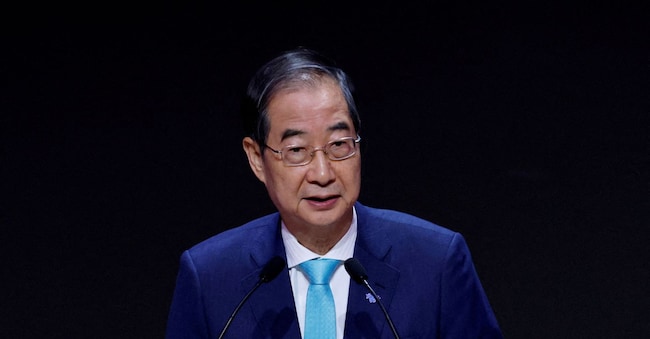
Il premier e presidente sudcoreano ad interim Han Duck-soo è stato messo in stato d’accusa meno di due settimane dopo il suo predecessore

2' min read

2' min read

From our correspondent

NEW DELHI - The constitutional crisis that has been paralysing South Korea's political life for weeks added a new chapter on Friday when the main opposition party voted to impeach Acting President and Prime Minister Han Duck-soo.

Loading...

The vote follows the one that less than a fortnight ago decreed the impeachment of President Yoon Suk Yeol. Now that Han has also been sent before the courts, the leadership of the government passes to Finance Minister Choi Sang-mok.

The new twist is bound to deal another blow to Seoul's credibility in global markets. The confirmation comes from the performance of the won: the South Korean currency is travelling at its lowest level since March 2009. The Kospi lost more than one per cent.

The knot of new constitutional judges

The main opposition party, the Democratic Party of Korea (Dpk) has accused Han of complicity with the currently impeached president and of prevaricating in the appointment of three new judges to the Constitutional Court, the body that will have to determine the possible guilt of Yoon, who on 3 December last year was the protagonist of a clumsy attempt at a self-coup. If found guilty, Yoon will step down as president. If innocent, he will return to lead the country.

Parliament has already indicated the three names, two at the suggestion of the opposition and one suggested by the President's party, which lacks a parliamentary majority, but Han has put the brakes on the nominations arguing that there must be bipartisan agreement on the names.

The Democratic Party of Korea (Dpk) is in a hurry to close the file on Yoon's impeachment for reasons that have only partly to do with the need to end the institutional crisis.

Dpk leader Lee Jae-myung is the big favourite for a possible early election of a new president, but his is a race against time because in the coming months a court will have to rule on a case in which he is a defendant. If he is convicted before the eventual election, he will not be able to run for office. If, on the other hand, a vote is held soon and he wins, Lee will be protected by immunity at the time of sentencing.

In the past, the Constitutional Court took two to three months to judge a president. If convicted, new elections must be held within 60 days.

An unprecedented case

.

The impeachment of an acting premier and president is unprecedented, so much so that until yesterday there was even a lack of consensus among constitutionalists on the type of majority required for the procedure.

According to some, half plus one of the parliamentarians would have been sufficient, as for prime ministers, a goal within reach of the Dpk, which controls 170 out of 300 seats; according to others, the bar should have been set much higher, as for presidents, i.e. at two-thirds of the chamber: 200 MPs. The first line prevailed and Han was impeached by 192 votes.

Also on Friday, the first hearing of Yoon's impeachment proceedings is scheduled.

Copyright reserved ©
Loading...

Brand connect

Loading...

Newsletter

Notizie e approfondimenti sugli avvenimenti politici, economici e finanziari.

Iscriviti