Cohesion

South, 40% of growth from NRP and EU Structural Funds but uncertainties about 2024
by Carmine Fotina

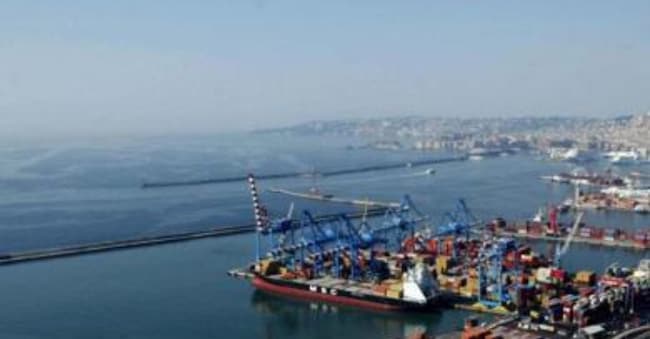
Il porto di Napoli

6' min read

6' min read

To more homogeneous public policies, especially in terms of public investments, the South reacts and gets going. But it may turn out to be a faltering race, destined to stop or lose pace when certain extraordinary factors - starting with NRP spending and the spending queue of the 2014-2020 EU funds - leave the scene.

This is the message that can be gleaned from the 2023 GDP, which has grown in the South more than in the Centre-North. A message that needs to be carefully plumbed, number by number, to discover how much there is of solid, lasting, mature economic development in the South, just as we are at the dawn of the differentiated autonomy era. On 13 July, the Calderoli law comes into force, and understanding what has really brought about the overtaking of 2023 is a fundamental exercise in order not to delude ourselves that the new course of regional competences is being grafted onto a terrain that has now been put back into balance.

Loading...

The post Covid scenario

.

On the post-crisis trend, the readings are not entirely unambiguous. In its latest Annual Report, the Bank of Italy notes that since 2019 the growth of southern GDP has been lower than the national average and that of the North, and the product is still more than 7 points below the 2008-2009 crisis, while in the northern regions it is higher as early as 2022. The GDP per capita remains just over 55% of that of the rest of the country, at almost constant levels since 2016. Svimez, for its part, estimates a more robust 2023 such as to determine a +3.7% over 2019 compared to 3.5% nationally and +3.4% in the North-West (+5.1% in the North-East). According to this analysis, which is in line with the preliminary data released a few days later by Istat, last year had the effect of a detonator (+1.3% real GDP compared to +0.9% nationally and in the North-East, while the North-West shows +1%).

But it is no coincidence that the Mezzogiorno exceeds the national average for the first time since 2015. Today, as then, the figure is strongly influenced by the rush of public administrations to take advantage of the last useful year of European programming to spend structural funds. At the time, this was the 2007-2013 cycle (the 'n+2' rule applied, i.e. certifications up to two years from the end) while this time payments were linked to the 2014-2020 period for which the 'n+3' rule applies instead. The accumulated payments are essentially related to public works, with an effect on construction. And the same applies, of course, to the powerful engine of the NRP, which in 2023 was finally switched on and on a good number of projects complied with the 40% clause in favour of the South. When all is said and done, Svimez attributes a contribution of 0.5 per cent, in practice 40 per cent of the overall growth in the South, to the greater expenditure in public investment, between the NRP and the structural funds.

Constructions

.

Public investments grew by 16.8% in the South, compared to 7.2% in the Centre-North. If we look at works, translated into euro the boost is worth 4.3 billion (from 8.7 to 13 billion). It is clear that in a context in which construction contributes to the formation of added value in a particularly significant way, more so than in the Centre-North, the effect is that of an economic mini-tsunami. ISTAT reports a growth in added value of 4.6% for construction, probably also due to the last few months of acceleration of superbonus expenditure in view of the décalage triggered in 2024. This dynamic was accompanied by positive trends particularly in those services that have construction-related lines of business, such as real estate, financial and professional services (+3.3%). Services related to education and healthcare also performed well. While it is on industry that the analysis and narrative of the recovery in the South visibly change register.

Industria

Industry in the narrow sense fell in the South by 0.5%. This is a smaller drop than the national one (-1.1%), but it should be correctly placed in the context of the German recession, which has hit the supply and subcontracting network of northern companies, traditionally much more exposed to German industry, much harder. This is not a marginal effect, considering the 4 billion cut in trade (data from the German-Italian Chamber of Commerce). This element leads one to think that the smaller drop in southern industry has a certain component of extemporaneity. A more structural indicator, i.e. public spending on business incentives - which has grown in the South to 16%, i.e. ten percentage points less than in the Centre-North - shows persistent gaps. That is, it testifies to the lesser capacity of the southern production fabric, characterised by a smaller presence of large companies, to absorb 'demand' measures based on industrial innovation, such as the 4.0 incentives, which, moreover, in the coming weeks will be flanked by the 5.0 tax credits, even more attractive to innovative companies in the North.
The same industrial transformation towards new strategic supply chains seems to be a slower process than expected, untouched by the 2023 growth. The South's share of the national production chains, calculates Svimez in a study presented during a conference organised with the Reichlin Institute, varies between 5 and 20% of added value, with peaks in traditional sectors such as automotive, agroindustry and construction, but much lower values for ICT, aerospace and electronics.

Export

The German effect also rebounded on exports, which affected the overall result of the two macro-areas. In the Centre-North, the stagnation of exports (-0.1% on 2022) cancelled out a traditional driver in cyclical recovery phases. This was counterbalanced by the southern exploit, with a growth in goods, net of the energy component, of 14.2%, driven by a considerable boost from pharmaceuticals and automotive. However, the contribution of exports on the overall growth of GDP in southern Italy remains limited and, despite such a different performance compared to the Centre-North, the share of southern exports on the national total will hang on from 10.6 per cent in 2022 to 10.9 per cent.

Employment

It is the other figure for 2023 that jumps out at you: employed persons grew by 2.6%, more than the national average (+1.8%) and all other territorial divisions. A result that deserves special attention. Partly also the result of the boom in public investment, the improvement is expressed by some growth in permanent employment and a slight drop in involuntary part-time work, but it does not correspond to a real shift in employment towards higher quality levels. The fact that employment visibly outstrips added value can be explained by an absorption dictated mainly by lower productivity sectors and there is no simultaneous improvement in poverty figures nor in the emigration of young graduates, the pool of higher added value jobs, to the North. The result is a still problematic wage dynamic, notes Svimez, which has been buffered by public policies of bonuses and income support that are gradually being exhausted. Households' primary incomes, in essence incomes from work and capital (relating to businesses only), have increased in a practically similar manner in the various territorial divisions, despite a much more pronounced increase in employment in the South. Only when considering disposable incomes - which also take into account the payment of taxes and contributions and transfers to households (i.e. policies and various bonuses) - is the South even ahead in 2019-2023.

The unknown about expansionary policies

.

The numbers and data presented so far explain the caution expressed by several observers on the possibility that in 2024 the South will replicate its exploits compared to the Centre-North. And they give rise to some reflections on a growth pattern based much more on demand than on supply. The more asphyxiated public finance framework - between the entry into force of the new European Stability Pact and the infringement procedure for excessive deficit - will make it likely that expansionary policies that have still strongly influenced growth in 2023 on construction, incomes, and labour will be scaled down. It will also affect Germany, because if it starts running again it will take with it a good chunk of northern industry that had been held back by the recession, thereby normalising the comparison. The momentum of the last year's spending of EU funds has already been exhausted, while the engine of the NRP will still be running, with effects that will depend on the speed of individual projects. And this is perhaps the key point. Last year's performance showed that, having reopened the spigot to capital investment, the Mezzogiorno reacts to the stimulus, and does so well. How long can this model hold up?

Copyright reserved ©
Loading...

Brand connect

Loading...

Newsletter

Notizie e approfondimenti sugli avvenimenti politici, economici e finanziari.

Iscriviti