
Walking routes: the Southern Via Francigena – a model of accessibility

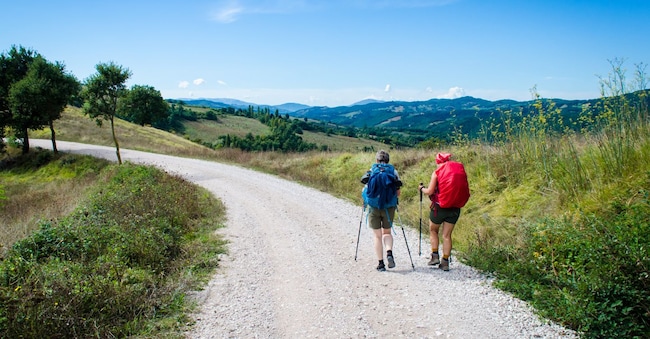
The project ‘Towards a Southern Via Francigena accessible to all’, funded by the Ministry of Tourism to promote slow, sustainable tourism and small villages, is nearing completion. The section being developed is the Lecce–Santa Maria di Leuca route, a 120-kilometre stretch that is being made accessible thanks to the project led by the Municipality of Poggiardo, in collaboration with the European Association of the Via Francigena (AEVF) and the Mollare Mai Association, covers approximately 120 km and five stages of the Via Francigena between Lecce and Santa Maria di Leuca, with specific initiatives in the municipalities of Poggiardo, Cannole, Giuggianello, Giurdignano, Martano, Palmariggi and Tricase, whilst also bringing benefits to the other towns along the route.
“Walking routes are one of the most powerful expressions of the Italia we wish to promote: a form of slow, sustainable tourism that revitalises both the local areas and the people,” said Gianmarco Mazzi, Minister for Tourism. “ “As a Ministry, we have invested wholeheartedly in the Via Francigena as a defining axis that unites Europe and Italia, from the Alps to Santa Maria di Leuca. This project demonstrates how accessibility and innovation are complementary drivers, capable of making a two-thousand-year-old route truly accessible to everyone, without exception. This is the model of tourism we support, in line with the major initiative that will lead to the Via Francigena’s recognition by UNESCO. Promoting these routes means celebrating the roots and identities of our villages, creating a real economy in these areas and offering international travellers the authenticity that only Italia can provide.”
This innovative model makes the Southern Via Francigena a pioneer in Italia in terms of accessibility in the broadest sense: not only for people with mobility, sensory and cognitive disabilities, but also for those with needs related to age, dietary requirements and temporary conditions. Plans include mapping critical points, georeferencing the route, services and places of interest, carrying out maintenance work, and developing augmented and virtual reality tools to ensure inclusive access to the heritage. Also planned are rest points equipped with first-aid kits, smart benches powered by solar panels and tactile QR codes. The project, which follows the AEVF Handbook on the accessible Via Francigena and continues the work begun with ‘Via Francigena For All’ and ‘Hike4all’, forms part of the national strategy to support the Italian Via Francigena’s nomination for UNESCO World Heritage status, which is currently under evaluation, with a decision expected in October 2026. As part of the project, from 23 to 25 September, BTM Interazioni will be stopping off in Poggiardo with a familiarisation trip for national and international buyers, B2B meetings with local operators and, on 25 September at 3.00 pm at the Palazzo della Cultura, a national conference on accessible tourism along walking routes.

