
Space economy, how the EU relaunches itself in the space race
After more than a decade of delays, Brussels is getting back on track in the industry. The competitiveness issue remains
by Alberto Magnani (Sole 24 Ore, Italy), György Folk (EUrologus/HVG), El Confidencial (Spain)
 Aggiungi Il Sole 24 Ore
ai preferiti su Google
6' min read
6' min read
Last 15 July, in Rome, Giorgia Meloni's Italian government reopened one of the most frequent chapters in its foreign policy: relations with Africa, the Continent at the heart of the so-called 'Mattei Plan' strategy and of the ambitions to strengthen an axis between Rome, Brussels and the Continent's economies. The tones of the day did not appear unprecedented, amid praise for Africa's 'centrality' in national strategies and promises of a change of course in relations. The topic was, at least with respect to the most talked about area of government policy: the space industry.
The Italian executive is attempting to broaden its scope to the so-called space economy, starting with the relaunch of its historic space base in Malindi, Kenya, active since the 1960s. In the background, there is a broader ambition: that of creating a bridge between the European Space Agency and the African Space Agency, founded by the African Union (AU) in early 2023 and now hosted by Egypt. The development of a space strategy is one of the 15 'flagship' programmes of the so-called Agenda 2063, the priority plan established by the African Union to 'accelerate' growth and development on the continent.
But it is also a crucial step for European industry as a whole, from individual countries to EU policies. On a national scale, there are cases such as the Italian government's plans to redeem the sector in Kenya or the agreements signed by Spain, which in May became the twenty-fifth country to sign the Artemis Agreements and is now embarking on a new partnership between Nasa and the newly created Spanish Space Agency (Aee). On an EU scale, Brussels is trying to get back on track and put the so-called 'launcher crisis' behind it, the stagnation of autonomous initiatives that has dragged on for over a year: since July 2023, when the Ariane 5 heavy launcher left the scene, Brussels had found itself without an autonomous space launcher.
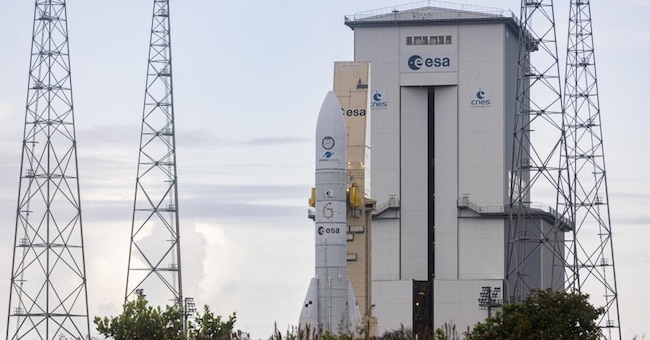
The 'fast' was broken a year later, in July 2024, when its heir Ariane 6 took off on its first test mission from French Guiana and carried nine CubeSats satellites produced by EU companies into space. The launch suffered some malfunctions, but the balance is favourable in view of new missions. As Andrea Gili, research fellow at the Ispi study centre, pointed out in his analysis, it is nevertheless a 'new pillar in the history of European space industry and exploration. It brings oxygen back to the entire aerospace sector, but above all it is the first step towards a return to strategic autonomy and autonomous access to space'.
The EU relaunches its 'space race'
.The process is underway. On 11 July, the European Commission, the guardian of EU funds, published an analysis report on the EU space programme and its specific agency. The overall conclusion of the programme, with a budget of EUR 15 billion for the period 2021-27, is proving positive. After more than a decade of chronic delays, technical complications and excessive costs on the Galileo-EGNOSS satellite navigation system, the EU seems to be on a better path in the space race.
The bottom line for European taxpayers is that the Commission's programme, including the Earth observation initiative, is achieving its goals and enabling services to capitalise - finally - on precision technology. The report reminds policy makers that 'the use of space data and services extends far beyond traditional applications, playing a crucial role in various sectors, e.g. energy, urban planning, insurance or environmental monitoring'. The Earth observation (EO) market is expected to grow to almost EUR 6 billion by 2033. Meanwhile, revenues from the global downstream market for Global Navigation Satellite Systems (GNSS) are expected to rise from EUR 260 billion today to EUR 600 billion by 2033.


