Space economy

Space, Europe is called to a change of pace, starting with governance

Weaknesses: the number of entities involved and the practice of geographical return on investment

by Leopoldo Benacchio

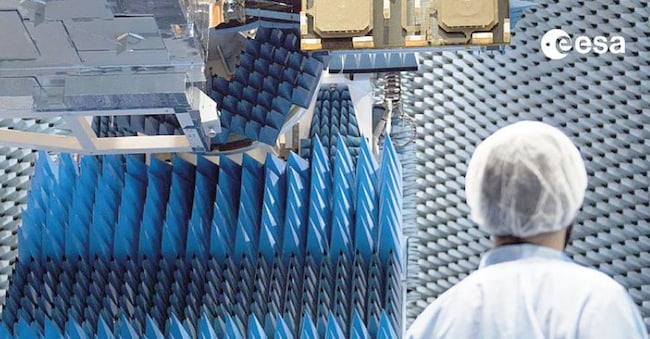
Il test di un’antenna del satellite Meteosat

3' min read

3' min read

2025 is an important year for Europe, also in the field of space. It is the opinion of analysts and commentators that in November, at the ministerial meeting on space of the ministers responsible for this field, either a decision will be made to react to the loss of competitiveness that has been manifested over the last four years, especially in the field of launchers, which has now fortunately rebooted, or a phase of decline will begin. As Samantha Cristoforetti stated in a very recent interview, either we will take a step forward or we will inevitably take a step backwards.

With the war in Ukraine, we have definitively seen that space is another battlefield, perhaps silent and clean, but increasingly crucial, and that those who control it can influence a war. At a time when there is talk of rearmament then space and cybersecurity are the two new, inescapable aspects of defence.

Loading...

Only 26 euro per citizen

.

Spending on space in the European Union is EUR 26 per citizen, eight times less than in the US and twice as much as in Japan, low then, but from a new point of view Europe has a perhaps unique opportunity: the cuts proposed for Nasa by the Trump administration, 24% at least, can perhaps lead us to new, even unprecedented, alliances in a boiling sector.

Many entities for governance

.

The aspect most in the balance today, however, is overall governance: the European Space Agency, ESA, the EU Space Agency, ESPA, the national space agencies, Asi ours, and finally, but increasingly important in the field, the Armed Forces.

Europe has produced true gems in the past, such as the Copernicus programme for the extremely important observation of the Earth, or Galileo, the best GPS navigation system in existence, as well as scientific satellites of great importance and impact, difficult even to find one as a symbol. Let us remember, incidentally, that Italy designs and builds excellent satellites, from those for low orbit to the large ones just mentioned that are in the distant Lagrangian equilibrium points. ,

We have also overcome, between the end of 2024 and this year, the ugly crisis of the launchers, with Ariane 6 finally taking off, after its long delay, and Vega C, which has got back on track and now has many rich take-offs planned. The impasse caused by having staked everything, for access to the cosmos, on Russian launchers, which we can no longer even think about today, has therefore been partly overcome. A strategic error that we are paying dearly for today. Europe's autonomous and rapid access to space is therefore an absolute priority.

In March, the Esa presented a plan in broad outlines defining the Esa Strategy 2040.

Esa strategies

The main points are that Esa will promote climate change monitoring and environmental sustainability through Earth observation, in which Europeans excel, and space debris management, including planetary defence, with the deflection of Earth-threatening asteroids.

Equally important remains the exploration of the Universe: in the forecasts we find the Moon, Mars and for the first time, human permanence in space

Strengthening European autonomy aims to reduce Europe's dependence on foreign space technologies, including by developing a resilient autonomous infrastructure for telecommunications, navigation and earth observation through the IRIS² programme, a new multi-orbit satellite constellation for secure and fast Internet connections.

The last two objectives include strengthening the European space industry ecosystem, promoting technological innovations and private investment, and increasing public-private partnerships, with strong support for emerging aerospace start-ups.

All this should help consolidate a European spatial identity, which is not very well developed, although it has grown in Italy in recent years.

Certainly this is desirable, but authoritative critics, from Mario Draghi to Roberto Vittori, point out how the bureaucratisation of Esa, and in part of the many European and national bodies dealing with space, has caused, and will continue to do so if nothing is changed, collisions of interests and duplication of costs. The practice of geographic return, to which Esa is bound, whereby each nation must have back from the agency industrial orders equal to the money paid into the common coffers, has created delays and above all flattened the overall strategy.

Europe's renewal in the space field must be done by November and presented to the Space Ministerial. Will the summits that have managed so far succeed, many wonder.

Copyright reserved ©
Loading...

Brand connect

Loading...

Newsletter

Notizie e approfondimenti sugli avvenimenti politici, economici e finanziari.

Iscriviti