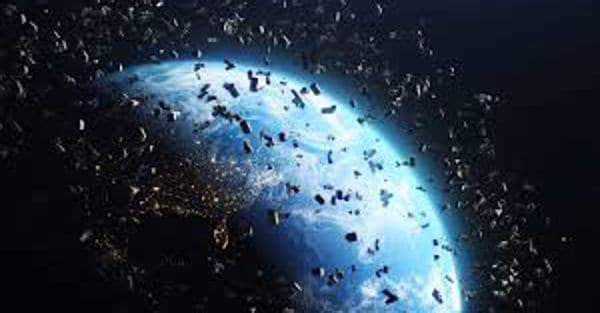
Space is like the ocean: full of waste. Satellites at risk
Orbiting the Earth is a cloud of 1.2 million pieces of space debris more than a centimetre in size, i.e. large enough to damage satellites and space stations

3' min read
3' min read
Space and a great ocean have something in common: colour, at least as we see it, and immensity, which always amazes us. But they also have something else, the fact that we have always thought, guiltily, that both represent an inexhaustible, almost infinite resource. But that is not really the case, we have abused them over the last 20 years and it shows. The seas are full of plastic, which even forms islands in the middle of the immense expanse of water, and the space around the Earth is full of space junk, let's call it 'debris' which is more engineering, but that's what it is.
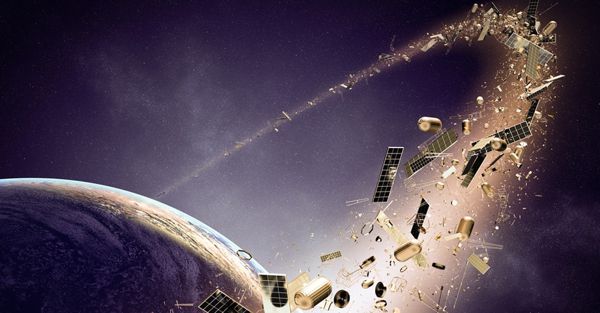
Imagine a belt around the Earth ranging from 300 to 1,500 kilometres above the ground, thicker around the equator; this is the so-called low orbit where most of the satellites launched in the last 60 years are located. The count is difficult to make, but there are about 20,000 according to the European Space Agency, Esa, with an incredible acceleration in launches in recent years, just think that in the period 2015-2024 13,366 were launched, of which 2873 last year alone, and these amount to 2171 tonnes placed in low orbit. 97% of the satellites are smallsat, with dimensions within the tens of centimetres and low weight, the numbers come from BryceTech's report a few days ago. This explosion is the result of a remarkable progress, over the last 20 years, in miniaturisation, especially in electronics, which has also led to being able to build and launch a microsatellite at a very low cost. Mind you, it is not that with a 20 by 20 centimetre satellite you can do the things that a large satellite measuring metres wide and weighing tons can do, but for a specific purpose they are useful, for example monitoring coastlines or borders. So the space economy has an unexpected side: it allows a faster and cheaper pace, but this almost makes things worse in orbit.
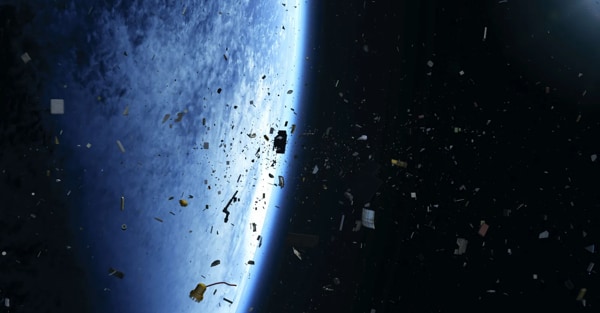
The nations that today have a satellite in orbit are at least 80, even though we always think of the usual three or four: the USA, Russia, China, India, plus Italy, of course, and there is a crowd also because 70% of the satellites launched so far, the 20,000 mentioned above, are still in orbit. To have a parameter, Esa has to do twice as many manoeuvres with its satellites to safeguard them from collisions as ten years ago, but NASA is even worse off.
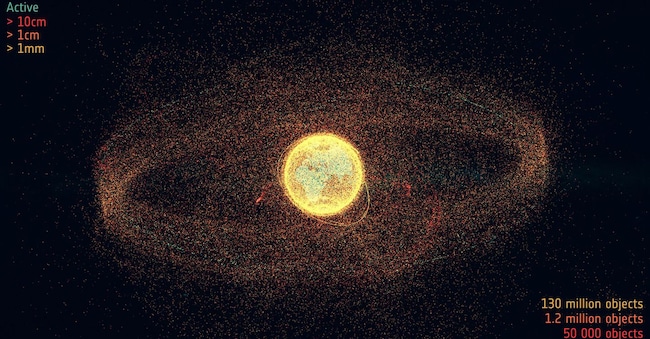
Also orbiting the Earth, however, is a cloud of 1.2 million pieces of space debris more than a centimetre in size, i.e. large enough to damage satellites and space stations; of these, more than 50,000 are believed to be larger than 10 centimetres and 40,000 are tracked by surveillance networks.
These are the data presented a few days ago in Bonn at the conference dealing with this very issue and contained in the European Space Agency's Space Debris Report.