
Space, satellite launches release soot into the atmosphere (and pollute 500 times more than cars)
Survey by University College London: the space industry also impacts the climate. According to British research, mega-stellar launches starting in 2019 will account for 42% of the total pollution produced in the atmosphere by 2030
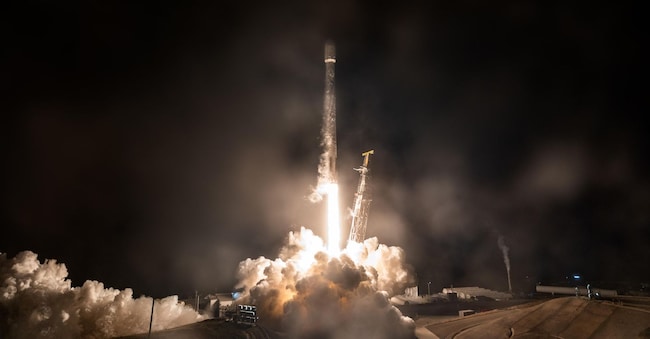
The space industry also pollutes and risks polluting even more. According to the University College London, large satellite constellations are the most polluting factor since the beginning of the space age. The study, published in the journal Earth's Future, makes a prediction: by the end of this decade, mega-constellation launches that began in 2019 will account for 42% of the total pollution produced in the atmosphere since 1957, when the first Soviet satellite Sputnik 1 was launched among the stars.
What happens at each launch
The launches could, in fact, release up to 870 tonnes of soot per year. But that's not all, because the team of researchers led by Eloise Marais discovered that the soot released by rockets during the launch and re-entry phase of satellites at the end of operations is rapidly accumulating in the upper atmosphere. Moreover, the pollutant, according to the research, stays in the air much longer than the pollutant produced by cars, with an impact on the climate more than 500 times greater.
Focus on the study
Projections for the end of the decade were calculated based on data on launches between 2020 and 2022. The authors showed that, in 2020, satellite constellations contributed about 35% of air pollution. By 2030, the percentage will rise to 42%, according to the research. The researchers put on the brakes, however, stating that these predictions are probably greatly underestimated. In fact, the number of annual launches in the last period, driven mainly by SpaceX's Falcon 9 rockets, has already exceeded estimates, rising from 114 in 2020 to 329 in 2025.
However, not all environmental impacts of satellites will be negative. As soot from the launches accumulates in the atmosphere, it could reduce the amount of sunlight reaching the earth's surface. The consequence would be a cooling of the climate (albeit slight). According to the researchers, however, the effect will be minimal compared to the expected temperature increase due to global warming.
The debris problem
From 1957 to the present day, more than 4000 launches have been made into space. According to The European Space Agency, of the approximately 9000 pieces of debris catalogued, 22% are satellites that do not function. In contrast, 17% is made up of rocket propulsion stages released in the final phase of a launch. 13% is made up of items that are used on satellites, such as bolts and paint. Finally, 43% includes fragments resulting from approximately 150 explosions and a couple of collisions.

