Space

The 'space mechanics' are Italian: D-Orbit supplies and repairs satellites in orbit

Circular economy reaches beyond the atmosphere thanks to a global leader in space logistics and orbital transport

by Leopoldo Benacchio

In Orbit Service   Active Debris Removal

3' min read

Translated by AI
Versione italiana

3' min read

Translated by AI
Versione italiana

Satellites around the Earth there are many, over 10,000 at the moment, but predictions are to go far beyond this number, towards 40,000 in two years, and that's without taking into account Elon Musk-like projects, who now, forget Mars, wants to put into orbit a million satellites that will be part of a gigantic space computer. All in low orbit, between 200 and 2000 kilometres.

There is therefore increasing attention to the practice of a circular economy in the field of satellites, and in this Italy and Europe are well ahead. This is also demonstrated by the announcement made today at the SatShow 2026 in Washington DC, by D-Orbit, a company from Fino Mornasco, Como, which is present there, together with many other Italian companies, in the Pavilion organised by the ICE Agency in collaboration with the Italian Space Agency.

Loading...

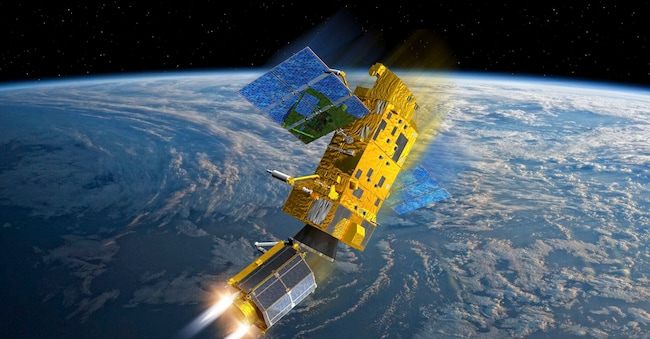
D-Orbit, a global leader in space logistics and orbital transport, has been selected by the European Space Agency, Esa, as prime contractor for Morph (Modular On-Orbit Refurbishment for Permanent Hardware), which could become Europe's first mission architecture capable of demonstrating refurbishment of satellites directly into orbit.

Target "recycling"

It is an important moment to establish whether and how satellites can not only be refurbished, but also repaired, upgraded or even reused in space. It is a change in the conception of the use of the satellite, which, until now, has been designed as a disposable object, which ends its life for whatever reason that, on Earth, would not be a problem: small hardware failure, serious software problems or, indeed, running out of fuel that satellites use for course corrections.

"With Morph, we explore a different model, in which satellites become long-term infrastructures that can be repaired, improved and adapted directly in orbit," says Diego Garcés de Marcilla, Director of the In Orbit Servicing Business Unit at D-Orbit.
The Morph project, which thus leaves the zero phase to enter, practically, into a feasibility study, investigates how interventions for refuelling can be carried out, but tomorrow even up to in-orbit assembly.

Circular economy in space means this, and it is important because if satellites can be repaired, upgraded, reconfigured and refuelled while they are already in orbit, the need to continually produce new copies of the same satellites here on earth to replace those now uselessly in orbit can be dramatically reduced. This would be fundamental in mitigating the already dramatic problem of orbiting space debris and that of atmospheric pollution due to the return of end-of-life satellites to earth, which already occurs for Starlink's end-of-life satellites.

Services in Orbit

However, this is not the only Italian initiative, the Italian Space Agency signed a EUR 235 million contract with Thales Alenia Space in 2023 for the design, development and qualification of an In Orbit Servicing (Ios) demonstration mission vehicle.

The temporary consortium of companies includes Leonardo, Telespazio, Avio and D-Orbit.

The mission should be ready for launch in 2026 and has been funded through the National Recovery and Resilience Plan (Pnrr).

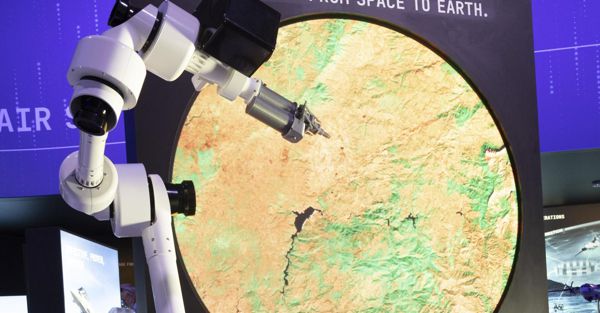
The complex operations envisaged, repair or replacement of components, orbital transfer and atmospheric re-entry will be performed by a robotic arm, developed by Leonardo in collaboration with Sab Aerospace, the Istituto Nazionale di Fisica Nucleare (Infn) and the Istituto Italiano di Tecnologia (Iit).

Telespazio, together with Altec, will be responsible for the design, development and validation of the ground segment of the demonstration mission. Avio will finally carry out the design and development activities of the orbital support and propulsion module for the orbital stages.

If anyone is also fascinated by advanced mechanics, Leonardo's robot arm is certainly an interesting case: seven degrees of freedom, for maximum agility and the ability to operate in complex scenarios, equipped with control electronics and a mechanism for the safe pick-up of the satellite to be repaired.

Copyright reserved ©
Loading...

Brand connect

Loading...

Newsletter

Notizie e approfondimenti sugli avvenimenti politici, economici e finanziari.

Iscriviti