
Space: from spacesuits to materials – a 113 per cent increase in patents for SMEs

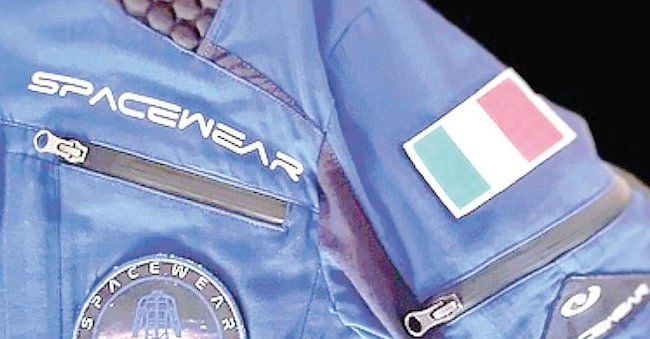
From fashion shows to astronauts, from the Indianapolis 500 to satellites. The transition from the manufacturing, textile and automotive industries to the space economy is possible. Spacewear and Dallara have succeeded in doing just that: the former was founded in Fano, in the Marche region, following a collaboration between fashion and textile designers and aerospace engineers, and produces suits, clothing and fabrics for space missions; the latter was approached directly by American aerospace companies at the pit stop for racing cars in Indianapolis, and through its Aerospace & Defence Business Unit, established in 2021, it supplies components made from advanced materials for space missions.
The convergence of manufacturing and space has become an opportunity for growth for Italian businesses – not only large and medium-sized firms, but also SMEs. Small companies and niche specialists can indeed break into the space sector: but they must overcome extremely fierce international competition, they must be able to team up with one or more major partners already operating in the New Space Economy, and they must be ready to commercialise their products in two spheres: on Earth and in space.
EY experts, interviewed by *Il Sole 24 Ore* on the role of Italian companies in the New Space Economy, note from their analysis that the traditional sectors showing the greatest interest in these diversification opportunities are mechanical engineering and mechatronics, electronics and electro-optics, chemicals and companies involved in the production of mixed components. “The Aerospace & Defence sector in Italy is characterised by a highly fragmented business landscape, with a large number of small firms and a turnover of less than 10 million euros. However, the data show that profitability and value creation are concentrated in the more structured companies, with revenues exceeding 10 million, which record significantly higher profit margins, with a net profit of around 9 per cent, underpinned by greater capacity for investment, organisation and management of industrial complexity”, explain the researchers at EY.
In recent years, the sector has taken on an increasingly central role in the European and Italian industrial landscape, evolving from an industrial niche to a pillar of industrial policy. EY’s expert advice? “A&D is not a ‘do-it-yourself’ market. Regulation, institutions and the ecosystem require skills, time and continuity. Without expert partners and established relationships, entry is slower and less credible. Mergers and partnerships act as a strategic accelerator. Critical mass is increasingly crucial for competing, gaining visibility and ensuring resilience. M&A and alliances facilitate scale, expertise and access to available funding.”
Collaborations, for example, with the Italian firm Leonardo or NASA in the US. The Dallara case is proof that partnerships in the space sector work. The Dallara Group, founded in 1972, has been active in motorsport for over 50 years, designing, developing and manufacturing racing cars. Among the most important races associated with its activities is the Indianapolis 500. For over 25 years, the Group has also been active in the road car sector and, since 2021, in the aerospace sector, offering leading operators solutions and components developed for racing or validated through simulation and digital twins. “In motorsport, and particularly in a race such as the Indianapolis 500, the pace of innovation is extremely rapid. It is in this context that leading international partners in the space sector have been able to observe our advanced materials and innovative components at close quarters: this is where our first contact with space began,” Alessio Grasso, head of Dallara’s Aerospace & Defence Business Unit, told Il Sole 24 Ore. The collaboration with major aerospace operators offers Dallara the opportunity to apply its expertise to new technological challenges.


