
Space, asteroid race for precious metals and rare earths
Start-ups engaged in the difficult and very expensive task of searching for raw materials to bring back to Earth are multiplying. And China starts in May

4' min read
Key points
4' min read
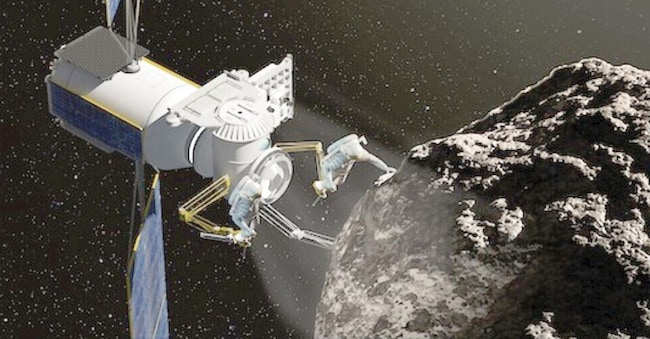
In our solar system there is a treasure trove of precious metals contained in the thousands of asteroids orbiting between Mars and Jupiter, or even much further away. The idea of fetching them and bringing them back to Earth, which until a few years ago seemed, at best, straight out of a science fiction novel, in 2025 instead seems like a daring operation, yes, but one that can be attempted, and one that is currently being worked on by various start-ups around the world, the Californian AstroForge in primis.
The impetus for this bold and very costly undertaking is the increasing demand for metals important to us, such as platinum, nickel and rare earths, which makes space companies also look to space to meet this need. Asteroids, in fact, may offer a solution, at least in theory, to solve the problem of the growing scarcity of many raw materials, the search for and extraction of which, moreover, often poses serious environmental impact problems.
To understand, remember that asteroids are small rocky bodies, often very metallic, that form a belt around the Sun and largely, but not exclusively, orbit between Mars and Jupiter, mostly at a distance of 300 to 500 million kilometres. A lot for us, but nothing for the distances in the Universe.
They range in size from a few metres to hundreds, are mostly irregular in shape and have decidedly non-circular orbits, with rare examples of rounded, larger bodies. These particular celestial bodies are thought to be what is left over from the initial formation process of the solar system, almost like Lego bricks from which many planets originated through successive aggregations.
Looking for lithium, platinum, gold and cobalt
By analysing the sunlight reflected from asteroids, we can tell if and how rich they are in metals, from iron to nickel and cobalt to platinum and gold. Apart from the hope of finding a lot of lithium, the holy grail of today's technology, some of these asteroids are thought to have enough rare metals to change the world economy. To get an idea: a platinum-rich asteroid, 500 metres in size, may contain 174 times the world's annual production of that metal.


