
SpaceX’s IPO sparks a 100-billion boom in space investment
The growth of the giant founded by Elon Musk is opening up new avenues but increasing the risks of dependency

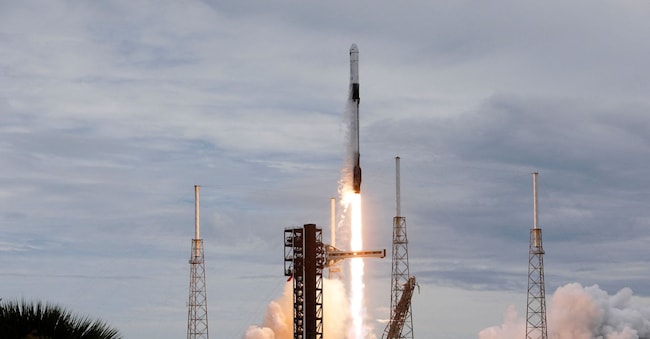
SpaceX’s initial public offering in the defence and space infrastructure sector, which kicked off the summer of 2026, has catalysed investment in the space economy, which is on track to exceed $100 billion for the first time this year. This forecast emerges from a new report by Space Capital, a private equity firm, which also highlights the risk of space companies being overvalued to ‘unicorn’ status – that is, a valuation exceeding $1 billion. “We all thought 2021 had been an exceptionally hot market,” says Chad Anderson, CEO of Space Capital, “but compared to what is happening today, it seems like a minor blip.”
The SpaceX effect on the market
This is a knock-on effect triggered by SpaceX’s historic IPO, which was priced at a record $135, and which is said to have prompted investors to significantly overvalue other companies in the space sector relative to their actual potential.
In addition, the gradual phasing out of the flagship Falcon 9 rocket has encouraged investors to turn to alternatives to SpaceX, such as Stoke Space Technologies and Blue Origin LLC, both of which have seen significant increases in production and funding. The US space company, founded by Jeff Bezos in 2020, has announced that it has raised at least $10 billion in external funding over the course of its 26-year history. According to an analysis by Space Capital, the wave of investment has been fuelled by strong interest from the US Department of Defence and from countries keen to establish autonomous satellite networks and other space infrastructure.
The risks of addiction
In reality, the risk of falling for a bait-and-switch is just around the corner. Anderson points out that some companies are raising funds at extremely high valuations but risk failing to deliver real value because they rely on uncertain factors such as excessive dependence on SpaceX. Many companies are forced to rely on the US aerospace firm to develop their infrastructure. A notable example is Amazon, which has signed a contract for three Falcon 9 rockets for the Project Kuiper satellite constellation; however, rival companies such as Eutelsat and OneWeb also use its launch vehicles to send their own satellites into orbit. According to Reuters, the proportion of Starlink missions within SpaceX’s operations has risen from 54 per cent of the Falcon 9 launch programme in 2020 to around 79 per cent so far in 2026. The Reuters analysis highlights that seven space companies have been informed that Falcon 9 launch capacity has been booked up until 2028–2029. Whilst this concentration may foster growth in the sector, it could also trigger a domino effect.

