
SpaceX’s Starship: the thirteenth test flight – a decisive moment for investors and space programmes
The launch will test the fixes following previous problems and will be crucial for the satellite constellations and the Artemis lunar programme

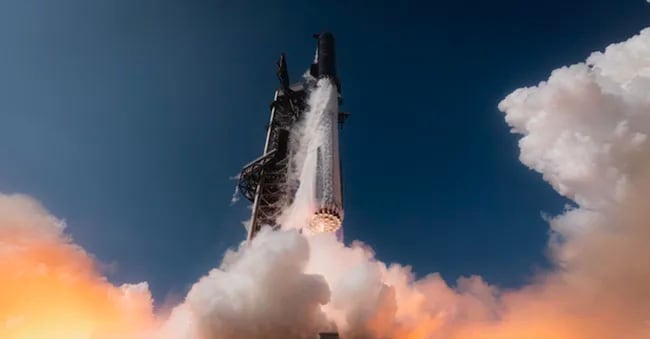
Starship, the giant rocket from SpaceX, which is at the heart of Elon Musk’s lunar and Martian ambitions, is preparing for its thirteenth test flight. The launch is scheduled for the 17th, in the early hours of the night in Italia, from the Starbase site in Texas, on the coast of the Gulf of Mexico.
It is a crucial test, both from a technical and an industrial and financial perspective. It will, in fact, be Starship’s first flight since SpaceX went public, and will put investors’ confidence to the test in the ‘fly, fail, fix’ model that has characterised the development of the most powerful rocket ever built. Beyond the prospects for exploration of the Moon and Mars, Starship is also the asset with which the company aims to rapidly deploy new large satellite constellations: the expansion of Starlink and similar networks intended for US military use.
To support these programmes, SpaceX needs to launch thousands of satellites into orbit quickly and cost-effectively. In the planned flight profile, lasting a total of around 90 minutes, Starship will follow a suborbital trajectory, entering space but without completing a full orbit around the Earth, and will re-enter the Indian Ocean. For the first time, it will carry 20 Starlink Version 3: these will be released along the trajectory, will attempt to integrate with the constellation via laser links for a few minutes, and will then be allowed to re-enter the atmosphere, where they will burn up.
The previous test, in May, had been regarded as a step forward but not without its challenges. The Super Heavy, Starship’s first stage, had failed to complete the engine reignition sequence to simulate a controlled landing in the Gulf of Mexico and had ended up in the sea after losing control. The second stage had also lost one of its engines during ascent, although it still managed to reach the planned altitude and deploy 20 simulated satellites.
Following an investigation carried out with the Federal Aviation Administration, SpaceX has modified the engine ignition procedure and the warning and abort systems to reduce the risk of further failures during the booster’s separation and re-entry phases. This week’s flight is set to demonstrate that the corrections are working, paving the way for the next phase, which involves at least one full orbit, the return of the first stage to the Gulf of Mexico and, possibly, the return of the Ship upper stage as well.


