
Spain remains in the lead, whilst France is struggling. Greece springs a surprise: air travel bookings up 4.1 per cent
Madrid sees figures remain steady following 36.8 million arrivals in the first five months of 2025

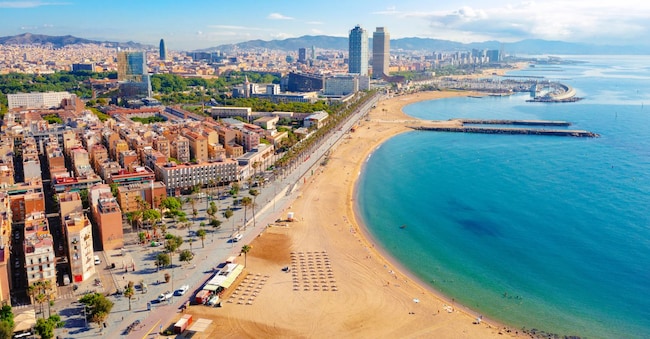
Competition amongst Mediterranean tourist destinations has so far unfolded in two distinct phases: in the early months of the year (January–May), Italia was the only destination to see a marked increase in its market share of air tickets compared with 2025, with year-on-year growth of 5 per cent; Greece, by contrast, was the only market to contract during the period (-1.86 per cent). Looking instead at summer bookings (June–September), the picture is very different: Greece completely reverses the trend of the previous months and becomes the second-fastest-growing market (+4.1%) after Spain, aiming to match its all-time record from last year when it welcomed a total of 37.98 million tourists. Italia, however, recorded a 3.65 per cent increase in tickets sold.
This overview of European tourist flows is based on an analysis carried out by Sojern for *Il Sole 24 Ore*. “Spain,” explains Luca Romozzi, the San Francisco-based platform’s commercial director for Europe, “remains the undisputed leader, with the most significant growth in both volume (+4.8 per cent) and market share (+0.9 per cent).” This is further confirmation following the record number of tourists in the first five months of 2026, with over 36.8 million arrivals. “France,” Romozzi adds, “is the market facing the greatest difficulties this summer.” This is a negative sign for a destination that boasts the title of ‘the world’s most visited country’ (102 million foreign tourists welcomed in 2025 and revenue of 77.5 billion euros). In the Mare Nostrum tourism league, Portugal rounds off the top four, having “remained broadly stable”.
A comparison with Italia’s main competitor countries is also provided by data from the Ministry of Tourism’s research department, which shows that, throughout the summer period, Italy’s OTA (Online Travel Agency) saturation rate of 51.2 per cent, higher than that of Spain (42.8 per cent) and France (32.9 per cent). The average rate in Italy is 153 euros, placing it midway between France (134 euros) and Spain (€195). It is worth noting that, according to Sojern data, the United States dominated hotel searches in June with 34 per cent, more than triple that of France (9.1 per cent). The proportion of US guests booked into Italian hotels for the whole summer is the highest among Mediterranean countries: 26.3 per cent (almost double that of Spain).
International guests are the most important from an economic perspective due to their high spending power. Foreign tourists in this segment very often choose 4- and 5-star hotels; and by 2028 Italia will have a total of 900 luxury hotels on offer. They stay for well above the average length of stay, enjoy culinary specialities and food and wine experiences, are keen shoppers and, above all, have a significant economic and employment impact on the local area.
A golden opportunity for tour operators specialising in inbound tourism. “The main source markets for our clients are the Americas, the United Kingdom, France and Australia,” says Vincenzo Emprin, CEO of ItalyScape, a company specialising in inbound tourism. “ “They ask us for bespoke, experiential holidays, and the main destinations remain Lake Como, the Amalfi Coast, Tuscany, Puglia and the major cities of art. We are seeing an increase in enquiries for Piedmont, the Dolomites and Sardinia.”


