Andalusia

What we know about the train disaster in Spain

Still 39 people in hospital. The railways are now limiting the speed on the route, as the unions have long demanded

Aggiornato il 20 gennaio 2026 ore 9:05

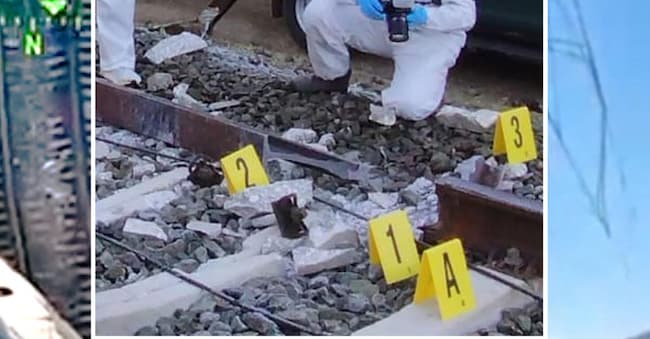
Lo scenario del disastro ferroviario del 18 gennaio 2026, vicino alla città di Adamuz, Cordova; il treno ad alta velocità deragliato; e nel riquadro il giunto che potrebbe essere saltato prima dell'incidente, creando uno spazio tra due sezioni del binari causando il deragliamento e la collisione con un altro convoglio che viaggiava nella direzione opposta, 19 gennaio 2026. ANSA/GUARDIA CIVIL

9' min read

Translated by AI
Versione italiana

9' min read

Translated by AI
Versione italiana

On the evening of Sunday 18 January, two trains derailed near the station of Adamuz, near Cordoba. The train derailed near the station of Adamuz, near Cordoba

At least 23 people are still missing from the roll call. Missing, at the moment, as reported by their families. To which must be added the ascertained victims - 42 dead and 122 injured - of the train disaster in Andalusia along the high-speed line connecting Madrid to southern Spain. Another victim was located in one of the Alvia-Renfe wagons late Tuesday afternoon, 20 January, almost two days after the incident. Andalusia's emergency services reported that 39 people, injured in the train derailment on Sunday evening, remain hospitalised at the moment. Among them are four children. Thirteen people, all adults, are now in intensive care. The minor who was in intensive care has been discharged. The emergency services also report that 23 people are missing. Since identification of the bodies has not yet been completed, it is unclear whether and how many missing persons are already included among the confirmed dead.
Loading...

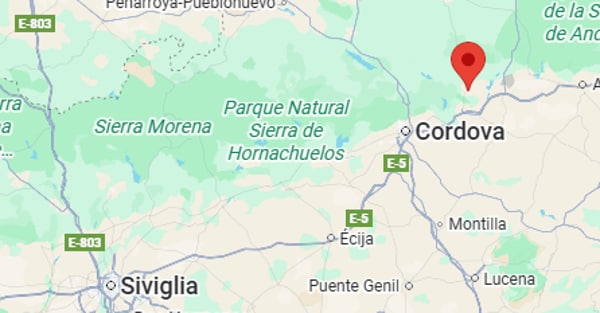
Adamuz

Vicino a Cordova

The Institute of Forensic Medicine of Cordova received - at 9.30 a.m. on 20 January - atotal of 37 bodies from the train accident that occurred near the town of Adamuz. Forensic doctors performed 23 autopsies and the Guardia Civil's criminal investigation service identified five people. All were identified by fingerprints. This was announced in a note by the Data Integration Centre (Cid), set up to deal with the emergency. Another three bodies - who were still inside the carriages of the Alvia-Renfe train - were recovered in the afternoon of Tuesday 20 January. The three victims were already included in the total death toll, which therefore remains at 41. Rescue teams are continuing to work at the accident site to verify that there are no more bodies among the wreckage.

A shock to which the Iberian government responded by proclaiming three days of national mourning. "Today is a day of sorrow for the whole of Spain," commented Prime Minister Pedro Sanchez, who called on the country for unity. 'We all wonder how this tragedy could have happened. Time and the work of the technicians will give us the answer,' the prime minister hoped.

Italian authorities have found no compatriots involved in the tragic train accident. This was confirmed to Tg2 Italia Europa by the Consul General of Italy in Madrid, Spartaco Calderaro, who visited the site of the train disaster. "However, one must be very cautious," explained Consul Calderaro, "as we are talking about two trains that were carrying a total of almost 600 people.

In the hospitals we have visited, we have fortunately found no Italians at the moment. Let's continue, clearly the numbers are important and the authorities are working: we are waiting for an official list in order to have a more definitive picture. An important fact is that we have received no reports, at least at the moment, of family members who are unable to contact their compatriots. We are here working to assist those who need assistance and to actually verify the situation'.

The assumptions

Experts investigating the cause of the derailment have found a broken joint on the rails, Reuters reports, citing a source briefed on the initial investigation into the disaster. Technicians at the scene, who analysed the rails, identified some wear in the joint between the rail sections, known as the splice plate.

 Usury that the drivers' unions would have reported months ago. This, according to them, proves that the fault had been present for some time. Investigators allegedly discovered that the defective joint created a gap between the rail sections, which widened as the trains continued to run on the tracks.

With regard to the investigation, the Spanish government has assured that 'all possibilities remain open', but has ruled out the hypothesis that it was sabotage that caused the train disaster on Sunday in Adamuz in which at least 41 people lost their lives. The investigation has not yet established whether the cause was a track or train malfunction, as Interior Minister Fernando Grande-Marlaska explained after the Council of Ministers meeting. "Following on-site inspections, it has been determined that a laboratory analysis of the rails at the point where the derailment started will be necessary, as well as an inspection of the axles of the Iryo train," he explained. Meanwhile, King Felipe VI and Queen Letizia arrived in Adamuz in the past few hours. The royal couple is accompanied by the Minister of Finance, Maria Jesus Montero, the Minister of Transport, Oscar Puente, and the President of the Regional Government of Andalusia, Juan Manuel Moreno.

Rail traffic repercussions

Rail traffic between Madrid and the region of Andalusia has been suspended, causing severe disruption to thousands of users. The authorities of the region, which have activated the Civil Protection emergency level 1, speak of a 'very serious' and still provisional balance sheet.

According to an initial reconstruction provided by Adif, the company that manages the Spanish rail network, the disaster occurred on 18 January 2026 at 19:39, when a train of the company Iryo - this is Spain's first private operator of high-speed trains, born from a consortium that includes Trenitalia with 51% - was in service between Malaga and Madrid Puerta de Atocha, with 317 people on board, derailed in the entrance switches to route 1 of the Adamuz station, encroaching on the parallel line, where anotherhigh-speed train of the state-owned Alvia (Renfe), coming from Madrid and bound for Huelva, was running in the opposite direction.

Precautionary Measures

Following the incident, Adif ordered thelimitation of train speed on the Madrid-Barcelona line. This was communicated, according to various media, by the company itself to the drivers, specifying that a maximum of 150-160 kilometres per hour was ordered at certain points on the route. The limitation was decreed as a safety measure, after several critical situations had been reported on the line, due to the state of a tunnel and some railway equipment. The drivers' union had already warned yesterday of its intention to limit the speed of trains on this line from the maximum permitted 300 kilometres per hour to 230 kilometres per hour for a stretch of around 200 kilometres, between Madrid and Calatayd, due to problems with the railway infrastructure.

Hardships and 'matt areas'

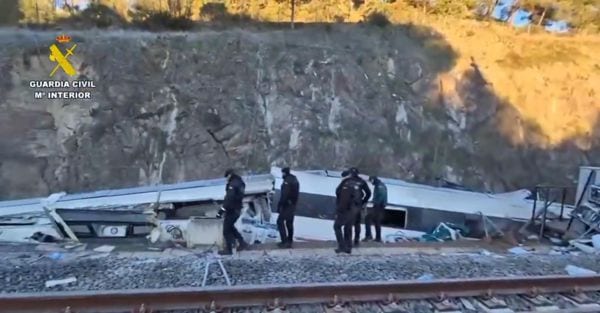
The last unit of the convoy overturned on its side and dozens of injured people were pulled from the wreckage by the emergency services and some 20 fire brigade teams rushed to the scene. There are still "opaque areas" that technicians have not been able to access, and where "there could still be casualties", the governor of Andalusia, Juanma Moreno, told reporters late Monday afternoon - almost 24 hours after the accident. "We hope that this is not the case," he added, "but there are points that can only be accessed with heavy machinery".

Numerous witnesses recounted the dramatic scenes of panic and chaos, including Radio Nacional de Espana (Rne) journalist Salvador Jimenez, who was travelling on the train from Malaga and experienced the incident live. "We left Malaga at 18:40 on time. At 19:45 there was an impact, it felt like an earthquake that shook all the carriages. I was in the first one," Jimenez recounted. Immediately the staff used emergency hammers to break the windows, to evacuate the passengers.

The testimonies of survivors and rescuers

"There were people who were well, but others who were sick, very sick. You had them in front of you, and you knew they were going to die. And you couldn't do anything". This is how Ana - a girl who emerged from the accident battered but alive - recounts her experience to the TV channel Telecinco upon leaving the hospital in Cordova. The young woman survived the tragedy together with her pregnant sister. "I thought: it's over. I turned around, looked at her as if to say goodbye and then everything went off. All you could hear was screaming," she continued, "it sounded like a horror film. Both young women were rescued and taken away from the scene of the accident in an ambulance. "She is still under observation in intensive care," he added before leaving the area of the facility, hunched and limping, wrapped in a blanket and accompanied by a boy. The girl also explained that she is still looking for her dog. "Please help us look for the animals, they are part of the family too."

"We were thrown into the air, there were bodies everywhere. I thought I was going to die'. Rocío Flores, 30, describes an apocalyptic scenario to El Pais: the train suddenly braking, then emptiness. Seats falling apart, suitcases flying, people thrown against each other. She is now in Cordova, bruised, her body sore and her head under observation.

"I saw a passenger cut to pieces. We were first on the scene together with the municipal police and I saw at least one corpse dissected into several parts and one body cut in two,' Mayor Rafael Moreno told El Pais.

Recognising the victims

"Our work, that of the Guardia Civil, at the moment is focused on identifying the victims of the accident and on the work that is being carried out by the Madrid Criminalistics Department, which specialises in collecting samples, fingerprints and DNA. We have opened five points to assist and collect information from these victims, five points so that the direct relatives of the victims can access them: the centres are located in Madrid, Seville, Cordoba, Huelva and Malaga'.

This was said by the spokeswoman of the Guardia Civil in Andalusia, Rosa Reina. Among the first confirmed dead are journalist Oscar Toro and photojournalist María Clauss, a married couple from Huelva, and four members of the same family from Punta Umbria (their baby girl miraculously survived). "Many searched for hours in the various hospitals," said a Red Cross worker. Social media were also filled with messages with photos and names of passengers who were untraceable.

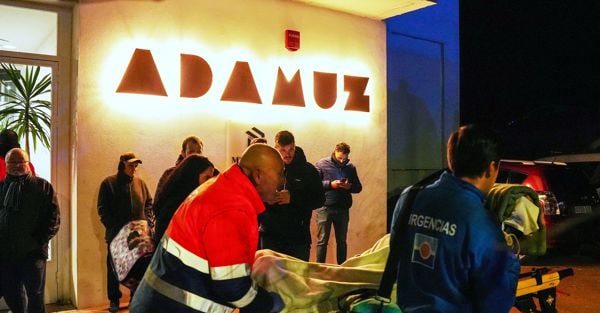
Le persone coinvolte in un incidente ferroviario mortale vengono trasferite e curate presso il Caseta Municipal nella città di Adamuz, dopo che un treno ad alta velocità è deragliato e si è scontrato con un altro treno in arrivo vicino a Cordoba, in Spagna, il 18 gennaio 2026. REUTERS/Alex Gallegos

Minister of Transport: 'Unexplained accident on a new line'

"Of the two convoys, the Alvia is the one that got the worst of it" in the Adamuz (Cordoba) derailment. This is what the Spanish Minister of Transport, Oscar Puente, told a press conference, explaining that the first two carriages of the Alvia, with a total of 63 passengers on board, 'plunged into an embankment' of about five metres. Puente gave no indication of the possible causes of the derailment, but noted that 'the accident was extremely strange', as it occurred 'on a straight section, on a recently renovated line' and involved a 'practically new' Iryo train.

Una persona ferita viene trasportata all'ospedale improvvisato nel centro sportivo di Adamuz, vicino a Cordova, nel sud della Spagna, lunedì 19 gennaio 2026, dopo che un treno ad alta velocità è deragliato e si è scontrato con un altro treno. (Francisco J. Olmo/Europa Press via AP)

"The state of the rail route was good," he reiterated. "We are talking about new materials," he added, recalling that on the Andalusia-Madrid route "700 million euros have been invested and the work to replace the infrastructure changes was completed in May, according to Adif," the state railways manager. 'We hope that the investigation will help clarify the causes of the accident,' the Transport Minister also said. As for the timetable for the restoration of the high-speed line, the minister warned that "it will remain disrupted at least tomorrow and probably for a month". "Not only does it have to be withdrawn, but there is an investigation" open on the disaster "which requires action on the ground in all its depth," he signalled. Puente finally announced the creation of a 'completely independent' commission of enquiry to 'establish what happened and make sure it never happens again'. That of the broken joint, according to him, is 'one of the theories explored', and 'it must be determined whether it was a cause or a consequence' of the derailment.

Iryo Company: 'Last train overhaul carried out 4 days ago'

The last overhaul of the Iryo high-speed train involved in the train disaster on Sunday evening in Adamuz, near Cordoba, had been carried out on 15 January, according to sources of the company (participated by Fs International) in a note. Iryo maintains constant communication with all the institutions involved - the Ministry of Transport, Adif, the Government Delegation, the Junta de Andalucía and the municipalities of Adamuz and Cordoba - and thanks them for their solidarity, rapid response and the human and technical means deployed from the first moment. It also points out that it is at the complete disposal of the commission in charge of investigating the accident and will cooperate fully, providing all the information requested

Il deragliamento

Un fermo immagine tratto da un video pubblicato su X dalla Guardia Civil mostra un momento successivo all'incidente ferroviario che ha coinvolto due treni sulla linea di alta velocità Madrid-Andalusia ad Adamuz (Cordoba), 19 gennaio 2026. X GUARDIA CIVIL

Renfe President: 'Human error practically excluded'

"Human error is practically excluded". This was assured by the president of the Renfe company, Alvaro Fernandez Heredia, commenting on the train disaster on public radio Rne . "It must be a problem related to Iryo's rolling stock or an infrastructural problem" - something to be determined by the Commission of Inquiry into Railway Accidents - Heredia explained. On that stretch of railway line, which is straight and has a 250 kilometre per hour limit, speed was not the cause of the accident, he further assured, pointing out that one of the trains was travelling at 205 kilometres per hour and the other at 210.

Meloni and Mattarella's condolences

"It is with great sadness that I learn of the train accident that took place in Andalusia, where two high-speed trains derailed. Italy is close to Spain's grief at this tragedy. Our thoughts go out to the victims, the injured and their families'. This was written on social media by President of the Council, Giorgia Meloni.

"I have learned with deep sorrow the news of the tragic train accident in the region of Andalusia, which claimed many lives and injured. Our thoughts go out to the families of those who lost their lives, to the injured - whom we wish a speedy recovery - and to the rescue teams". Thus the President of the Republic, Sergio Mattarella, in a message sent to the King of Spain, Philip VI.

"At a time of such grave mourning for our friend the Spanish people, I would like to convey to Your Majesty and the relatives of the victims the most sincere condolences of all Italians and the expressions of my personal closeness,' added the Head of State.

Copyright reserved ©
Loading...

Brand connect

Loading...

Newsletter

Notizie e approfondimenti sugli avvenimenti politici, economici e finanziari.

Iscriviti