Hôtellerie

Spark by Hilton, the first premium economy arrives at Milan Linate

The Group, present with 11 brands, expects to reach more than 130 hotels between operational and development facilities by 2029, with 22 new openings planned over the next three years, of which six already this year

by Laura Dominici

4' min read

Translated by AI
Versione italiana

4' min read

Translated by AI
Versione italiana

Hilton is accelerating its roadmap in Italia and is doing so by focusing on a diversification of the offer that ranges from iconic luxury to the new frontier of 'premium economy'. The group has made official in these days the landing on the Italia market of the Spark by Hilton brand, an operation that represents not only a numerical expansion, but a strategy to garrison the mid-range segment, more and more in demand both by big property investors and by business tourism.
The debut will take place at Milan Linate by autumn - as David Kelly, senior vice president, Continental Europe, declared in an interview with Il Sole 24 Ore - with the Spark by Hilton Milan Linate Airport, a 118-room structure that is the result of the consolidated partnership with Ele Spa chaired by Fabiano Rebecchini, now in its fifth project with the group. Among the hotel's features are bright common areas, buffet breakfast, the Hydration Cart available free of charge to guests, a 24-hour market, three meeting rooms, an outdoor swimming pool and a gym.

The logic of choice and an ambitious pipeline

Loading...

The choice of the Linate hub for the launch of Spark responds to a logic of efficiency and extreme connectivity. The new brand is designed to offer global quality standards at competitive prices in high traffic areas. As the manager points out, "Spark is currently the fastest growing brand globally for Hilton, with 242 properties already operational and 193 in the pipeline worldwide". In Italia, the brand will be strategically positioned to intercept not only the "on-the-go" traveller, but also that segment of users looking for reliability and functional design just a few minutes away from city centres.

Hilton's Italian strategy, however, does not stop at quality economy. The group, present with 11 brands, has outlined an ambitious pipeline that envisages reaching more than 130 hotels between operational structures and those under development by 2029, with 22 new openings planned over the next three years, six of which already this year. Areas of interest include Rome, Milan, Florence, Venice, Turin and Naples.
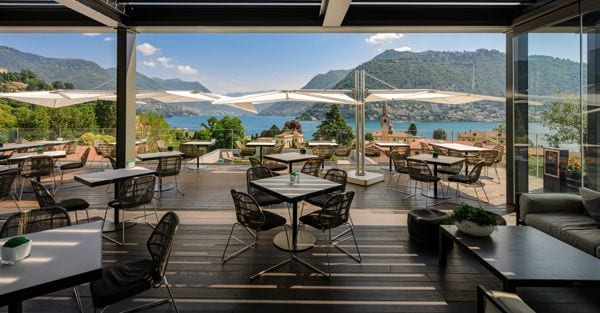
Hilton Como Lake

Alan Mantin, vice president development - Southern Europe, highlighted the attractiveness of the system for Italian owners: "Globally, Hilton enjoys a 14% premium over the competition on the average rate and this translates into a higher margin for the owner. This generation of hoteliers is becoming ambassadors for the power of our network; family group owners find that with Hilton they earn more money thanks also to a loyalty programme, Hilton Honors, which has now reached 250 million members".
Flow motor

It is precisely the Honors programme that is driving the flow, with the United States confirming itself as the top nationality for overnight stays in the group's Italian hotels, followed by the Italia market and Europe in general. Occupancy figures in key cities such as Rome and Milan confirm a record season, also sustained by the long wave of major international events. Kelly confirmed the positive trend of new investments, citing the example of the Hilton Garden Inn Colosseum in Rome and the Tapestry Puccini in Milan: "The team is extremely satisfied with occupancy and rates. The variety of our brands allows us to meet the needs of every market. In Milan, with recent renovations and new projects such as the Canopy in Via Torino and the Curio in Gae Aulenti, we are creating an ecosystem that covers every style of stay'.

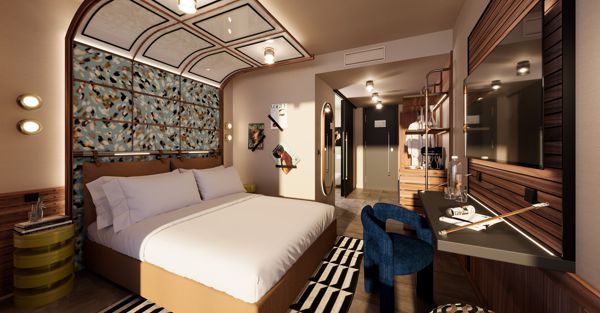
Canopy by Hilton

A massive renovation plan

In addition to new openings, Hilton is pursuing a massive redevelopment plan for its historic assets. After the complete restyling of the Hilton Milan, work has moved on to the iconic Waldorf Astoria Cavalieri in Rome, where the rooms are being renovated to maintain global luxury standards. Other significant operations involve Naples, with the conversion to the DoubleTree brand of the Hotel Oriente, and Sicily with the Hotel Quiete in Giardini Naxos, destined to become a new landmark for the Taormina area under the Tapestry Collection banner. Turin also remains at the centre of the radar, after the successful renovation that focused strongly on the integration between hotel and local community through the food & beverage offer.

The well-being of the guest and the authenticity of the local experience remain the pillars on which Hilton builds its profitability. The global trend is moving towards an ever deeper human connection and an offering that enhances the local area. "Travellers, especially international ones, want to experience something unique," explains Kelly. "They want to feel part of the city, they ask the concierge for the non-touristy little restaurant, they seek the aperitif on the terrace where they mingle with the locals. Our aim is to make our hotels not just places to sleep, but hubs where relationships, including business, are established'. This commitment is also reflected in the management of human capital, a crucial factor in a service-intensive industry. Hilton has been awarded "Great Place to Work" in Italia for four consecutive years, an accolade that David Kelly considers fundamental to guaranteeing the "magic" in hospitality that international tourists expect from Italia.

First Quarter Results

The hotel group started 2026 with positive results, exceeding expectations and revising its full-year forecast upwards. In the first quarter, it reported total revenue of $2.94 billion, net profit of $383 million and Ebitda of $901 million. RevPar (average revenue per available room) on a comparable basis and at constant exchange rates, grew by 3.6% compared to the same period in 2025. On the expansion front, Hilton added 16,300 rooms to its portfolio and approved the development of an additional 26,200 units, bringing the global pipeline to 527 thousand rooms in 129 countries.

Copyright reserved ©
Loading...

Brand connect

Loading...

Newsletter RealEstate+

La newsletter premium dedicata al mondo del mercato immobiliare con inchieste esclusive, notizie, analisi ed approfondimenti

Abbonati