Interview

Assange's wife speaks: 'Julian is a symbol for freedom for all. In some ways, like Bitcoin'

Stella Assange, wife of the well-known Wikileaks founder since 2022, exclusively tells Il Sole 24 Ore about the steps that led to the release, on 24 June, of the Australian journalist and activist, who returned to freedom after five years in prison thanks to a plea bargain with the United States. He also recounts the role Bitcoin played in the affair

by Vito Lops

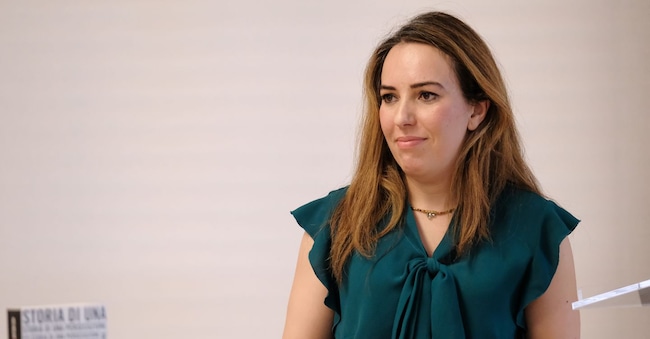
Stella Morris Assange, avvocata e moglie di Julian Assange

5' min read

5' min read

"The fight for Julian's freedom was a long one. It took time to build a movement and a public understanding of the importance of his case, his freedom and how it actually concerned the freedom of us all'. Stella Assange, wife of the well-known Wikileaks founder since 2022, exclusively tells Il Sole 24 Ore about the steps that led to the release, on 24 June, of the Australian journalist and activist, who returned to freedom after five years in prison thanks to a plea bargain with the United States.

How has Julian's fight for freedom been experienced over the years? And what lessons did he learn from his experience?

Loading...

"As time went on, there was a turning point where there were fewer and fewer people who supported his imprisonment. Everyone I spoke to, everyone who spoke publicly, except the US Department of Justice, said Julian should not be in prison. But it took time, and this is a bittersweet lesson: Julian had to pay with years of his life to gain his freedom. In fact, the guarantees that should exist for journalists are not there, because Julian should never have spent a single day in prison'.

Was his release a surprise?

"Not for me. Nor, I think, was it for those who lived it from the inside, closely following the way the US administration was talking about Julian's case and the legal developments in the extradition case. I thought it was clear that Julian was improving his political position over time, because it was a political case. Legally, yes, he was very close to extradition. But on the other hand, politically, there was support within the US Congress, on both political sides, that this case was dangerous for freedom of the press. All the civil society groups, the human rights groups, the press freedom groups, were saying that this case was very dangerous and should be dismissed. Moreover, the simple fact of Julian's imprisonment for so long made people realise that this was a grave injustice. He was in the UK's maximum security prison, Belmarsh, where terrorists are detained. It was so arbitrary: he was charged for publishing information of great public interest, concerning war crimes. I think many books and films contributed to a public understanding that this was a grave injustice. And that is what finally unblocked the situation'.

What lessons can we learn from Julian's story?

"There are many lessons to be learned. One is that a global movement can free a political prisoner. The support has been constant and growing, from the bottom to the highest levels of politics. There were heads of state like Lula da Silva constantly talking about Julian's case, or the president of Mexico. It was a non-hierarchical movement; it was everywhere. And it teaches us something very positive: even if you have very dangerous and powerful opponents, a society can resist. But the society only won because Julian survived five years, and there was doubt that he could do it. It also tells us a lot about the current situation, where we see a dismantling of the protections for press freedom and basic rights that were solid 15 years ago, when it all started, for public access to information and transparency. The Council of Europe conducted an investigation and report on Julian's case, and the conclusion was that Julian was a political prisoner held in the UK in Belmarsh for five years, and that the safeguards to protect journalists do not in fact exist, and that reform is needed."

Talking now about Bitcoin, often associated with privacy and freedom, do you think that this technology can contribute to freedom of expression and the fight for transparency?

"Bitcoin was essential for the survival of WikiLeaks, because the first choke point, the first attack on WikiLeaks, was its financial support. WikiLeaks, unlike newspapers or some NGOs, which are usually financed by advertising or foundations and sometimes by governments, was different, because it only received donations from the public, and it was a small organisation, so it was able to survive thanks to public donations. But in 2010, when WikiLeaks started publishing Chelsea Manning's documents, the US realised this and imposed a banking blockade on Bank of America, PayPal, Visa and MasterCard to stop donations. Then, a few months later, some of the first people involved in Bitcoin made donations in Bitcoin. WikiLeaks found alternative ways to get support, and one of them was Bitcoin itself. And, of course, at that time the value of Bitcoin was very low, but it was precisely this that allowed WikiLeaks to survive. Also, the reason why the Bitcoin community supports Julian and WikiLeaks so much: it somehow stems from the same philosophy. Yes, that of the cypherpunks. Julian was, or rather is, a cypherpunk, but he applied his cypherpunk philosophy to freedom of information, to guarantee the anonymity of sources and to be able to distribute information democratically. While Satoshi and others used this philosophy and technology to find a distributed system for transactions. There is a common origin between different projects, but with the same goal: to solve the problem of censorship, both financial and informational, and control, by distributing it. And that is why this community understands the importance of WikiLeaks and has been so supportive of Julian's freedom and the broader value of the fight against censorship'.

Do you think your husband will continue to be committed to online privacy and freedom?

"It is too early to say, we are still getting our bearings. It has only been four months since Julian has been free. Our goal was only to grant him freedom. Julian is free to do what he wants, and he is a brilliant mind."

Does Julian now have total or partial freedom?

"Total freedom. He can say whatever he wants. However, there are constraints in the plea agreement. But the essence is to have obtained freedom. That is the great victory."

Do you think that in the future, governments will attempt to ban technologies such as Bitcoin to regulate digital freedom?

"It depends a lot on the Bitcoin community and how willing they are to compromise. Hopefully the principle of resistance will prevail. Because although there might be immediate benefits for some of the people involved, those benefits might be at the expense of the freedom that exists. So I think the Bitcoin community is going to be very divided on how things are going to go. The reality is that the community is made up of people and those people might have incentives in different directions. There are some very strong ideologues who are purists and some people who are more willing to find a middle ground. So I don't know where it will go, but I would like to see a world where Bitcoin still represents freedom. Because it is an important technology now. Just look at what is happening with the US elections. As Julian's brother Gabriel said, in a way it's like an election on Bitcoin as well'.

Many people think that Julian is Satoshi Nakamoto. What do you think? Can you assure us that he is not Satoshi Nakamoto? Or do you have any doubts yourself? 

"I bet not. No comment (with smile, ed.)'.

Copyright reserved ©
Loading...

Brand connect

Loading...

Newsletter

Notizie e approfondimenti sugli avvenimenti politici, economici e finanziari.

Iscriviti