Circular economy

Special waste: a shortage of processing facilities is driving 5.1 million tonnes abroad

Assoambiente’s figures at Ecomondo: exports are mainly to Germany, Austria and Hungary, with production having grown over the years

 Unsplash

3' min read

Translated by AI
Versione italiana

3' min read

Translated by AI
Versione italiana

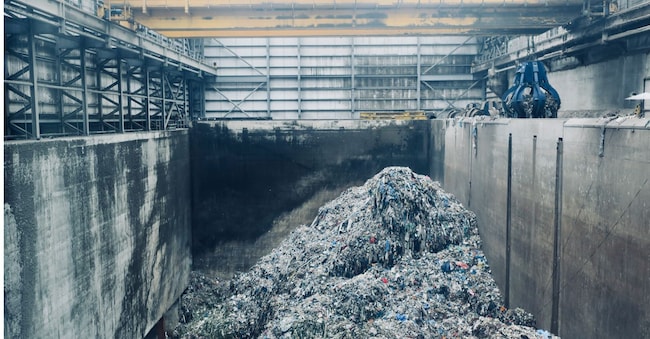
Special waste: in Italia, a shortage of treatment facilities is driving it abroad. “Most of our exports go to Germany. We don’t have enough facilities to treat this waste in Italia. And that’s a shame, because we’re giving away wealth to others,” says Chicco Testa, president of Assoambiente.

The association – which brings together companies operating in the sectors of urban sanitation, recycling, recovery, the circular economy, waste disposal and remediation – has compiled a set of figures on the sector in the report “Waste in Figures 2026”, presented at the Ecomondo trade fair in Rimini.

Loading...

Special waste

In 2024, Italia produced a total of 202 million tonnes of waste, of which 29.9 million tonnes was municipal waste and 172.1 million tonnes was special waste. Whilst the production of municipal waste has remained broadly stable over the last decade (it stood at 29.7 million tonnes in 2014), that of special waste has increased, rising from 134.4 million in 2014 to the current figure of 172.1. More than half of this (52.5 per cent) comes from construction and demolition activities, whilst 23.1 per cent stems from waste treatment and 15.9 per cent from manufacturing activities.

Migration flows to Germany, Austria and Hungary

As the Assoambiente report points out, Italia exported 6.4 million tonnes in 2024, equivalent to around 3 per cent of total production. Of this, the majority – namely 5.1 million tonnes – was special waste, whilst 1.3 million tonnes was municipal waste.

Specifically, the special waste exported abroad consists mainly of waste from the treatment of non-hazardous waste (770,000 tonnes), plastic and rubber (535,000 tonnes), soil and rock (348,000 tonnes), and mixed waste (300,000 tonnes). The main destinations are Germany (1.1 million tonnes), Austria (0.7), Sweden (0.4), Hungary (0.3), France (0.3) and Spain (0.3). Our waste is mainly sent to facilities for material or energy recovery.

Dependence on foreign countries

We must also take into account the context of Italia, a country characterised by a shortage of raw materials. As the Assoambiente report highlights, the Italian economy uses 777 million tonnes of materials every year, a figure that has remained largely stable over the last decade. Of these, 642 million tonnes are virgin raw materials, with 300 million tonnes (46 per cent) sourced from abroad, particularly in the case of fossil fuels. A further 135 million tonnes come from recycling: Italia has a material circularity rate of over 21 per cent (ISPRA 2024 data), second in Europe only to the Netherlands (27.2 per cent). It is clear that an increase in the recycling rate would reduce the country’s dependence on imports.

‘We are among the European leaders in the circular economy, but we cannot be content with the results we have achieved. We continue to export millions of tonnes of waste and rely too heavily on landfill sites. We must address the shortfall in treatment facilities, make better use of energy recovery for non-recyclable waste, and create a regulatory environment conducive to investment, through clear rules and, for example, simpler and faster authorisation procedures. Only in this way can we make the system more efficient, sustainable and less costly,” comments Testa.

“Let’s take an example: we are removing asbestos from all over Italia. Yet there isn’t a single facility in the country for treating this material, even though the process is simple: the asbestos is vitrified and rendered harmless. Instead, we send it all to Germany. The shortfall in treatment facilities is particularly significant for this type of waste – industrial and special waste – whilst the NRRP has taken important steps regarding municipal waste,” continues Testa.

“A starting point,” he adds, “could be special waste, which comes from industrial activities: all it would take is the political will to do so. The climate has changed somewhat in recent years: it has become clear that waste treatment – both urban and special waste – are important activities that require facilities and industries. However, the transition has not yet been completed because there is still a widespread view amongst the public that waste, rather than being seen as an opportunity, is a threat.”

Copyright reserved ©
Loading...

Brand connect

Loading...

Newsletter

Notizie e approfondimenti sugli avvenimenti politici, economici e finanziari.

Iscriviti