
Speed cameras seized throughout Italy: lack of type approvals and prototypes
Involved the T-Exspeed v 2.0 and widespread problems on many other models. And precedents have closed without convictions. But a ruling by the Supreme Court relaunches
by N.T.
2' min read
Key points
- Seizures throughout Italy and charges
- Lack of homologation
- Failure to file the prototype
- Background and outcomes
2' min read
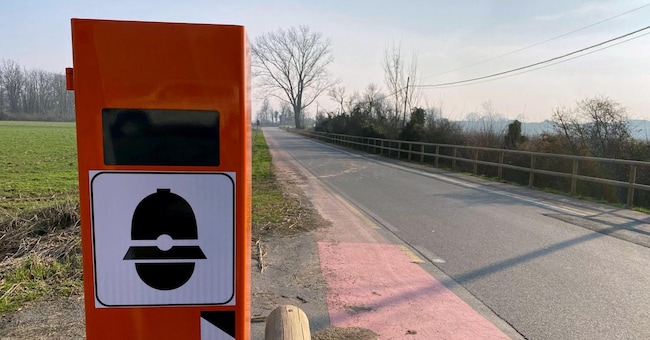
On Monday 29 July, the Cosenza Traffic Police seized several T-Exspeed v 2.0 speed measuring devices (both punctual and average) installed along State Roads 106 and 107 and Provincial Road 234.
The seizures throughout Italy and the charges
The seizure, ordered by the gip of Cosenza, also concerned equipment of the same type in various parts of Italy: in the press release issued by the Traffic Police, Venice, Vicenza, Modena, Reggio Emilia, Pomarico (Matera), Cerignola (Foggia), Pianezza (Turin), Piadena (Cremona), Formigine (Modena), Arcola (La Spezia), Carlentini (Syracuse) and San Martino in Pensilis (Campobasso) are mentioned.
According to the press release, fraud in public procurement is being investigated on two fronts: the lack of type approval and the failure to file the T-Exspeed v 2.0 prototype. Problems common to various models of devices widely used for decades throughout the Italian road network.
Lack of type approval
.The homologation front, which has long been the focus of controversy, was recently rekindled by ruling 10505/2024, in which the Supreme Court held that the Ministry of Infrastructure must homologate speed gauges and not simply approve them (a procedure that Article 192(3) of the Road Traffic Code's Enforcement Regulations reserves for cases in which the Regulations themselves 'do not lay down fundamental characteristics or particular prescriptions').
Prototype filing
.Compliance with the obligation to deposit the prototype (imposed by Article 192(2) not only on speedometers, but on all devices subject to homologation or, as far as possible, approval) has also already been the focus of court cases, including criminal ones. Which, however, according to the chronicles, have not so far led to significant convictions.

