
Spirit Airlines, now the cost of fuel weighs on the bailout
The American low-cost airline, in Chapter 11 for the second time in a year, now focuses on high-performance services such as premium economy

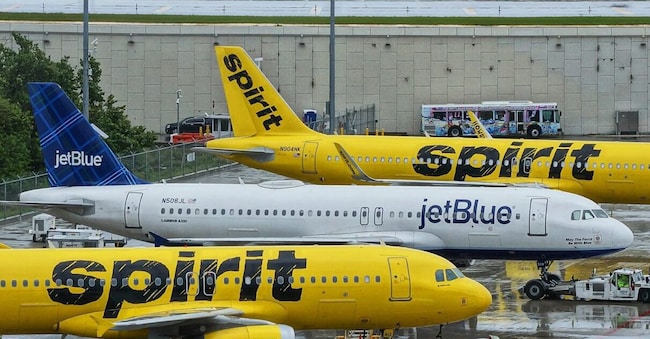
There is no peace for Spirit Airlines, the American low-cost airline that has gone bankrupt and attempted to be bailed out twice in a year by the court it had access to in both cases through the 'Chapter 11' procedure. The presentation of yet another bailout plan just as the war in the Middle East is driving up the price of fuel, putting its survival in serious difficulty. In a race against time to save what's left, the company said it expects to reduce the number of aircraft to only 76-80 by the third quarter of 2026, down from 214 before the crisis, with the aim of reducing debts and aircraft leases from around $7.4 billion to just $2 billion. Its fleet consists mainly of Airbus A320s and A321ceo.
Timing does not help, and while the company seeks approval from the US Bankruptcy Court for the Southern District of New York, a decision expected by May, volatile fuel prices have made its predictions more difficult. What has been reported is that Spirit post-bankruptcy will be a much smaller airline, focused primarily on a few key markets such as Florida, Michigan and the New York City area.
The carrier will focus on a range of higher yielding products, such as Spirit First and Premium Economy, while not giving up its identity as a low-cost carrier. A further effort that might not be needed since the company has one bankruptcy after another behind it, while losses and operating costs significantly exceed any revenue forecasts: analysts quoted by Reuters indicated that Spirit Airlines lost around USD 246 million in the three months ending June 2025 since the first restructuring did not solve the company's problems. Since then, Spirit has cut routes, abandoned airports, reduced aircraft leases, and sought support from creditors.
Divesting the carrier was also on the list of potential solutions, but negotiations to complete the deal are taking longer than expected in part because fuel costs have become harder to predict while volatility is raising questions about Spirit's liquidity and cash flow forecasts: if thefuel costs remain high, the carrier will have less room to compete with its rivals in terms of airfare, especially since airlines around the world are already raising fares to defend margins. Thus, passengers will be faced with a more reliable Spirit Airlines, but certainly not a cheaper one.


